


These non-profits are keeping India’s culture and heritage alive
From remote villages to digital archives, a quiet cultural movement is underway. Across India, these non-profits are working to preserve India’s traditional art and culture for future generations.

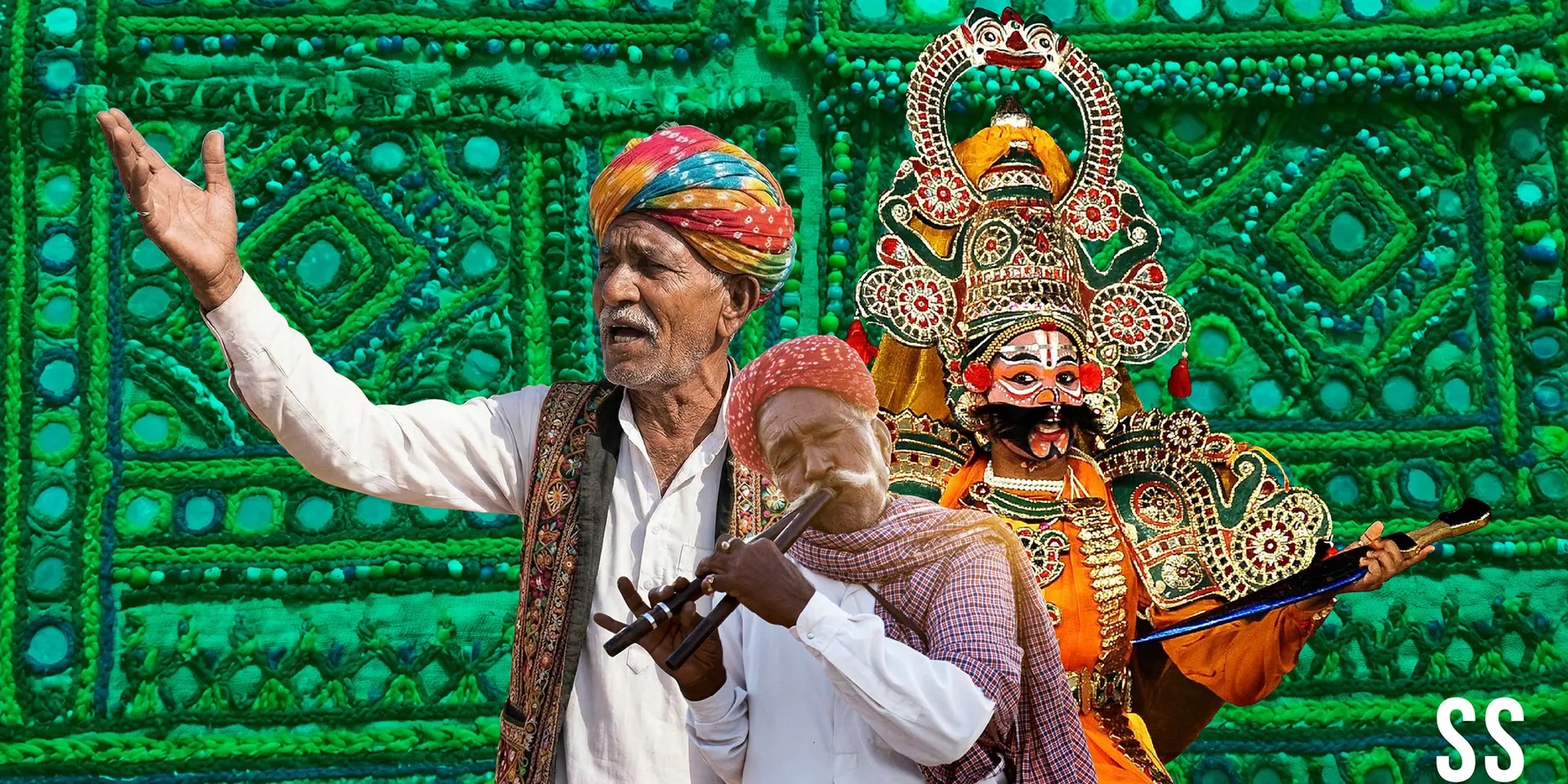

As the world rapidly embraces technology across every domain, many of India’s traditional art forms are at risk of fading into obscurity. It’s not because they lack value, but because they lack visibility, documentation, and monetary support.
From folk music and embroidery to oral history and theatre, our cultural heritage can survive only when communities come together to sustain it.
Here is a list of organisations preserving art and culture and creating new and sustainable models for the future.
Anahad Foundation
When Abhinav Agrawal and Shuchi Roy founded Anahad Foundation in 2013, they recognised that while India celebrates its classical music, thousands of folk musicians remain invisible—underpaid, undocumented, and unheard.
Anahad’s focus is clear. It aims to preserve India’s folk and tribal music traditions while building sustainable incomes for artists. Through its portable BackPack Studio, the team travels to remote villages to professionally record musicians who may never have entered a studio. They help artists create digital identities, understand intellectual property rights, and reach audiences through streaming platforms and performances.
Anahad’s impact is both cultural and economic. It has trained over 6,000 folk artists across 15 states, enabling them to thrive in the age of technology. It has increased artists' incomes and facilitated international collaborations and opportunities.
By combining technology with tradition, Anahad is ensuring that oral histories become archived legacies—and viable livelihoods.
Archival and Research Project (ARPO)
Founded in 2021 by Sruthin Lal, Parvathi AR, and Nevin, the Archival and Research Project (ARPO) began as a small effort to document Kozhikode’s layered history.
What started as a small effort has since evolved into a cultural collective preserving Kerala’s tribal music, oral histories, rituals, and forgotten local narratives.
ARPO’s focus lies at the intersection of community memory and digital documentation. Through podcasts, short documentaries, and open archives, it captures stories that rarely make it into textbooks.
Its Earthlore Fellowship equips tribal musicians with professional training and performance exposure—ensuring that preservation is not passive archiving but active cultural transmission.
In an age of shrinking attention spans, ARPO reminds us that heritage survives when communities are empowered to tell their own stories.
Banjara Kasuti
In Lambani communities, embroidery is more than ornamentation—it is storytelling.
Founded in 2017 in Vijaypura (then Bijapur), Karnataka, by grassroots cultural activists, Banjara Kasuti works to preserve the rich tradition of Lambani embroidery while creating sustainable livelihoods for Lambani women.
By championing handcrafted pieces that reflect the intricate beauty of this heritage art form, the initiative promotes economic independence, self-sufficiency, and grassroots entrepreneurship within the community.
It works with Lambani women artisans to ensure that this intricate needlework tradition does not disappear under mass-produced fashion.
The organisation’s focus is on preserving Lambani embroidery techniques and creating sustainable livelihoods for women artisans.
Through training, market linkages, and collaborations, Banjara Kasuti has helped artisans move from irregular earnings to stable craft-based incomes without diluting the tradition and authenticity of their work.
Kattaikkuttu Sangam
Rooted in Tamil Nadu’s villages, Kattaikkuttu is a vibrant folk theatre form combining music, elaborate costumes, and epic storytelling. To keep it alive, practitioners established the Kattaikkuttu Sangam, a non-profit dedicated to preserving and propagating this art form.
Based in rural Kanchipuram, the institution is committed to keeping the vibrant Kattaikkuttu performing art tradition alive, especially at a time when much of its knowledge was rarely passed down in a structured way.
Founded in 1990 by actor, director, and playwright Perungattur P Rajagopal, along with Dutch theatre scholar Hanne M de Bruin and 15 actors and musicians, Kattaikkuttu Sangam was set up as a non-profit association of professional theatre performers to safeguard, strengthen, and sustain this powerful folk theatre form for future generations.
The organisation trains performers, organises festivals, and runs educational initiatives that pass the craft to younger generations. Importantly, it has opened pathways for women performers, challenging historical gender barriers within the tradition. It is also the first and only institution to train women in this art form.
Edited by Megha Reddy