



How Madhi Foundation is transforming early learning in India
Madhi Foundation puts foundational learning at the centre of its initiatives, strengthening government school systems and engaging parent communities.


Contrary to the conventional expectations, Merlia Shaukath’s parents did not nudge her towards a predictable profession. Instead, they consistently encouraged her to consider a career in the development sector.
Born and raised in Chennai, Merlia grew up in a home where conversations about entrepreneurship were as frequent as discussions on education and social change. Public purpose was not an abstract idea—it was part of everyday life.
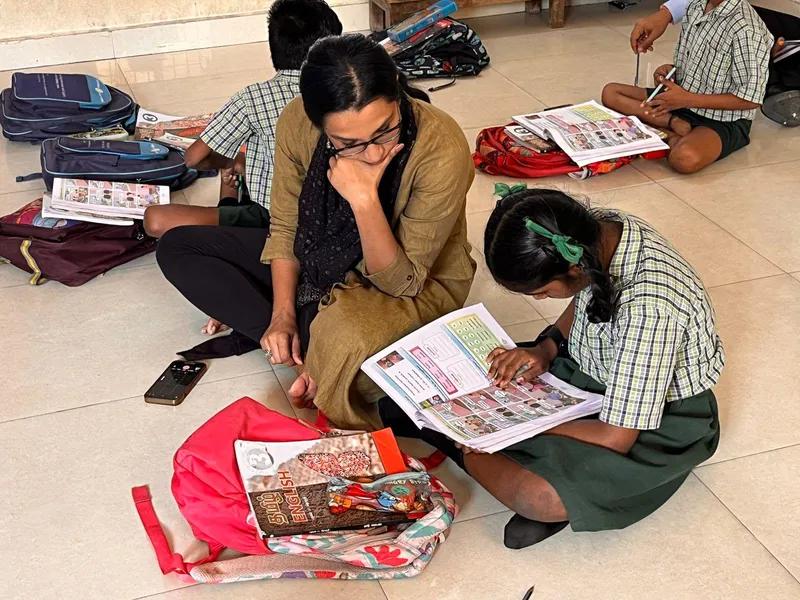
Merlia Shaukath with a student
Her grandfather, a social reformer, co-founded institutions for girls and boys from minority communities, while her parents built their journeys as first-generation entrepreneurs.
In that intersection of enterprise and equity, Shaukath found her calling. After completing her education at the London School of Economics and the University of Oxford, she returned to India, as she had always wanted to.
“My parents would always tell me that I was born into privilege and that privilege should not just perpetuate privilege, and that I had a responsibility to put that privilege to better use,” she tells SocialStory.
Inheriting the entrepreneurial DNA of her parents and the social purpose of her grandfather, Shaukath knew early on that she wanted to be a social entrepreneur—someone who could solve problems at scale, not just in pockets.
In 2011, she began her journey with Teach For India, joining as the first staff member. She wore multiple hats—fundraising, finance, operations, HR, and just about everything in between. It sharpened her understanding of systems-building while grounding her in the realities of grassroots education reform.
“It took me very close to classrooms and teachers to understand why it lay beyond the theoretical aspects of education reform, what it looked like on the ground,” she says.
After Teach For India, she joined a boutique consulting firm that worked directly with the Tamil Nadu government and a senior IAS officer, which gave her a different vantage point on how policies align from the ground up or top down.
In 2016, she started Madhi Foundation in Chennai to work at the intersection of policy and implementation, and not just one or the other.
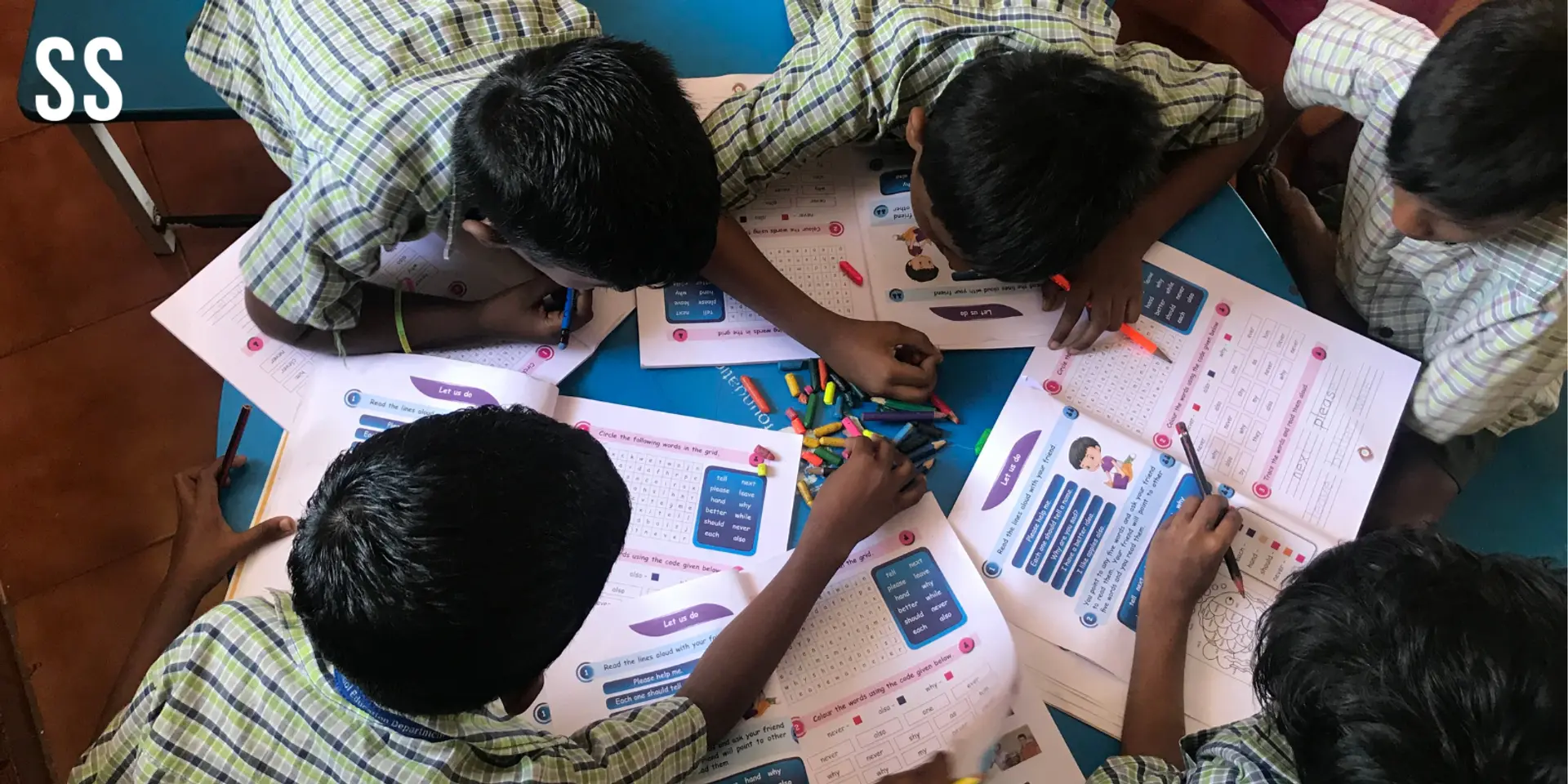
“We focus only on primary education with the belief that if we can provide children with a strong foundation, then we will be solving a lot of future learning gap problems. So, we work in primary schools on language, mathematics, and social-emotional skills,” explains Shaukath.
While placing the child firmly at the centre, it works with the government school system and engages with parents, who have become allies in this process.
Madhi Foundation works across the entire value chain of the public education system, from supporting and collaborating with the government on curricular and teacher training reform, teacher-coach reforms, and the digitisation of many governance mechanisms, to strengthening state-district relationships.
In the early years, Madhi focused on piloting ideas in a handful of urban centres in Chennai. Funding came first from close friends and family.
The turning point came when Madhi expanded beyond Chennai. Of Tamil Nadu’s 37,000 primary schools, only about 300 are in Chennai.
What the organisation found outside the city was, in Shaukath’s words, "a completely different archetype." The assumptions built in urban settings did not hold, and the very definition of what success looked like had to change.
"We have to look at it on a much longer time horizon, and chip away at the system every year so the needle keeps moving. That's what we are doing,” she says.
The inflexion point came when Madhi became the chief management partner for Tamil Nadu's Ennum Ezhthum Mission, launched after COVID to improve foundational learning — known locally as basic learning.
The scale was enormous: 37,000 schools, roughly 2.25 lakh children, 65,000 teachers, and 45,000 school and education administrators.
The results, Shaukath says, have been meaningful. For the first time in approximately a decade, Tamil Nadu has moved out of the bottom ten states on the National Achievement Survey (NAS).
In ASER, the Annual Status of Education Report, the state shows an upward trajectory, having not only recovered to pre-COVID-19 levels, but also slightly exceeded them.
Based on an internal survey, the programme has shown improvements of 7 to 15 percentage points in key learning outcomes, including reading, writing and numeracy.
Today, the proportion of schools receiving teacher coaching visits has risen from 1% to 86%, and at least four-six times a year.
The proportion receiving textbooks on or before the first day of school has reached 99%. All these point to a system transformation story.
Challenges in the journey
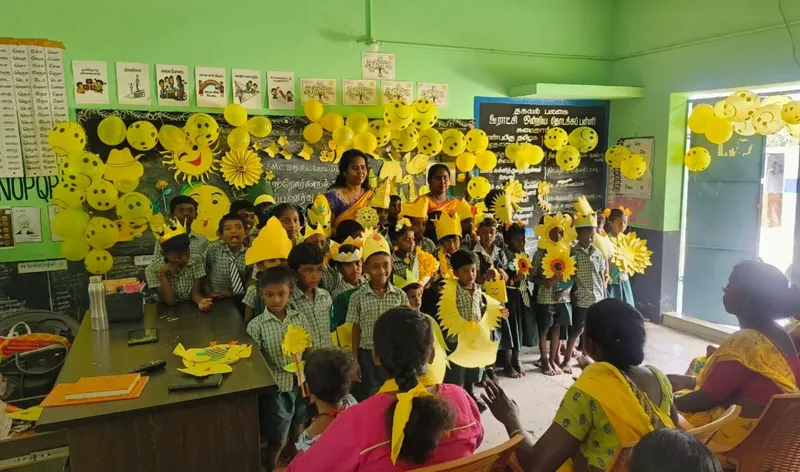
Ennum Ezhuthum classroom
Working with a large system that has many competing priorities and finding enough funders who may not always have the patience to work with such systems has proved challenging in Madhi’s 10-year journey.
“Change takes time. There are complexities and layers that are challenging. Despite all these, we found very aligned funders and partners who understand that this needs to be done. We found team members who led from the front. The realisation that foundational learning is important is also being accepted more across the board,” she elaborates.
As the pilots evolved and Madhi started building capacity, they began attracting institutional funding. Today, Madhi is supported by the Gates Foundation, Central Square Foundation, Godrej, and others. It is also supported by The/Nudge Institute.
Human stories are woven into the data. Shaukath shares the story of a teacher who had submitted her voluntary retirement papers and was ready to leave the system, attended one of Madhi's training sessions and withdrew her resignation. She stayed on for three more years and, by the end, described it as the most fulfilling period of her career. Teachers report that the programme has removed the fear of learning from their classrooms. Children are engaging in activity-based, play-based learning, whereas they once learned only by rote.
For eight years, Madhi worked almost exclusively in Tamil Nadu. The organisation needed to know whether its hypothesis was right before it could responsibly offer it elsewhere. Now, with work underway in Meghalaya and Nagaland, there are plans to expand to other states.
“What Madhi can offer is a playbook of how to navigate governance structures, how to build reliable data flows between state and district levels, and how to make change stick. The organisation is also building digital products using AI, with the intention that some of these will eventually become public goods available to other organisations in the ecosystem,” explains Shaukath.
On the parent side, it wants to scale from 20,000 parents currently to three million within five years.
Beginning with three, Madhi now works with 38,000 schools. What would India's education system look like if the Madhi model were replicated nationally?
"Effective, efficient government public school systems that put a child's well-being at the centre of all their decisions,” says Shaukath.
Edited by Megha Reddy