



5 organisations taking healthcare to rural India
From telemedicine centres to maternal and child health programmes, these organisations are taking essential healthcare closer to rural India.

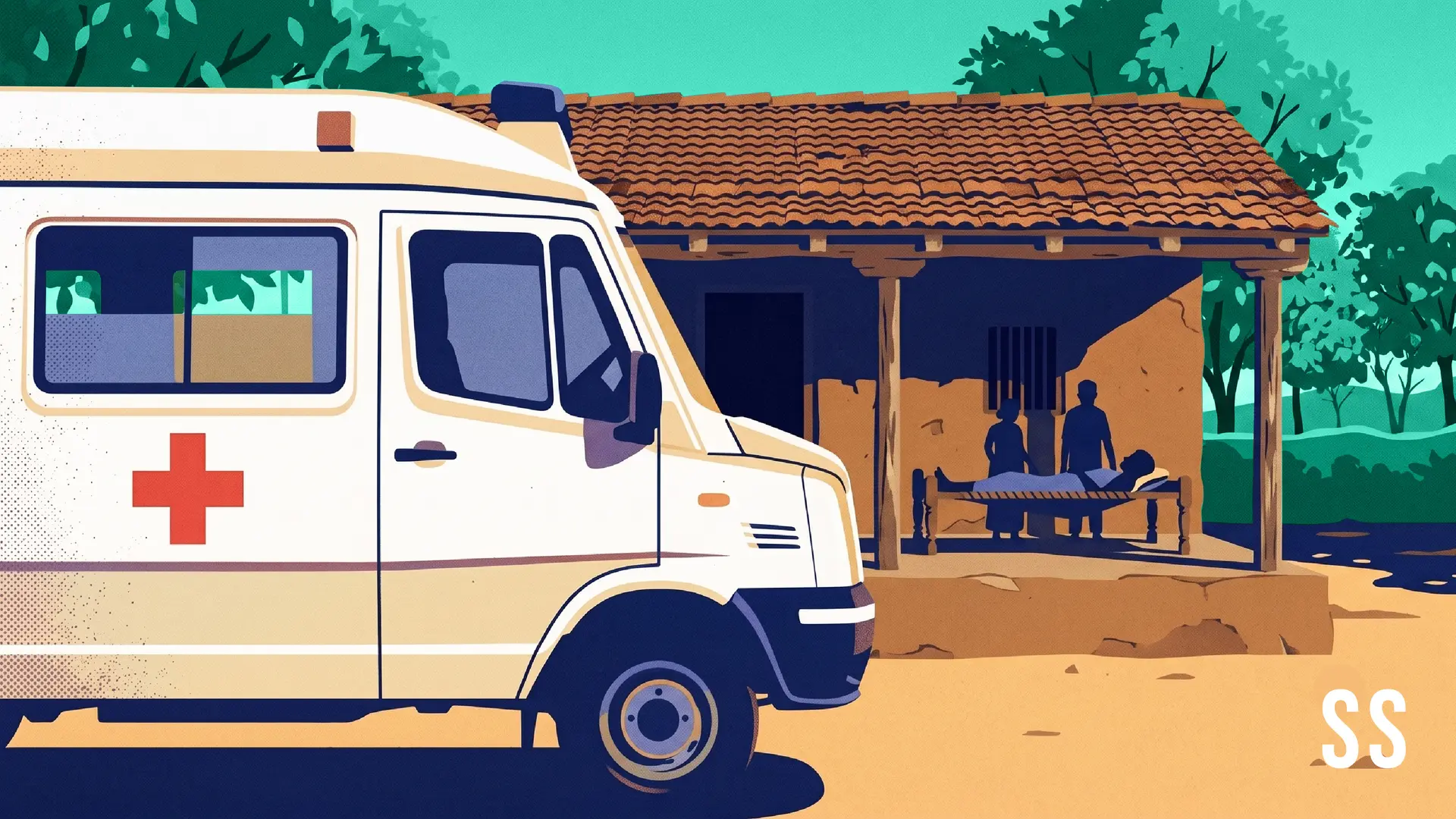

In India, rural healthcare is often limited by distance, affordability, and access. In many areas, seeing a doctor still means travelling long distances. Misinformation, poor connectivity, and a shortage of healthcare professionals compound the problem and delay timely treatment.
Several organisations are at the forefront of taking healthcare closer to communities. Their approaches are varied. Some work through on-ground health workers and existing systems; others combine physical clinics with telemedicine; and some use technology to monitor high-risk pregnancies or work directly with communities that have historically had little access to healthcare.
Here are five organisations using different models to make healthcare more accessible in rural India.
Smile Foundation’s Swabhiman
Smile Foundation began in 2002 when a group of young corporate professionals, including Santanu Mishra, decided they wanted to give back to society. Mishra co-founded the foundation while still working full-time and left his corporate career in 2005 to build the organisation. The foundation initially focused on education but soon recognised that a child's ability to attend school was closely connected to the family's health and empowerment, particularly the mother's.
That understanding led to Swabhiman, Smile Foundation's women’s empowerment programme, which has been running since 2005. The programme focuses on reproductive, maternal, newborn and child health alongside women's empowerment and economic independence. It works with Anganwadi centres, ASHA workers, ANMs and Primary Health Centres to help women understand and access government healthcare services. It uses door-to-door mobilisation, street plays, puppet shows, nutrition demonstrations and community events to address misinformation and change behaviour around pregnancy and childbirth.
Swabhimaan operates across eight to nine states, primarily among rural, migrant and marginalised communities. It tracks its impact through indicators including pregnancy registrations, antenatal check-ups, uptake of government schemes, haemoglobin levels, and institutional deliveries.
Medyseva
Dr Vishesh Kasliwal and Rachita Kasliwal founded Medyseva in February 2022 after Vishesh began conducting video consultations during the COVID-19 pandemic. He repeatedly encountered patients from underserved rural areas who lacked access to even basic healthcare. That experience convinced the couple the problem was structural rather than temporary and prompted them to build a model to connect rural and semi-urban communities with better healthcare.
Medyseva uses a “phygital” model that combines physical clinics in rural communities with telemedicine. Patients can access consultations with city-based specialists, diagnostics and medicines at these centres, while nurses at the clinics facilitate care. It also uses MedyVend, a doctor-operated medicine vending machine, and specialised healthcare modules covering mental health, women's health, eye care, and nutrition.
The model is designed to put healthcare within walking distance for rural patients while allowing medical institutions to extend their outpatient reach.
JioVio Healthcare
For Senthil Kumar, the problem JioVio Healthcare eventually set out to solve began at home. In 2016, his pregnant sister Manimala was missing antenatal appointments because she lived far from the city hospital and had to endure long waits to see a doctor. Concerned about her anxiety and access to regular monitoring, Kumar approached her gynaecologist to understand what needed to be checked during pregnancy.
An engineer, Kumar built a prototype using a blood-pressure monitor and glucose-measuring device and developed a mobile application that sent his sister's readings to her doctor. The app could also send medicine reminders, provide diet and nutrition information, alert her husband during an emergency, and help arrange a cab. That experiment became SaveMom, JioVio Healthcare's suite of IoT-based maternal healthcare solutions.
The model has since moved from one pregnancy to a broader maternal-health programme. JioVio works with hospitals, government agencies and NGOs, using connected devices and community-based healthcare workers to collect vital health information from pregnant women in remote locations. Its solutions support 1,000-day care for mothers and newborns across four states, aiming to identify high-risk pregnancies early and ensure women receive appropriate care.
DigiSwasthya Foundation
Sandeep Kumar founded DigiSwasthya Foundation after his own experience with cancer made him aware of the healthcare gap faced by people in rural India. From a village in Uttar Pradesh, Kumar saw how hard it was for people in underserved communities to access specialists and timely treatment. His experience pushed him to build a model that brings healthcare closer to people, rather than requiring them to travel long distances to cities for consultations.
DigiSwasthya uses telemedicine and digital technology to connect people in rural and underserved areas with doctors and specialists. The organisation sets up telemedicine centres and conducts health camps, enabling patients to receive consultations, basic diagnostics and referrals closer to home. Its work also focuses on cancer screening and early detection, helping identify health problems that might otherwise go untreated because of distance and cost.
Foundation for Mother and Child Health
The Foundation for Mother and Child Health (FMCH) was founded to address the persistent gaps in maternal and child nutrition and healthcare among vulnerable communities. Shruthi Ranganath Iyer, who became a co-founder in 2020, has been closely involved in building the organisation's work around the critical first 1,000 days of a child's life—from pregnancy through the first two years. The premise is simple: improving the health of mothers and children early can have consequences that extend well into adulthood.
FMCH works with communities to improve maternal and child health through nutrition, healthcare and frontline-worker interventions. Its programmes support mothers during pregnancy and the early years of a child's life, while also working with frontline workers who are often the first point of contact for families in vulnerable communities. By combining clinical expertise with community-based interventions, the organisation aims to identify nutritional and health concerns early rather than waiting until they become severe.
Edited by Affirunisa Kankudti