



Fabric of freedom: Textile revivalist Chandra Jain revives Banaras brocade for the future
Chandra Jain, textile revivalist and the founder of Kadambari, an NGO that promotes arts and crafts, wants the younger generation to think about India’s textile legacy and help revive the heritage of Banarasi brocade.

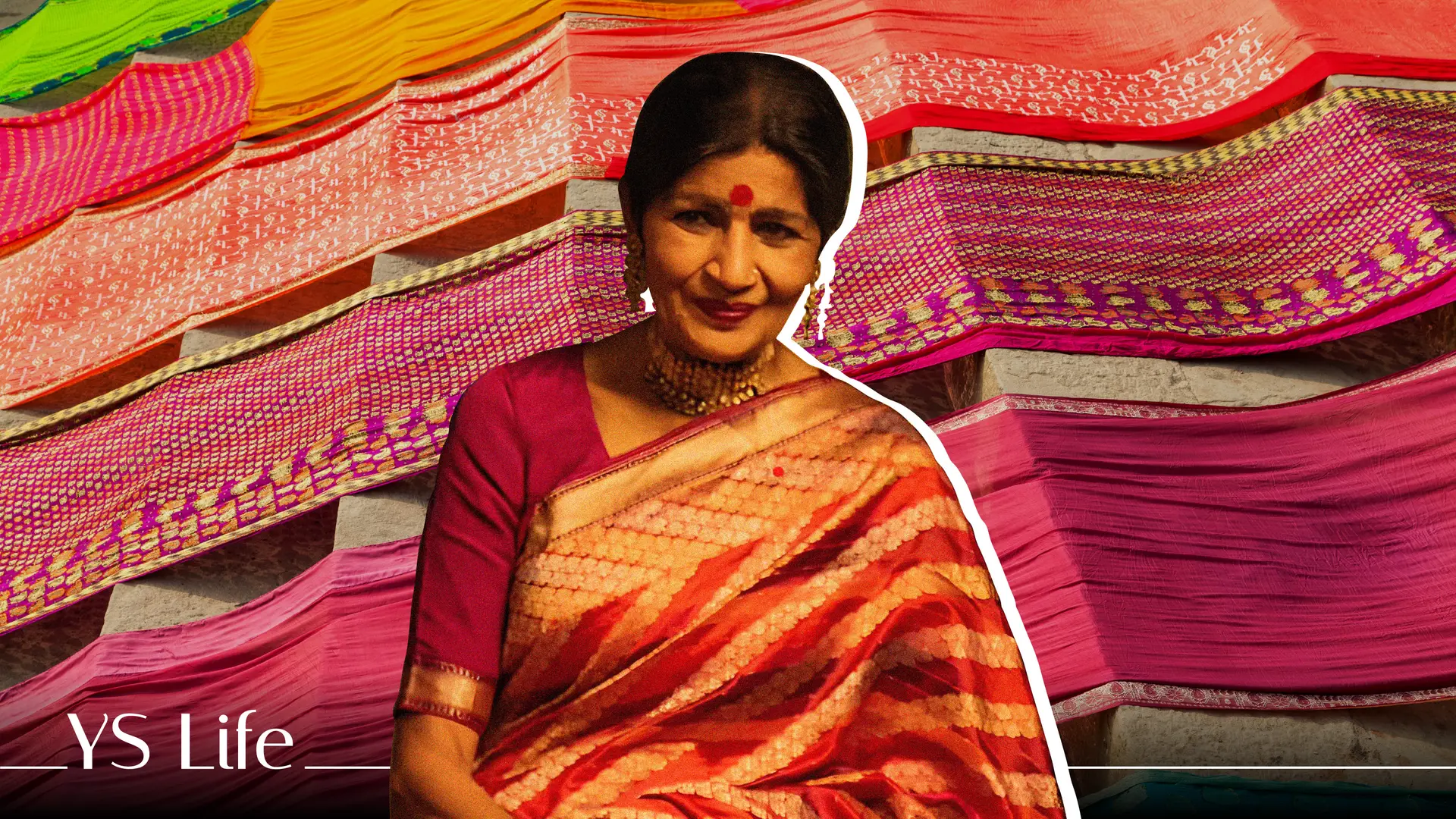

Banaras, Kashi, or Varanasi, as it is known today, is one of the oldest cities in the world. And its textile—Banarasi—is just as timeless.
Influenced by Mughal artistry, Banarasi—with its intricate weaving technique and rich texture—has been a part of important life occasions across generations.
However, over the years, intricate work has given way to bright artificial silks and zari (thread), untasteful work, and colours that simply follow the trend, instead of honouring the heritage of the weave.
While researching and working on traditional weaving techniques of India, Lucknow-born textile revivalist Chandra Jain realised that the Banarasi brocades being sold now bore little resemblance to the heirlooms that she had grown up seeing.
“What I was looking around was not at all like what I had seen with my aunts and mother,” she tells YS Life.

Chandra Jain with a Banarasi weaver
A visit to Banaras confirmed her doubts—the market was in a “pathetic situation”, and Jain felt the need to step in and try to do her bit in reviving what is perhaps “the most opulent and most captivating” of India’s textile traditions—the magnificent, ceremonial and beautiful Banarasi brocade weave. And that’s how her journey with Banarasi brocade began.
Reviving heritage
Jain runs an NGO called Kadambari which helps promote crafts, performing arts, and fine arts.
When she started working with master weavers in Banaras, her first mission was to bring back the natural dyes to the weave—a practice forgotten for over a century. Close to 125 years ago, there were no synthetic dyes, “The colours were very different… very close to nature,” she says.
This move was not based on aesthetics alone. It was more about the survival of River Ganga—the lifeline of Banaras, and its textile industry.
“Somewhere it just stuck to me that there was so much toxicity that was happening around and in the land, in the water,” Jain explains.
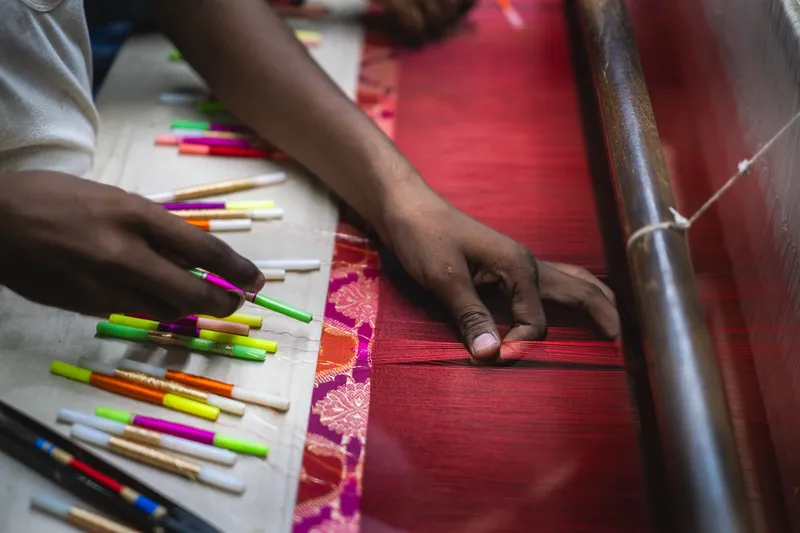
Banarasi Brocade weaving
The water from the holy river is used for dyeing, rinsing and processing of the Banarasi brocade. With artificial dyes, the chemical runoff added to the water pollution.
Returning to natural dyes meant reducing the harmful impact on the river, while also reviving an age-old practice.
Jain’s research also revealed that reintroducing the natural dyeing process meant changing the mindset of the weavers and the buyers—for instead of mixing a colour in 10 minutes, artisans would have to pound flowers, boil them for hours, and extract the colours by hand.
Making old-school relevant
After having worked with five master weavers of Banaras for over two decades, and spreading awareness within the community, Jain is now celebrating the legacy and beauty of Banarasi with her latest exhibition—River Weaves, at the Bangalore International Centre from August 15 to 20.
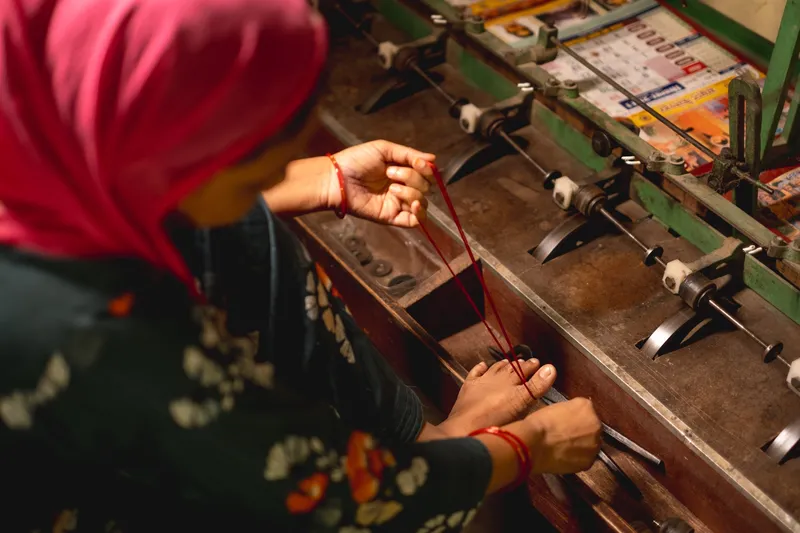
The exhibition, curated and designed by Chiara Nath and Siddhartha Das, attempts to pay tribute to the textile heritage of Banaras while bringing contemporary lens to traditional craft. The exhibition also aims to communicate the urgency of preserving Banarasi brocade and the handloom weaving traditions of Kashi.
On choosing Independence Day to open her exhibition, Jain says, “(India’s) Independence is inseparable from its craft heritage. Handloom was both an economic tool and a political symbol during the freedom movement,” adding that by linking the exhibition to the day, she hopes to spark conversations about the past, present and the future of handlooms.
Continuing the legacy
Jain also emphasises the importance of living, adapting and keeping the textile relevant and making it survive. One has to use the handloom, and make it a part of their life, “for the community to survive, for an art to survive…”
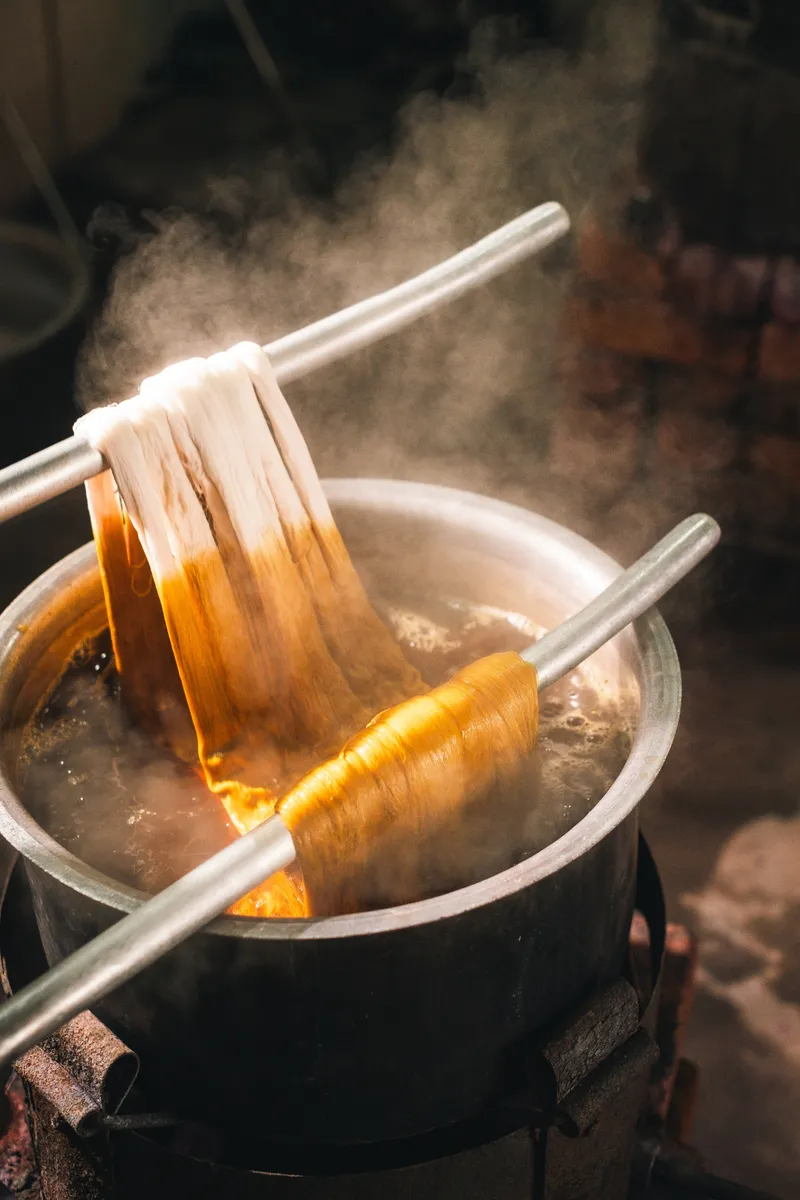
Natural dyeing of Banarasi
For visitors of her exhibition she has only one agenda—to make them think: “How can I help? How can I be a part of this journey in taking the legacy forward? I wouldn't want to lose it…It’s a call for action.”
Chandra also wishes that the younger audience sees the link between nature, culture and the craft—the seasonal colour, motifs and weaving patterns.
“We’ve always had the brides wearing red and during monsoons, everyone wearing green. So much colour coding is already available and beautifully integrated.”
By reconnecting with these roots, Jain believes, the Banaras brocade will survive the test of time.
“All these fabrics contain so many memories, so many associations…If suppose there was no weave available now, how would you feel? Unless we create this awareness, unless we make people feel proud and responsible, how is this legacy going to continue?” she asks the younger generation to think.
Edited by Swetha Kannan