



Freedom on a plate: Tracing India’s culinary evolution since 1947
On the occasion of the 78th Independence Day of India, YS Life traces India’s culinary evolution since 1947, spotlighting the major highlights that shapes the Indian plate today.

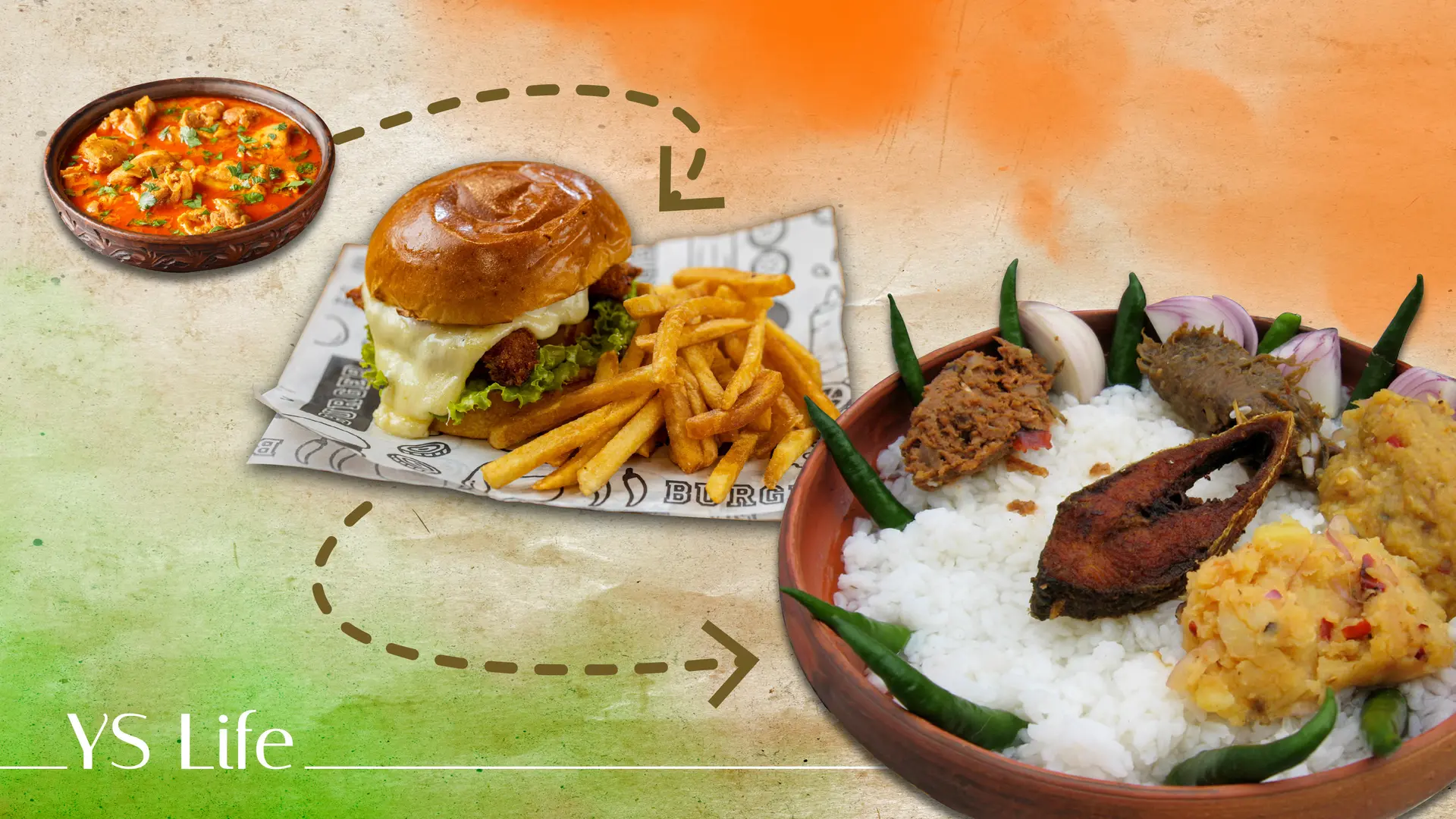

When India attained independence from British rule in 1947, the Indian kitchen was as much a battlefield as they were sanctuaries. In the newly formed cramped partition homes, strangers turned into neighbours—sharing rationed rice, lentils and measured out ghee.
Recipes travelled hidden in the folds of saris and dupattas, and that’s how Punjabi tandoor secrets reached the lanes of Chandni Chawk, Dhaka’s bhorta became a staple in Bengal’s homes, Jagannatha Temple’s bhog reached urban homes in Odisha, and the Anglo-Indian roasts adapted to coal stoves.
The decades that followed, the enforcement of the Public Distribution System, the emergence of the Green and White Revolutions saw the scarcity of kitchens giving way to abundance on the plate.
Gradually, dining out shifted from an occasional indulgence to a lifestyle, with thalis being plated for Instagram stories, millet being reborn as fine-dining staples, and forgotten tribal grains reclaiming their space on the fusion menus.
On the occasion of the 79th Independence Day of India, YS Life traces India’s culinary evolution since 1947, spotlighting the major highlights that shapes the Indian plate today. From the slow-simmered dal of a pre-partition Mumbai dhaba, to the mountain lentils cooked whole, every dish tells a story of migration, aspiration and pride.
Finding a new identity
At the end of the 200-years of Colonial Rule, much like its people, Indian kitchens were struggling with a new identity. Among those whose food carried layered histories were the Anglo-Indian and the Punjabi community.
Punjabi kitchens, much like the region, were separated into two. The Partition displaced over 14 million people—making it one of the largest migrations in history. For many migrants, food became a comfort—a memory of the lost homeland and an incentive to start over in an unfamiliar land.
Recipes were carried across borders in scribbled notes and muscle memory of the hands that made them for generations. The refugee camps and colonies became sites of culinary exchange, and new communities were formed around shared plates.
Home Chef Shelly Tripathy, and founder of Elaach, says dishes like Dal Ghosht, Chicken Lahori, Dal Makhani, Sodhvi Dal, and breads including kulcha, Khameeri Roti, Sindhi Seyal Tewan, along with Kebabs and Painda crossed the border.
“The magnanimity of the partition, cultural change, culinary change happened during the refugee phase. Non-availability of food items as before partition and settling down across India made Punjabi food more adaptable to other substitutes, while largely the essence remained the same,” Shelly adds.
Chhole Bhature, Sarson ka Saag with Makki rotis, Dal Makhani with tandoori rotis became freedom foods without the imposition of any restrictions. Similarly, low-heat cooking techniques, pickling traditions, and seasonal preservation—like drying of cauliflower for summer, survive the journey across borders.
Comfort drinks like Chhitt (milk with dried dates, sonth or dry ginger powder, and ghee) travelled with the new kitchens, with few alterations.
Gurbaxish Singh Kohli, Jt Mg Director, Pritam Restaurant, Pritam Da Dhaba and Pritam Group of Hotels, recalls how the dhaba—then known as Pritam Punjab Hindu Hotel—served migrants who had moved to Mumbai seeking livelihoods.
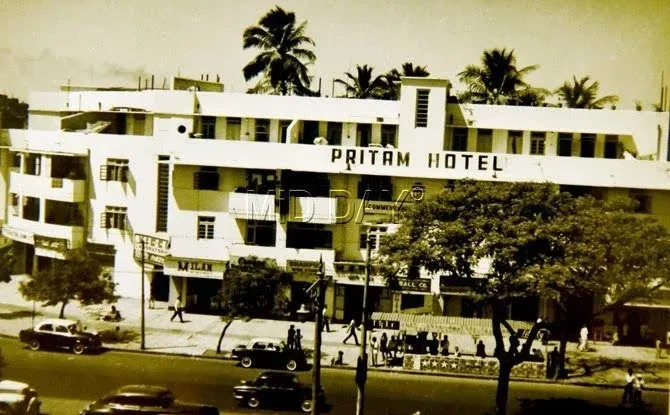
“Menus were straightforward—perhaps two or three non-vegetarian dishes and about double that in vegetarian fare…The vegetable of the day would change with the seasons, based on availability and freshness,” Kohli adds.
On the other hand, during colonial rule, the Anglo-Indians—the British group with Indian spouses, worked in the railways, customs, telegraphs and civil administration—blending European customs with Indian ones.
Post Independence, most were too Indian to move back to the UK, and thus, stayed back in India, carrying forward not just their professions and language, but also their food that bridged the two worlds.
“Anglo-Indian cuisine emerged from a fusion of British/European and Indian culinary traditions. Post Independence, the cuisine continued to evolve taking on regional and local influences, while maintaining the key elements,” says Bridget White-Kumar, food historian, cookbook writer, and Anglo-Indian cuisine chef.
Dishes like roasts, stews, and pies, although born in colonial kitchens, adopted Indian techniques. “Since there was no electricity, everything was cooked, grilled or roasted over an open firewood oven or hot charcoal. The same dishes are now cooked over modern methods,” Bridget says. The Chicken Roast, she adds, best captures the cultural coexistence—capable of wearing Indian spices as comfortably as salt and pepper.
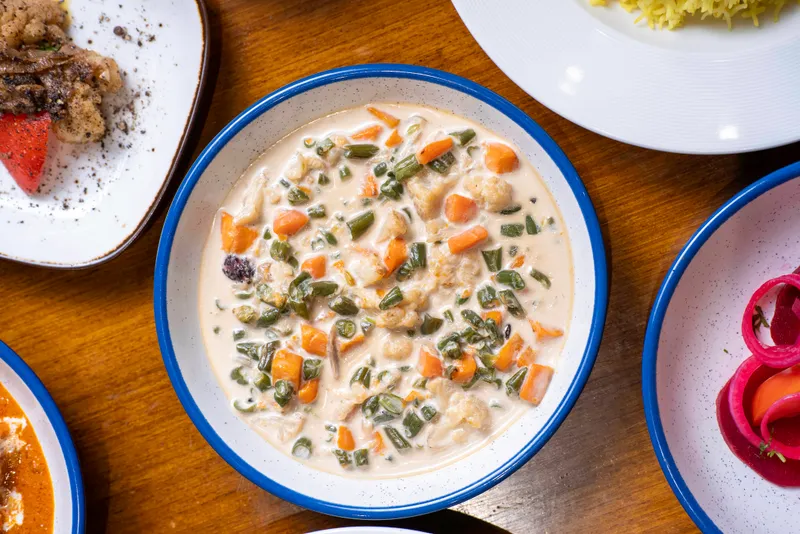
Anglo-Indian Mixed Vegetable Curry in Coconut based gravy: A typical Home Style Anglo-Indian mixed vegetable Curry in a Creamy Coconut based gravy, cooked with selected spices and herbs
The Indian railway stations, too, transformed trained journeys to culinary experiences with dishes like the Railway Mutton Curry and crispy Railway cutlets still finding their way into modern menus.
Reforms shaping the food culture
The post-Independence years brought another shift—the Green Revolution in the 1960s. “The local varieties (emmer, madhulika, nandimukhi) gave way to high-yielding semi-dwarf wheat varieties .This definitely impacted the texture and quality of grains consumed…Millet production was reduced. Wheat (hybrid) and maize became predominant,” recalls Chef Shelly.
Similarly, in the decades that followed independence, milk continued being a luxury for the common man. With uneven distribution and low production, demand outdid supply.
However, things started to change in the 1970s with the introduction of Operation Flood, later termed as the White Revolution—a development programmed spearheaded by Verghese Kurien and initiated by the National Dairy Development Board to transform India from a milk-deficient nation into the world’s largest milk producer.
Mumbai-based Parsi Dairy Farm, founded in 1916, witnessed this change and stood the test of time. Since the White Revolution also aimed to stabalise prices and reduce exploitation by middlemen, “The Dairy had witnessed serious hardship in that era. On one hand the dairy was not ready to compromise on its principles of supplying the purest and richest quality products, and on the other hand, the pricing was controlled by the state,” Bakhtyar K Irani, Managing Director at Parsi Dairy Farm recalls.
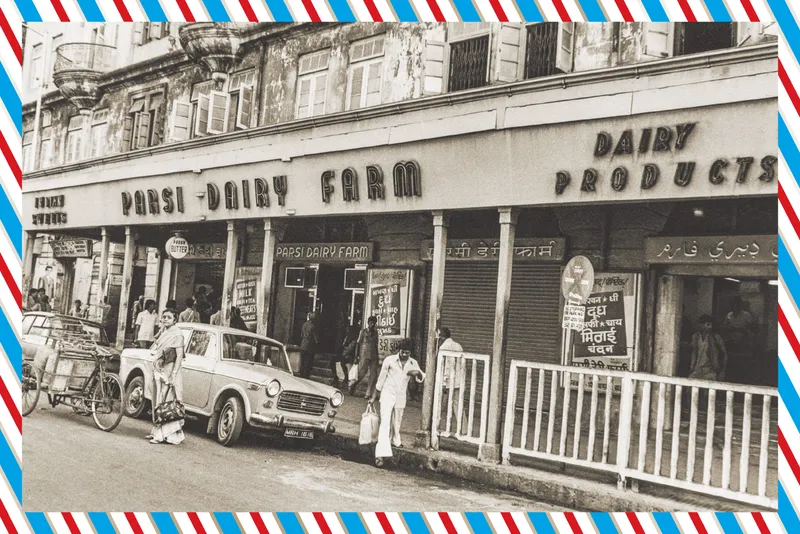
During that period Parsi Dairy Farm had to reduce its prices to stay within the parameters of the state-controlled prices, which eventually led to the acquisition of more customers.
Paneer on pizza: Impact of globalisation
The liberalisation of India’s economy in 1991 didn’t just open doors to foreign investments, but to a wide range of western delicacies. Multinational fast-food giants including McDonald’s, Pizza Hut, Domino’s, KFC established their outlets in the country’s metropolitan areas, marking a new era in India’s urban food culture.
While these became a symbol of aspiration of the middle class, the brands had to adapt to better suit the Indian palate too—Mc Aloo Tikki by McDonald’s, Dominos’ paneer and chicken tikka pizzas, and KFC’s Biryani Rice.
On the root level, India was reimagining western offerings too—shezwan chutney dosa, chowmein, chilli idli, gobhi manchurian and the likes of it, became street-food favourites.
In the fine-dining space (fine-dining space is the focus here), the introduction of Indo-Chinese—originating in Kolkata’s Tangra or China Town, in the 1980s was one of the first cases of fusion food in India. Following which, restaurants and chefs started experimenting with western flavours. Pasta sauces reimagined with Indian spices, tandoori lobsters, or the blue cheese naan (popular in Indian Accent).
Kohli of Pritam Da Dhaba recalls that the restaurant was known for its continental offerings from mid-1950s to 1970s. “Those additions were meant to give diners more choice, not chase fads,” he adds.
Revival of the past glory
While the Indian market continues to experiment with its food, we are now starting to go back to our roots. Once limited to the rural kitchens, millets and micro-cuisines are now commanding the spotlight in the country’s refined dining rooms.
In 2023, the United Nations declared 2023 as the International Year of Millets, further amplifying a trend that had been brewing for some time now. Driven by climate-conscious chefs, health-focused diners and a renewed pride of indigenous ingredients, millets are reclaiming the fine-dining restaurant space today.
Similarly, the country’s micro-cuisines are garnering renewed interest from both diners and chefs.
“Indians have become very open to exploring cuisines, mainly regional. Social media has a huge role to play in it as well,” says Shelly whose expertise lies in Odiya cuisine as much as in Punjabi food.
“Reviving means bringing forward the food stories of our past; reimagining means presenting the beauty of the cuisine in a way that connects with a larger audience, sometimes with a slight modern take. This process preserves cultural identity by creating conversations around it and allowing more people to access and appreciate it,” says Sanithra Raju, Co-founder of Tijouri, a Bengaluru-based restaurant that hosts monthly pop-ups highlighting micro-cuisines and home chefs.
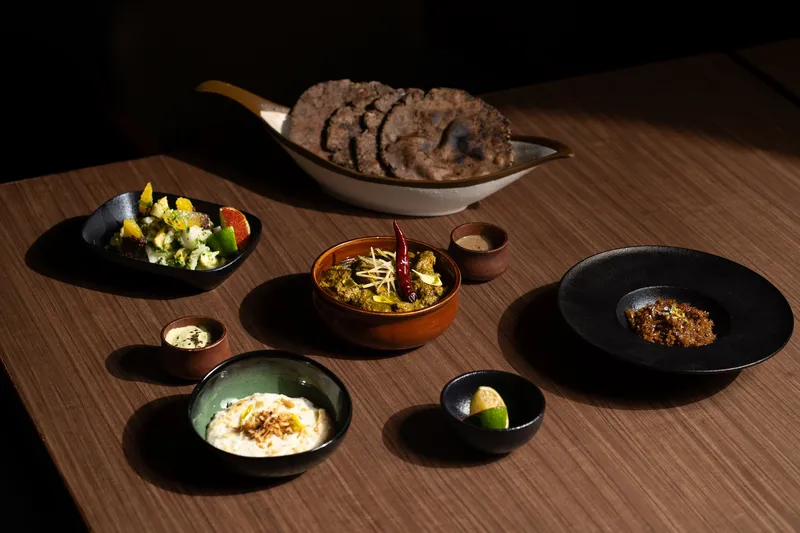
Uttarakhand's food
For instance, quintessential Odia dishes that have their origin in the Jagannath Mandir of Puri, “Over the years, the influence of Mahaprasad has permeated into the kitchens of Odisha,” says Chef Shelly.
Similarly, Garjwali cuisine of Uttarakhand, which had remained under radar for the longest time is now gradually coming under the spotlight, thanks to food pop-ups and home-chefs. “Balancing the simplicity and seasonality of Garhwali cooking for urban and global diners is something I’ve had to consciously work on,” says Dehradun-based Chef Yojana Khanduri Chaudhary.
Sanithra adds: “I believe it’s also because there is such a wealth of regional food still waiting to be explored. Many chefs are just beginning to skim the surface, and where better to find inspiration than in our own backyard—a vast and diverse one at that? This certainly feels like a moment when the movement to reclaim and celebrate our regional food is gaining strength, whether presented in its pure form or with a modern twist.”
Edited by Affirunisa Kankudti