


Rhythm and roots: Mahindra Percussion Festival gears up for fourth edition
In this photo essay, we showcase highlights from annual editions of the Mahindra Percussion Festival, along with performer insights.


Launched in 2014, PhotoSparks is a weekly feature from YourStory, with photographs that celebrate the spirit of creativity and innovation. In the earlier 960 posts, we featured an art festival, cartoon gallery. world music festival, telecom expo, millets fair, climate change expo, wildlife conference, startup festival, Diwali rangoli, and jazz festival.
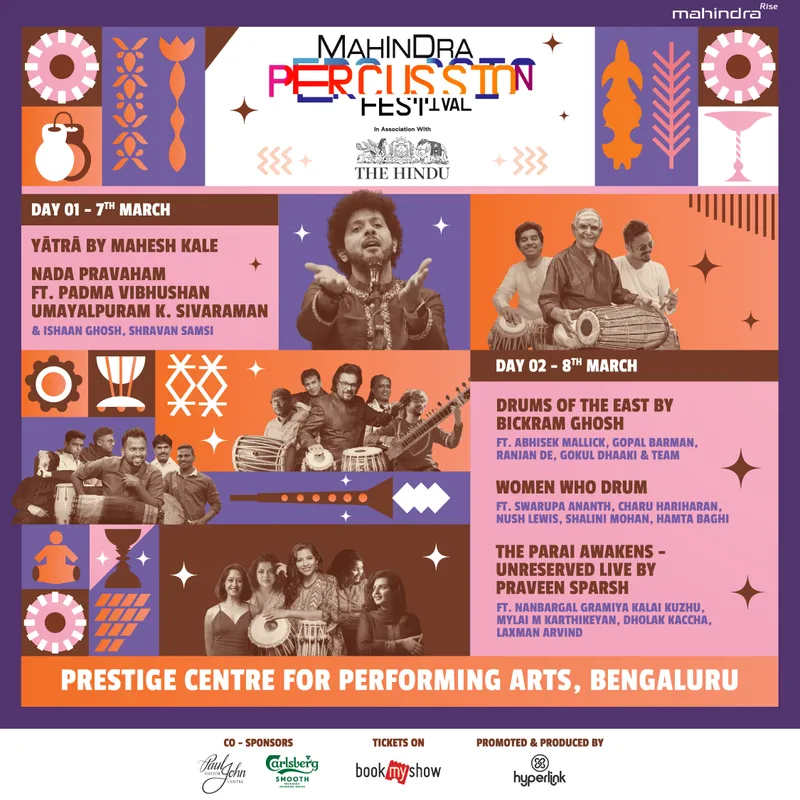
Held each year in Bengaluru in the month of March, the Mahindra Percussion Festival kicks off its fourth edition on March 7 and 8 at the Prestige Centre for Performing Arts. See also our photo essay on the iconic Mahindra Blues Festival which recently celebrated its 14th edition in Mumbai.
“The Mahindra Percussion Festival celebrates India's rich rhythmic traditions. It showcases established artists and also aims to unravel artists and instruments not yet in the limelight,” Jay Shah, Vice President of Cultural Outreach at Mahindra Group, tells YourStory.
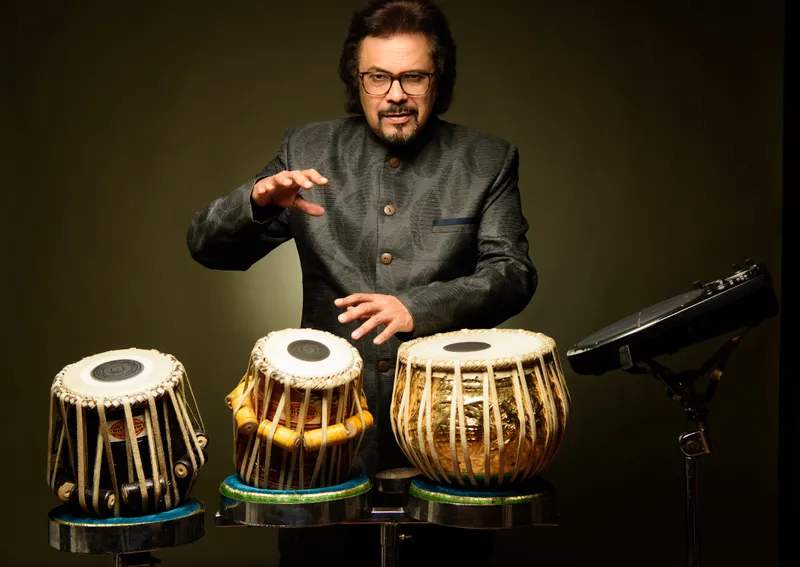
Bickram Ghosh

Percussion is an integral part of India’s musical culture. “Through the festival, we are unifying artists from across the country who carry different identities, but their art represents the singular spirit of India’s evolved music tradition,” he adds.
The 2026 lineup features YATRA by Mahesh Kale, Nada Pravaham (with Umayalpuram K. Sivaraman, Ishan Ghosh, Shravan Samsi), and Drums of the East (Bickram Ghosh, Abhisek Mallick, Gopal Barman, Ranjan De, Gokul Dhaaki).
Other performers are Women Who Drum (Swarupa Ananth, Charu Hariharan, Nush Lewis, Shalini Mohan, Amirthavarshini Manishankar) and The Parai Awakens (Praveen Sparsh, Nanbargal Gramiya Kalai Kuzhu, Mylai M Karthikeyan, Dholak Kaccha, Laxman Arvind).
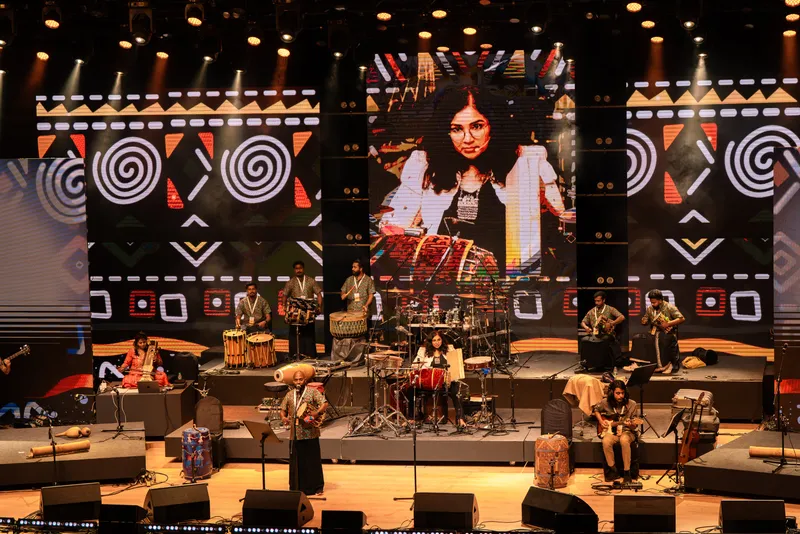
Charu Hariharan featuring Kozhikode Nanthalakoottam & the Kattunaykkar (Jenukuruba)
“Music acts as a catalyst to build a widespread movement that becomes an important part of our cultural fabric,” says festival producer VG Jairam, Founder, Hyperlink Brand Solutions.
Indian percussion spans a wide variety of instruments and genres. “Many have not been showcased or represented on a global platform. Curated festivals like the Mahindra Percussion Festival bring about such valuable opportunities and collaboration,” says percussionist and producer Swarupa Ananth.
The inner voice and external influences both interact with each other in a musician’s journey. “For me, the inner voice is mostly instinct – what feels honest, what feels important to express in that moment. External influences, like collaborators, different genres, technology or even the performance setting, tend to push and shape that instinct in new ways,” Ananth explains.
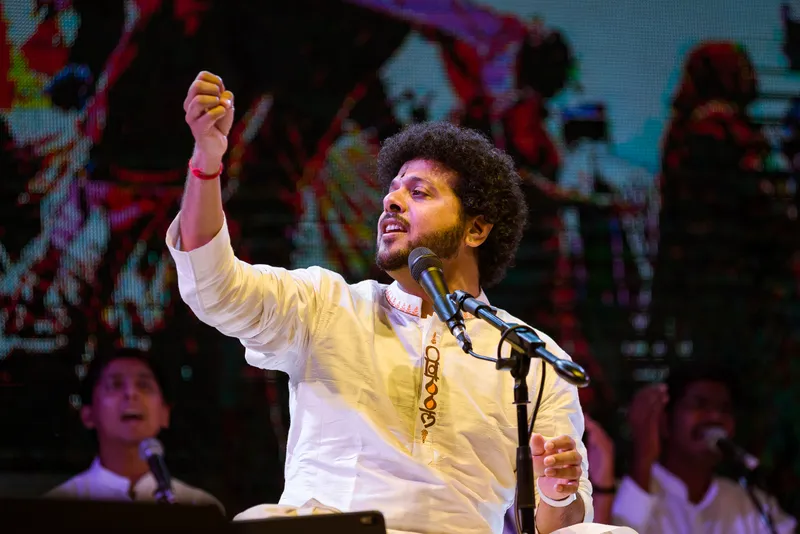
Mahesh Kale

“What is really special about Indian percussion is how closely it is tied to everyday life. You hear it in temples, on the streets, during festivals, processions, and also on concert stages. It is an integral part of how people celebrate, gather and express themselves,” percussionist, vocalist and composer, Charu Hariharan observes.
Scaling this nationally and globally calls for presenting Indian percussion not just as a solo tradition. “It is important to show its contemporary relevance – as composition, sound design, and ensemble work,” she adds.
“Platforms like Mahindra Percussion Festival are powerful because they can frame percussion not as a niche or cultural showcase, but as a mainstage, contemporary art form,” Hariharan says.
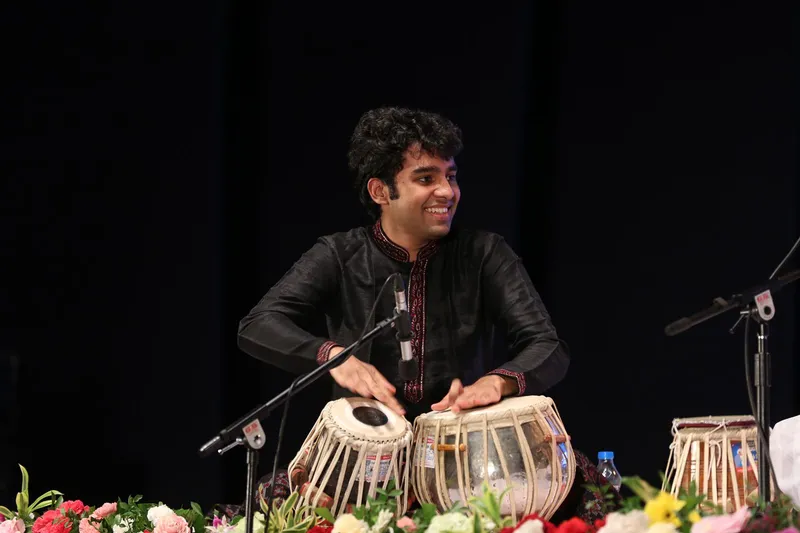
Ishaan Ghosh
“Indian percussion is something that is intricate but also intimate and can be felt deeply. It should be scaled as far and high as it can be. I am glad that Mahindra Percussion Festival has taken up this initiative to spread the love of Indian rhythms and percussion all across,” says Indian American classical vocalist and playback singer Mahesh Kale.
“There are two unique things that come to my mind when it comes to Indian percussion. One is the diversity of this country, which shows in its cuisines, fabric, aesthetic, dialects, and of course music. Secondly, I find that the more I travel, the more I understand that we indulge a lot in fingering techniques in drumming,” says multi-percussionist and music producer Praveen Sparsh.
As trends in the music industry, Sparsh points to changes in the consumption of art. “It has now become more experiential and is about what you feel, rather than just what you hear. That includes the stage, state of the art technology, lights and so on, which creates a holistic experience,” he observes.
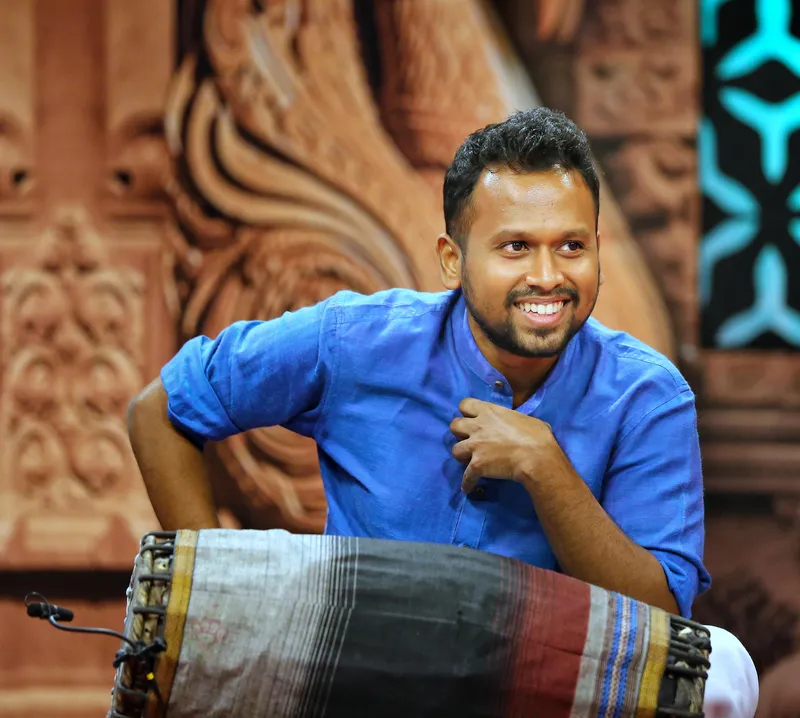
Praveen Sparsh
“I feel that the Mahindra Percussion Festival is one of the main players who really invests in that direction and makes sure that the artists and the audience get the best experience out of that performance,” he adds.
Sparsh’s creative process has evolved over time. “I started learning the craft of mridangam playing at the age of five and my first stage performance was at eight. So I would say that in my teens the most exciting thing I could do was to create patterns that had intelligent progressions,” he recalls.
This evolved with the journey of his life through college and beyond. “The mridangam is my closest friend. I feel there is always an osmosis – you go out and assimilate information and perspectives, and then come back to this extremely vulnerable space in your head where you are creating art,” Sparsh describes.
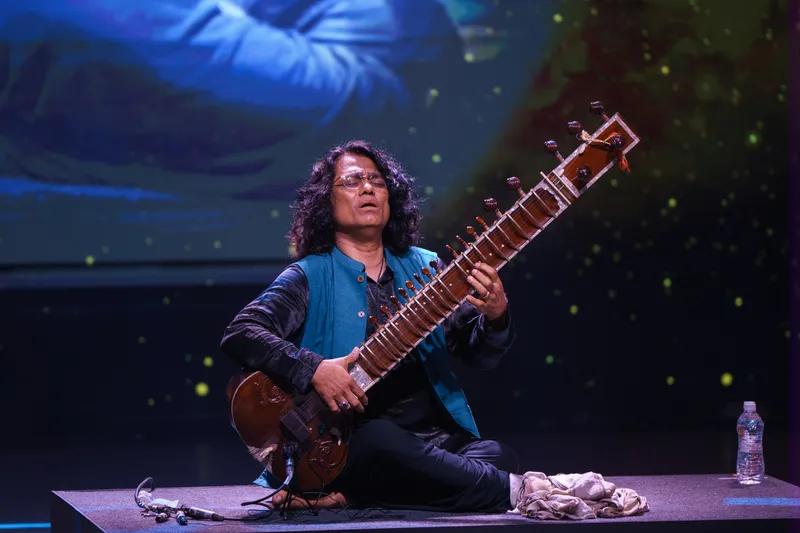
Ravi Chary (2025)
“In the field of rhythm, what really interests me is that the language of rhythm, whether it is national or international, is always understood easily. It is universal. The main thing which attracts the whole of mankind is that there is always a rhythmical life in one's being,” observes mridangam maestro Umayalpuram K. Sivaraman, who has been awarded the Padma Vibhushan.
“The Adi Tala in Carnatic music is called Teen Taal in Hindustani music, and this relates in Western music as 4/4. But when you go deeper into the melody and rhythm in music, I have found there is only one language, one humanity, one feeling, and one sentiment,” he adds.
Tabla maestro and music curator Bickram Ghosh explains the success factors for effective collaboration between different musicians when a new project or band is formed. “Certainly, there has to be chemistry. This chemistry isn’t just about music, but also about people,” he says.
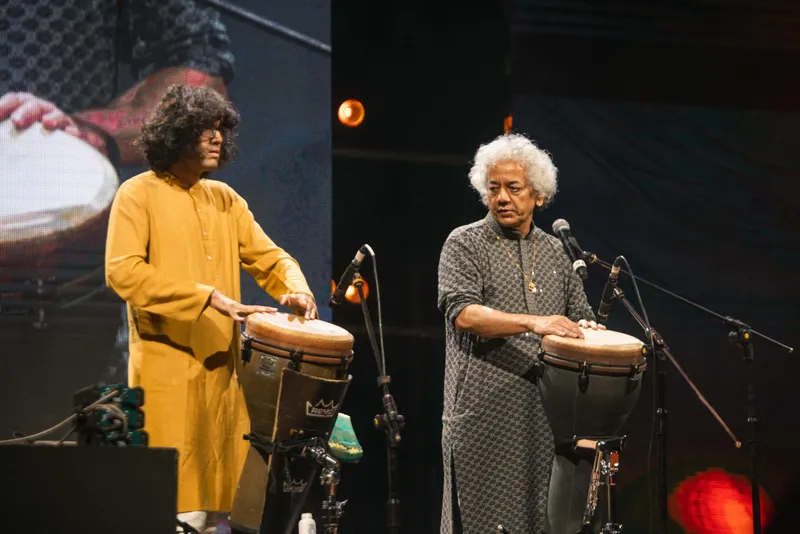
Shikhar Naad Qureshi & Taufiq Qureshi (2025)

In such projects, artists often need to strike a balance between tradition and contemporary fusion. “I would do it according to the project at hand. If the project is more experimental than tradition-driven then it will be more towards newer sounds,” Ghosh says.
He has worked on collaborative projects featuring rap, electronica, DJs, jazz, and Western classical music. “It is important to understand the ambit of that concept, the communication objective, and the specified thematics. That requires vision, which comes from an open mind as well as experience in tradition,” he describes.
Ghosh is working on a number of musical projects. “The album Rhythmscape 2 is ready to be released in April. There is another project that I am doing with Kala Ramnath which is an international live collaboration,” he says.
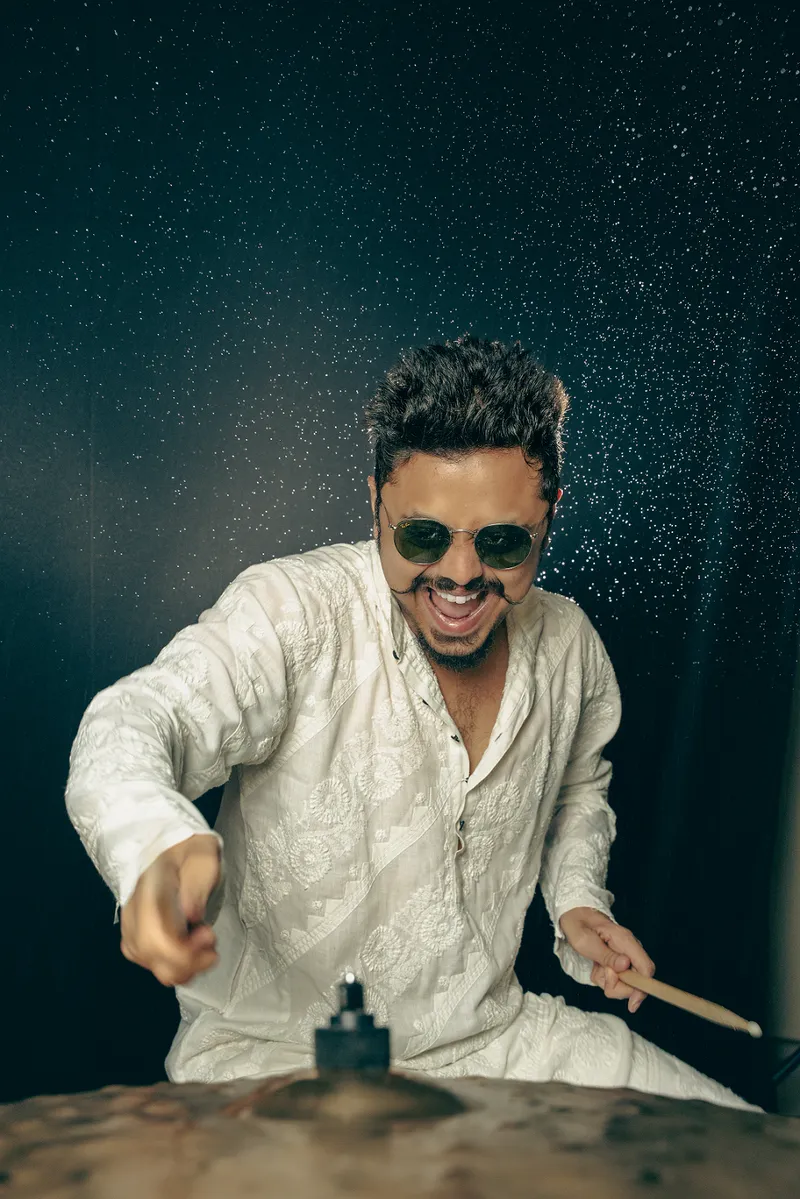
Shravan Samsi
“There is a wonderful project on Rabindranath Tagore where I am composing the orchestra for six of Tagore’s songs. They will be sung by Kamalinee Mukherjee along with the fantastic Duisburg Philharmonic Orchestra from Germany, which has almost 100 artists,” he enthuses.
The performers also offer tips for aspiring musicians on talent and collaborative projects. “Train yourself first, learn well at least in one subject. Practice well, have a certain skill set which is top class so you can express music in the way you want to,” Ghosh advises.
It is important to keep the mind and heart open. “Go with your passion, but balance it with imagination, intellect and logic. If you are good, sincere and have a certain vision, chances are that you will do well in your musical profession,” he advises.
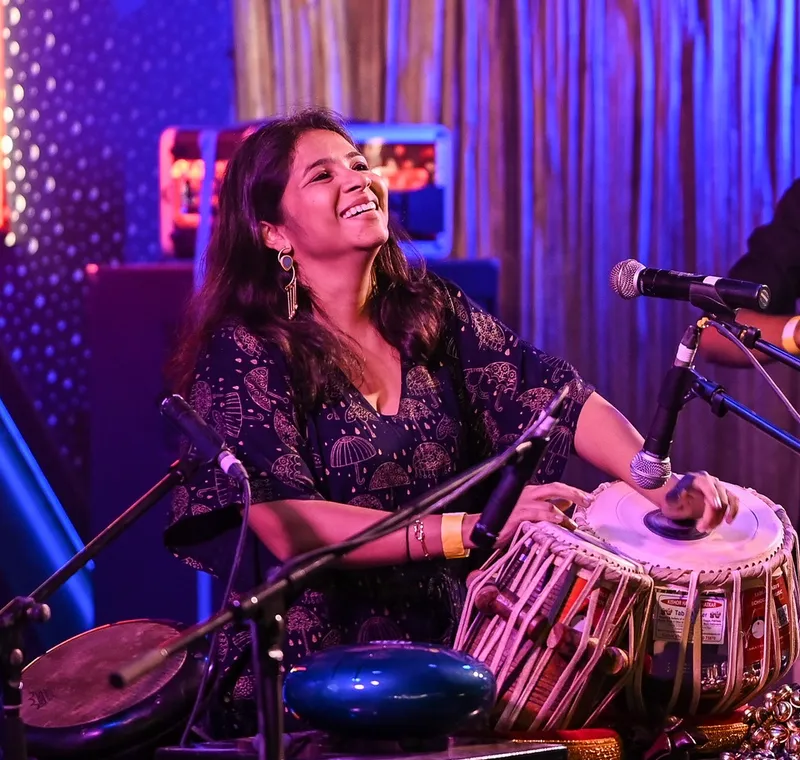
Swarupa Ananth

“Your composition should have the attractive quality of something new, which has not seen the light of day. You should be a trendsetter, you should be an icon, you should be a reference book for the future percussionists,” Sivaraman advises.
As his musical influences, he cites Palghat Mani Iyer, Aruppukkottai Natesa Iyer, Thanjavur Vaidyanatha Iyer, and Sakkottai Ramaswamy Iyer. “You have to have a balance of external influences, inner voice, and creativity. You have to really move with the times, so that the inner voice may create something that will go well with the present and future generations,” he adds.
“Effective musical collaboration calls for understanding and respecting one another's mastery, music language, spaces, limitations, and advantages – and making the best of it. This takes a lot of vulnerability and focus on learning. It is important to keeping the art project bigger than oneself – and ultimately have a lot of fun,” Hariharan advises.
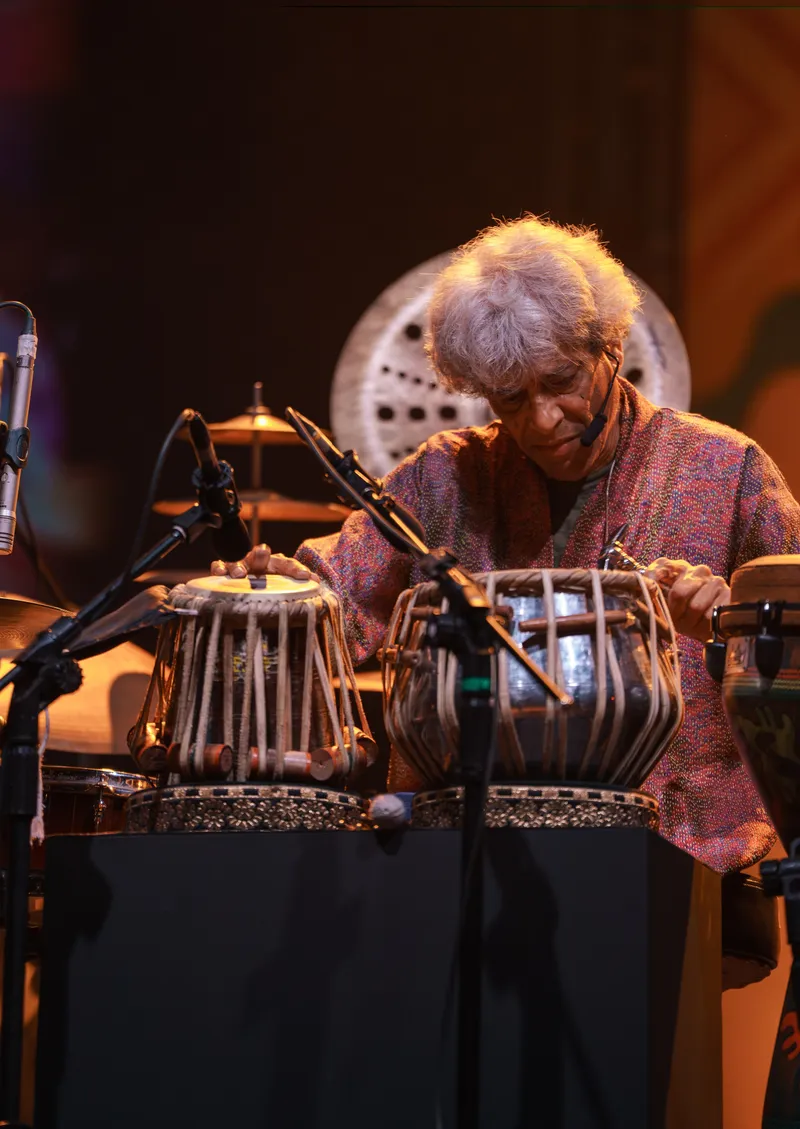
Trilok Gurtu (2025)
“Good collaboration starts with listening before playing. It is about listening to where each person is coming from, what they care about, and how they relate to sound. It also really helps to be clear about why you are coming together in the first place,” Ananth adds.
When that shared intention is clear, differences in training or background actually become strengths instead of points of conflict. “Finally, collaboration works best when there is no hierarchy in the room. Go with curiosity, generosity and room for experimentation,” she advises.
Balance in music fusion projects comes from integrity. “The question I keep asking myself is Am I engaging with this form with depth, or just borrowing its surface? When the engagement is deep, the contemporary expression tends to feel rooted rather than forced. Fusion then becomes a natural byproduct of your practice, not a stylistic goal,” Ananth affirms.
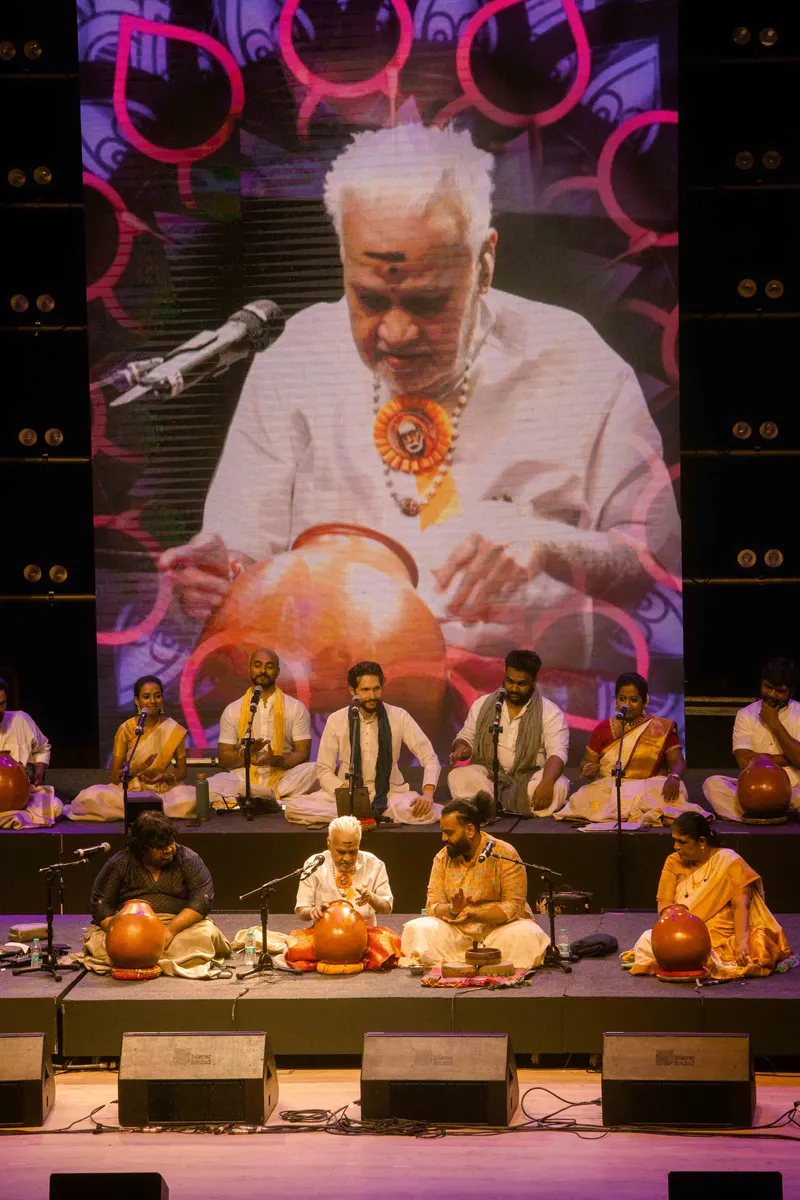
Vikku Vinayakram (2024)
“The most important successful factor for collaboration amongst musicians is that you admire each other for musicianship – but not just that. You should be able to connect on a human level, because it is this collective consciousness that rises and forms a beautiful bond that can be expressed through your own musical expertise,” Kale advises.
As trends in the music industry, some of the musicians point to the rise of digital technology like AI. “Art has seen so many different technologies come and go, and I don’t think AI can be a threat to art. It could change the way we create and consume art, which has also happened with social media,” Sparsh observes.
“Certain changes might happen and it is not a bad idea to go with it. But it is important to strike a balance,” he adds.
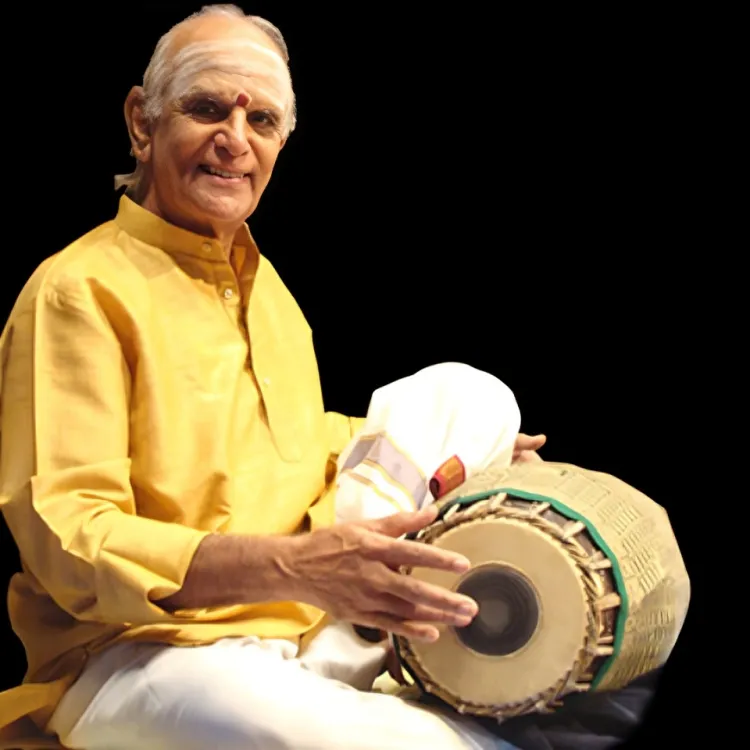
Umayalpuram K. Sivaraman
“Indian classical music has withstood a bunch of different waves and threats and has been standing solid for the last several centuries. Every new technology needs careful observation, not only because it could be a threat, but perhaps it can be turned into an opportunity where it can meaningfully co-exist with Indian classical music,” Kale suggests.
He points to the digital tanpura as an example. “It has become an asset for several travelling musicians who cannot take their physical tanpuras to all their concerts,” he says.
Immersive stage design and interactive audience elements will play a bigger role in shaping how live experiences are delivered. “The live entertainment market will have more arena-format shows, global collaborations, and IP-led festivals that travel across cities,” says Jairam of Hyperlink.
“Regional music and vernacular artists will take centre stage alongside international acts. This will reflect India’s cultural diversity,” Jairam signs off.
(All photographs courtesy Mahindra Percussion Festival.)