



Patience, practice, persistence: Tips on creative success from the Art Bengaluru Collective
In this photo essay, we feature more highlights from the Art Bengaluru Collective’s exhibition, along with artists’ insights.


Launched in 2014, PhotoSparks is a weekly feature from YourStory, with photographs that celebrate the spirit of creativity and innovation. In the earlier 1,010 posts, we featured an art festival, cartoon gallery. world music festival, telecom expo, millets fair, climate change expo, wildlife conference, startup festival, Diwali rangoli, and jazz festival.
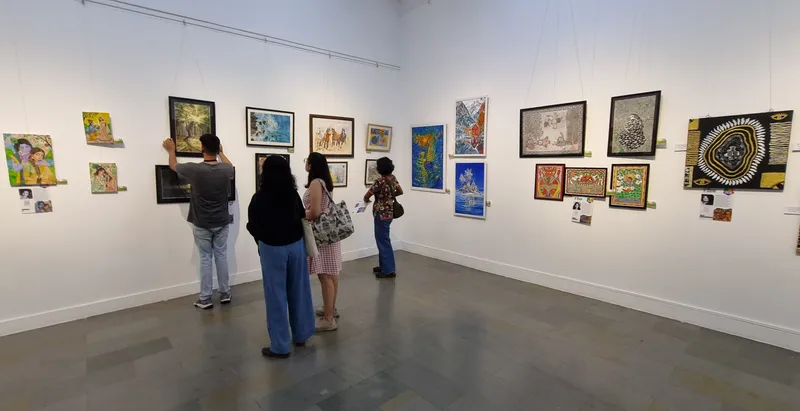
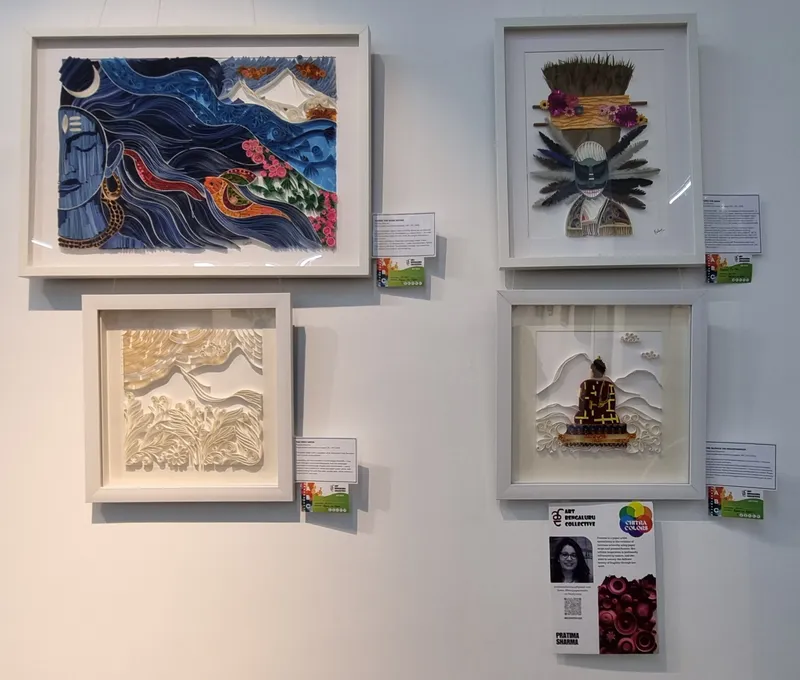
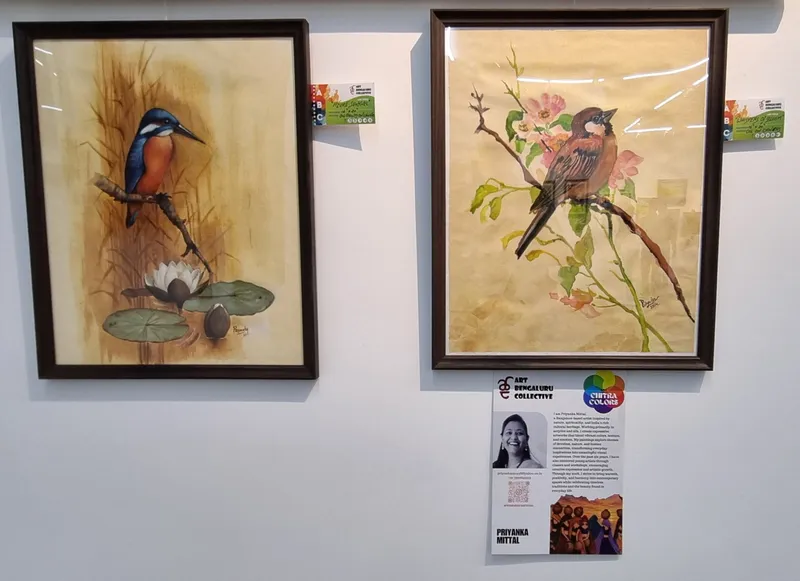
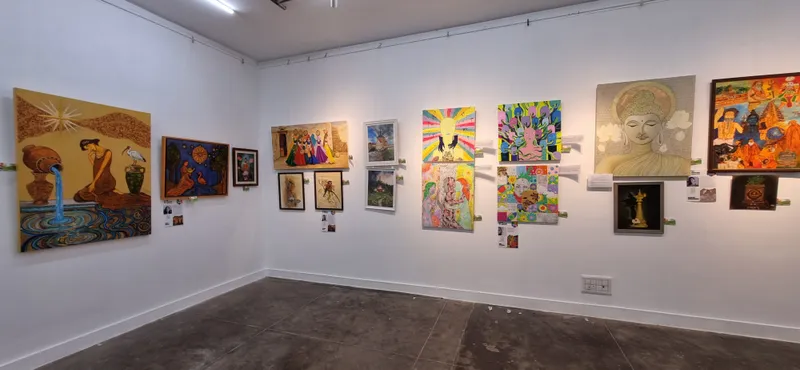
Karnataka Chitrakala Parishath (KCP) recently hosted the 11th annual exhibition of the Art Bengaluru Collective. Titled ABC Chitra-Colors 2026, it featured 300 works of over 45 artists.
The collective was founded by artists Rasheed Kappan and Ranji David. See our coverage of earlier exhibitions at this popular Bengaluru cultural hub here. KCP’s most popular event is Chitra Santhe, regarded as India’s largest annual street fair for art.
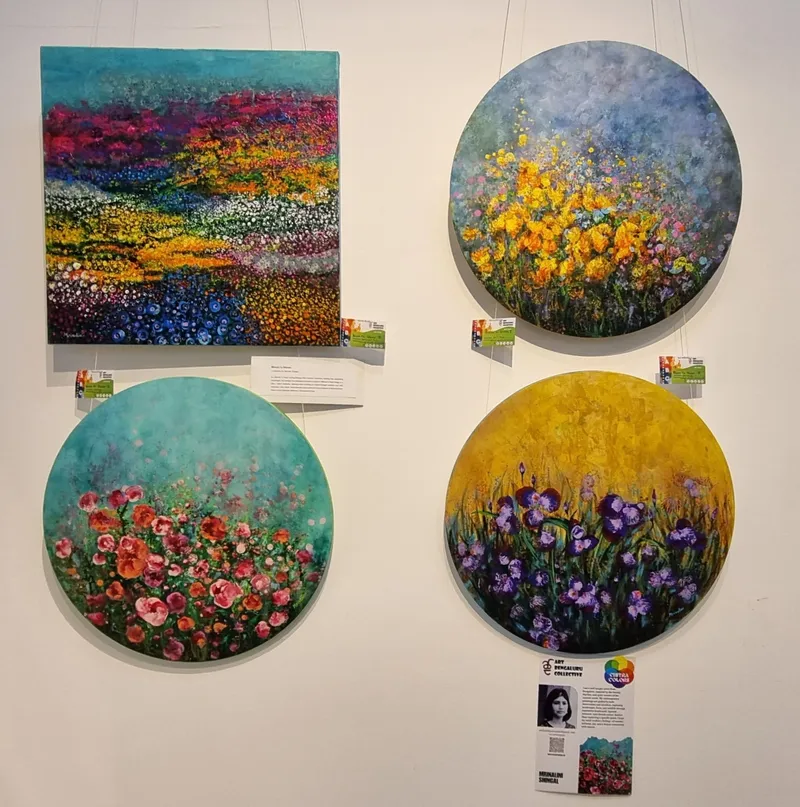
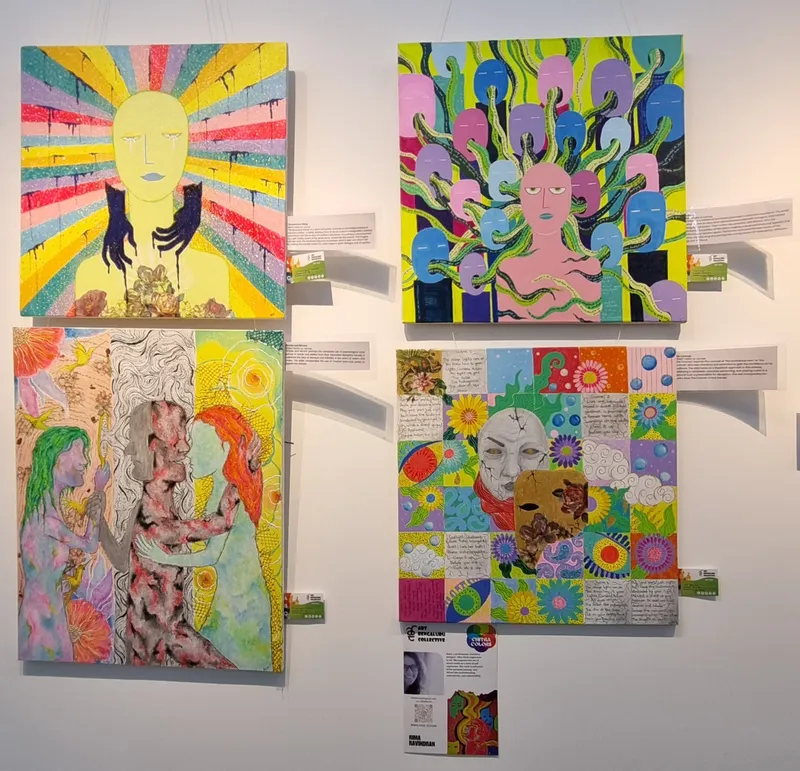
Artist Mrinalini Shingal presented a collection titled Bloom in Gloom for the exhibition. Influenced by nature, the paintings reflect her philosophy of acceptance and transformation. They are priced at Rs 30,000 and above.
“The series is inspired by the difficult emotions we often try to avoid or suppress. Yet, when we choose to acknowledge and experience them fully, something within us begins to transform,” Shinghal tells YourStory.
An artist’s work is shaped by experiences, emotions and life’s journey. “My own practice has gradually evolved from realism towards a more expressive and intuitive style,” she adds.

“This shift came from a deep desire to let go of perfectionism and create from a more subconscious, authentic space. Experimentation has become an integral part of my process—not only with ideas but also with materials,” she describes.
She rarely plans her paintings in advance. “Instead, they emerge through intuition, past experiences, and the emotions I carry into the studio,” she says.
Shinghal also uses AI as a tool to support marketing, communication and online presentation. “I see AI more as an ally than a threat. I believe the emotional depth, lived experiences, and intuition that shape original art remain deeply human,” she affirms.
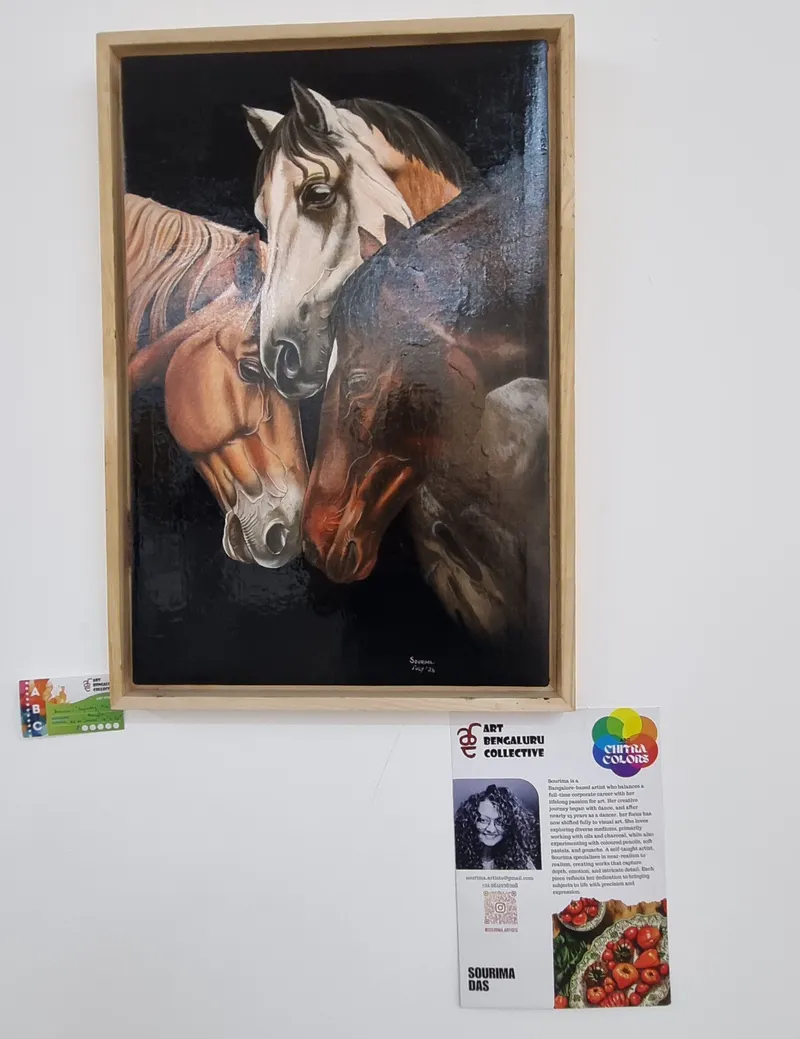
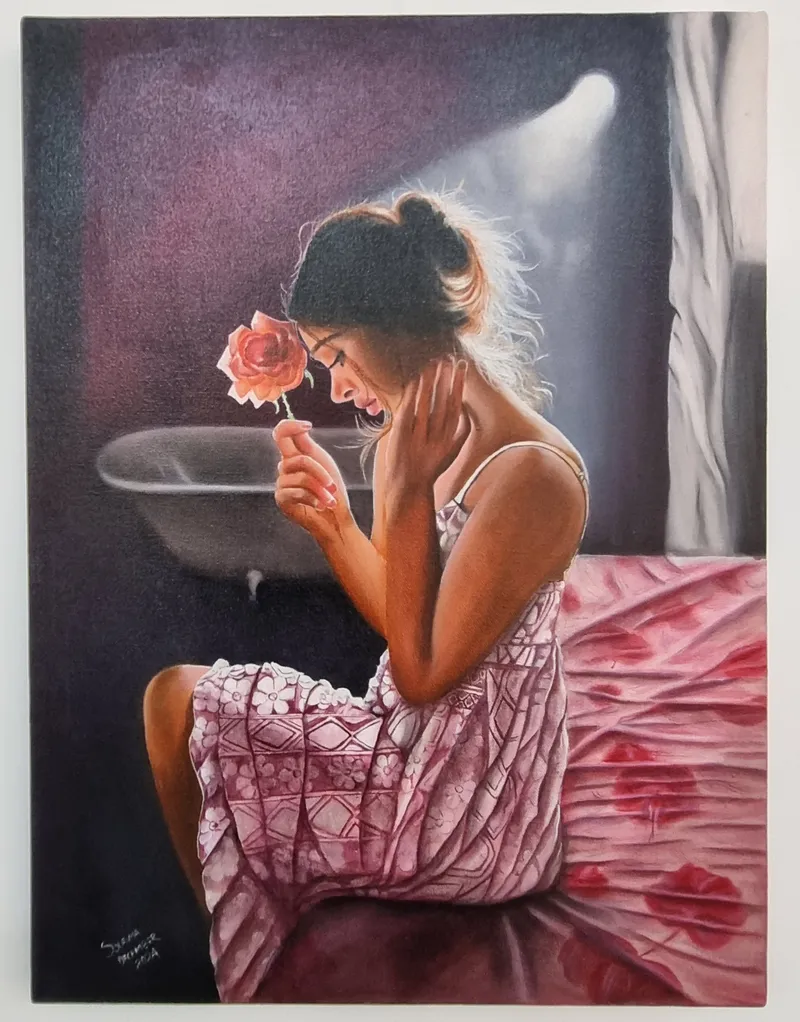
A graduate of Kolkata’s Jadavpur University, Sourima Das is a Bengaluru-based self-taught artist working primarily in realism and near-realism. She has a full-time corporate career in IT, and also spent nearly 25 years as a dancer.
“I believe that sensitivity to rhythm, balance and expression naturally found its way into my paintings and drawings. My work celebrates the beauty hidden in everyday details and invites viewers to slow down and truly observe,” she explains.
Art is a way of paying attention. “In a world that moves so quickly and chaotically, creating art allows me to pause, observe and appreciate the extraordinary within the ordinary. Every texture, every reflection of light and every tiny imperfection tell a story,” she adds.
Some of her artworks featured the empathy and strength of horses. Her works range in price from Rs 15,000 to Rs 1.5 lakh depending on the medium, size and complexity of the work.
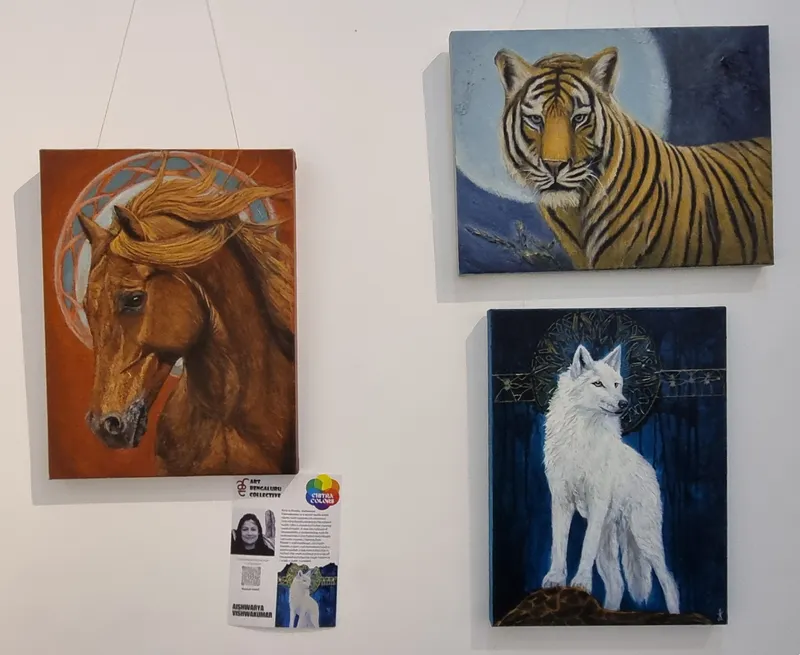

Aishwarya Vishwakumar was formerly Branch Head–South at Sony Pictures. “My father’s passing away changed everything, prompting me to relocate to Kerala, to be closer to my mother, and fully dedicate myself to art,” she recalls.
“Today, I work under the name Tales of the Hue, building a dedicated mixed-media practice. Deeply inspired by my new environment, I highlight the endangered and vulnerable species of the Western Ghats, telling their stories on canvas,” she describes.
She sees art as a way to pay attention. “It is my way of focusing closely on one animal, one landscape, until I actually see it and not just feel something about it. My work turns that attention into storytelling,” she adds. Her works are priced from Rs 35,000 to Rs 1 lakh.
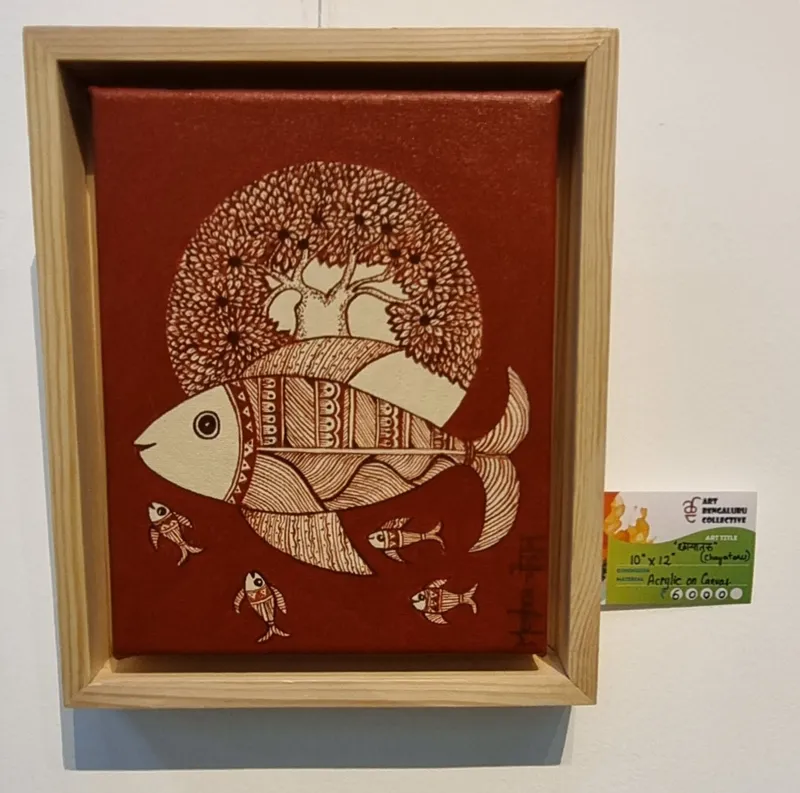
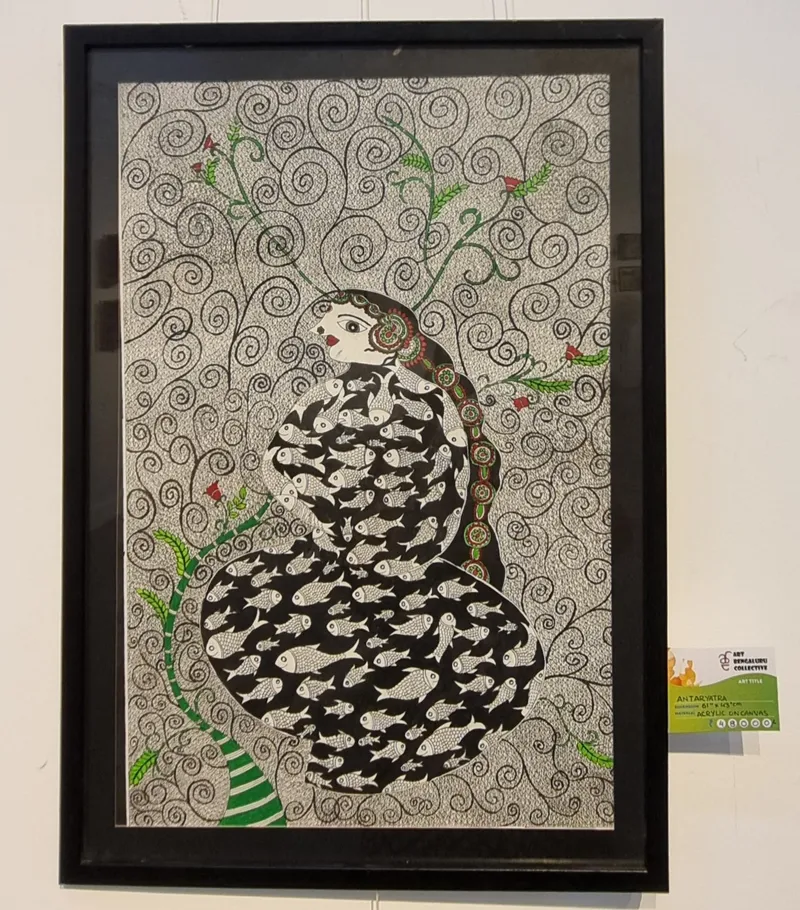
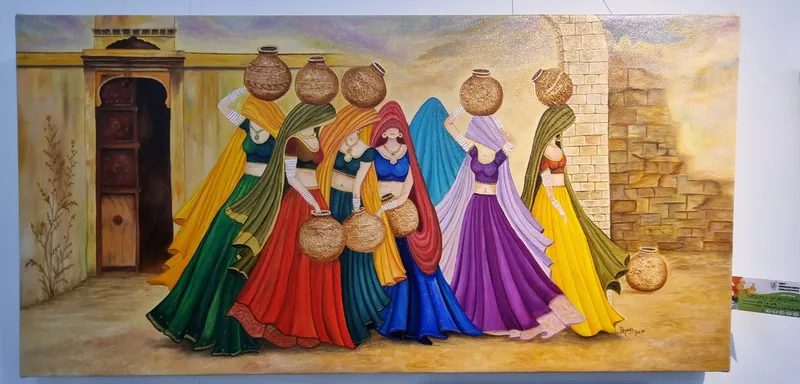
Meghna Chowhan is a Bengaluru-based self-taught contemporary artist. Her work draws heavily from folk arts like Gond and Madhubani that depict the coexistence of life in nature. They range in price from Rs 5,000 to Rs 60,000.
Trina Chaudhary is an artist and educator, and has a PhD in textiles. “For over six years, I have been practicing as a full-time professional artist and teaching students globally online,” she says.
Her work bridges contemporary, spiritual and nature-inspired themes. Their price range is between Rs 15,000 and Rs 60,000. She also does commissioned and customised pieces.
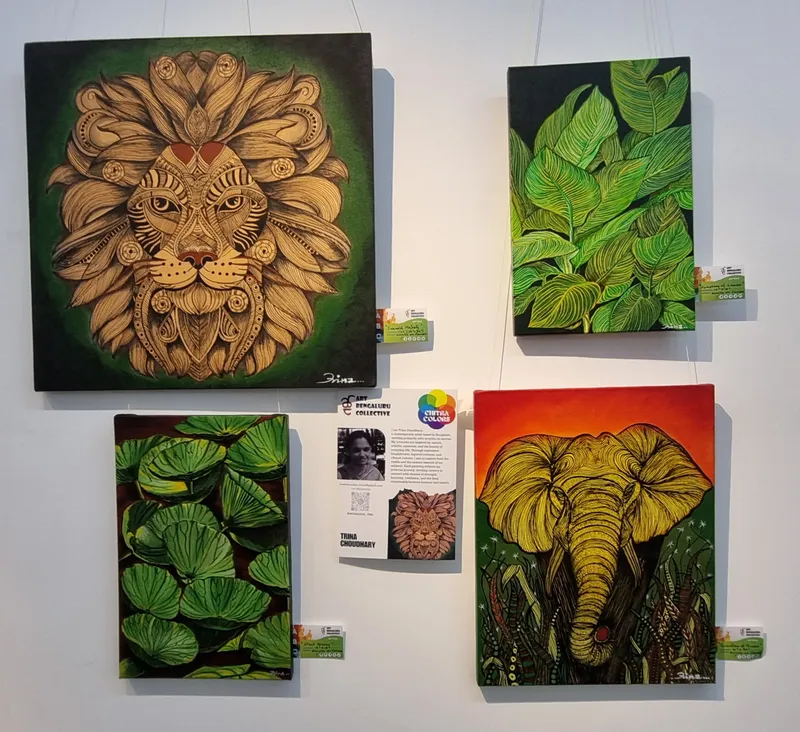
“For me, art is a living meditation. It is a language beyond words where nature, spirituality and human emotion meet. Art is about creating a space to pause, heal and remember how connected we all are,” she explains.
Through works aptly titled In Emerald Majesty, Guardian of the Woods, Symphony of Leaves, and Blossom of Water Lily, Chaudhary captures the confidence of lions, the elephant’s ancient wisdom, the silent music of swaying foliage, and resilience blooming out of still waters.
The featured artists also offer insights on learning from mistakes and failure. “I don’t think any artwork is a failure. My biggest mistake – I sometimes don’t know where and when to stop perfecting the artwork,” Das explains.
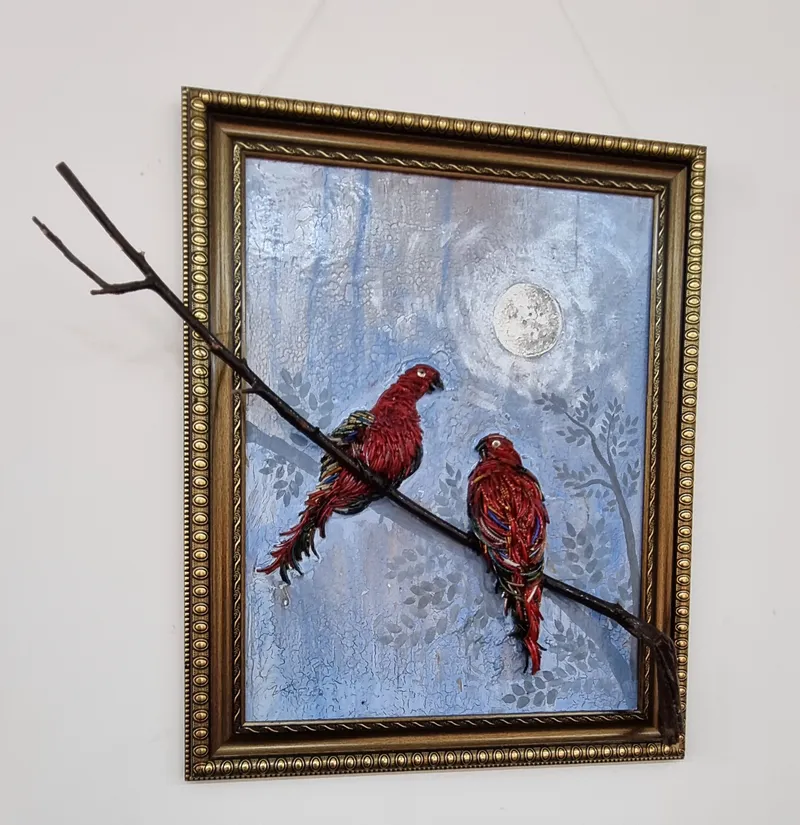
“Art constantly reminds us that perfection is not achieved by avoiding mistakes but by learning from them. I also believe growth comes from staying curious, experimenting with different mediums, and accepting that not every artwork has to be a masterpiece. Every finished work becomes a stepping stone towards the next one,” she adds.
“Failures and hardship are a major part of the artist’s journey. But consistency is the only way to move on and never give up,” Chowhan explains.
“Honestly, most of my mistakes are just paintings that look fine but feel flat. They are technically okay, but with no connection to the painting, no sense of pride, and no real emotion evoked in me,” Vishwakumar says.
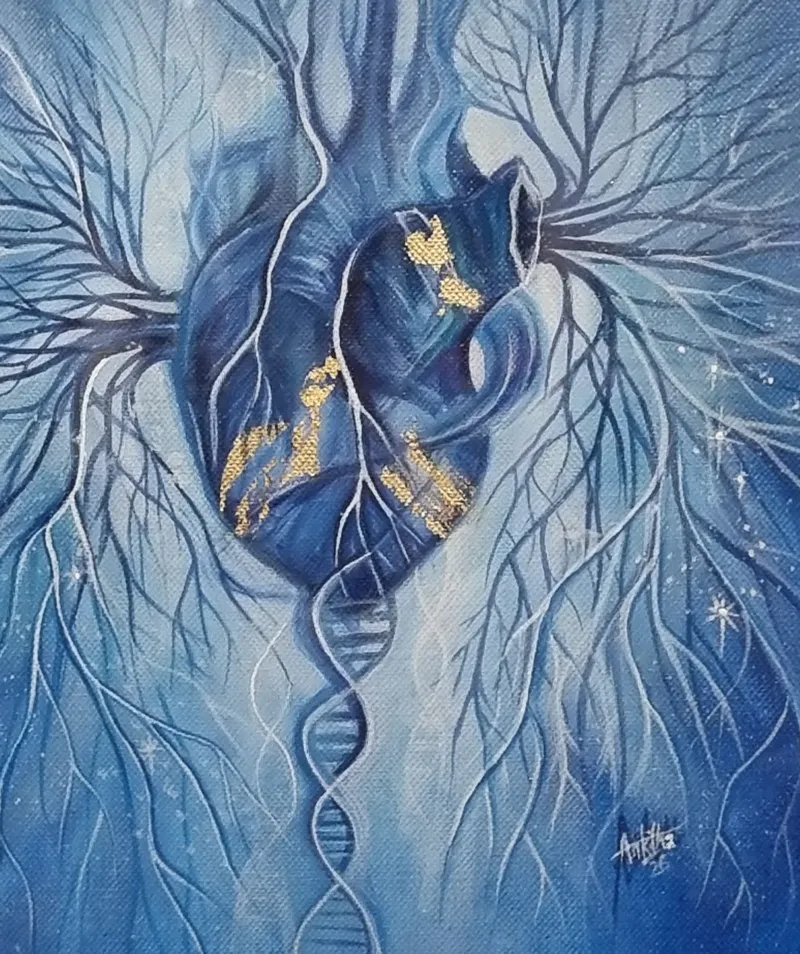

The fix in such a case is usually simple. “I stop trying to make it pretty, go back to the one real thing I noticed about the animal, and let that lead. I have stopped treating failed paintings as failures, really! They are just the ones that tell me I was trying too hard instead of paying attention,” she adds.
“Every unsuccessful painting, rejected exhibition, or unexpected result teaches something valuable. Instead of seeing them as setbacks, I view them as opportunities to improve my technique, rethink my creative process, and grow as an artist,” Chaudhary says.
It helps to remain curious, patient and open to learning. “Every challenge helps me become more confident, creative and resilient, and each new artwork is a chance to begin again with a fresh perspective,” she adds.
The exhibitors also offer tips for aspiring artists. “Stop chasing pretty. Paint the thing you actually care about, even before you know why. That is when the work starts to mean something,” Vishwakumar affirms.
“It is OK to listen to people’s advice – you may hear a thousand things about how your art should look or what you can do to improve. But never change your way of work just to please someone – do your thing, stay consistent, and move ahead,” Chowhan says.
“Observe the world carefully because good art begins with good observation. Experiment with different mediums, challenge yourself often, and be patient with your progress. Every artist develops their own voice over time, and that voice is built through persistence far more than talent alone,” Das advises.

“Stay curious, practice consistently, and enjoy the creative journey rather than focusing only on the final outcome. Every artist has a unique voice, so avoid comparing yourself with others and instead work on developing your own style,” Chaudhary advises.
Patience is key as well. “Experiment without fear, and be patient with your growth. Artistic excellence comes with time, dedication and persistence,” she adds.
“Most importantly, create art with honesty and passion. When your work reflects your true thoughts and emotions, it naturally connects with others,” Chaudhary signs off.
Now what have you done today to pause in your busy schedule and harness your creative side for a better world?
(All photographs taken by Madanmohan Rao on location at Karnataka Chitrakala Parishath.)