



Microsoft’s new Phi-4 model shows how smaller AI can think big
Microsoft’s Phi-4-reasoning-vision-15B model shows how compact AI systems can combine vision and reasoning, signalling a broader industry move towards efficiency rather than simply building ever larger models.

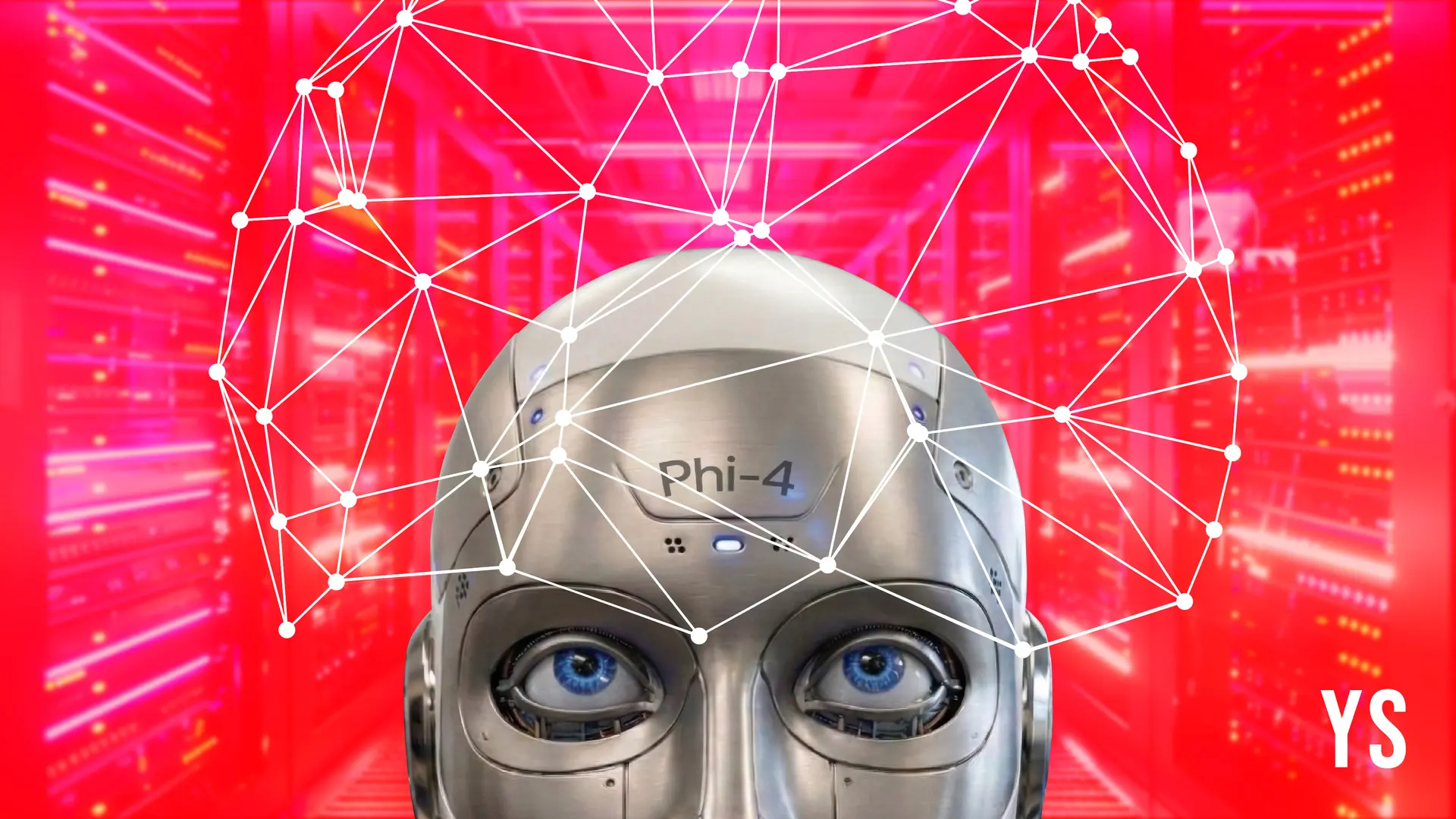

Microsoft’s Phi-4-reasoning-vision-15B model is an interesting addition to the company’s Phi family of small language models.
While much of the AI industry has spent recent years building ever-larger models with hundreds of billions of parameters, Microsoft is exploring a countertrend focused on efficiency.
This is a 15-billion-parameter multimodal model, meaning it can process both images and text. A parameter is a learned number that sets capacity, and 15 billion (parameter) is much less compared to hundreds of billions or trillions used by some frontier models developed by firms such as OpenAI, Anthropic, Google, and others.
What is Phi-4-reasoning-vision-15B?
Phi-4-reasoning-vision-15B joins Microsoft’s Phi family of small language models (SLMs), which are designed to give high-quality results while remaining light enough to run on more modest hardware, unlike very large LLMs that typically need huge cloud data centres.
The Phi journey began in 2023 with Phi-1 and Phi-2, which showed that carefully curated, high-quality training data can sometimes outperform the traditional strategy of simply scaling up models with ever more data and computing power.
The model is open-weight, meaning its weights, the learned numbers that store what the AI has absorbed during training, are publicly available for developers and researchers to download and use. These weights form the model’s core working part, similar to its “brain”. Microsoft has not released all the training data used to build it. The model is distributed under an MIT licence, allowing others to reuse and modify the technology.
Microsoft says the model was trained using a mix of cleaned public datasets and selected internal and licensed data, rather than relying only on private sources.
The model uses a mid-fusion architecture, where a vision system called SigLIP-2 converts images into digital tokens that the language model can analyse. The visual and text information are then combined step by step, which helps reduce computing and memory requirements.
Using this approach, Microsoft is emphasising efficiency, cost-effectiveness, and speed rather than raw scale.
How does its mixed reasoning allow it to work as an agent?
One key innovation is the mixed-reasoning approach. Rather than always giving a short answer or always producing a long explanation, the model switches modes and uses only slow, step-by-step reasoning when needed.
For easy tasks, a “nothink” token yields a direct reply. For hard tasks, a “think” token triggers a chain-of-thought, a step-by-step working-out, which helps with multi-step problems.
This flexibility makes the model a strong foundation for what researchers call a computer-use agent, an AI system that can understand what appears on a screen and carry out tasks on a computer.
Most AI assistants struggle to interact with graphical user interfaces because they cannot interpret screens the way humans do.
Phi-4-reasoning-vision-15B is designed to identify and ground elements on computer screens, such as buttons, menus, icons, and text fields.
Because it can process images with about 3,600 visual tokens, it can detect tiny icons and small text that less detailed vision systems might miss. Models such as LLaVA or Flamingo often rely on smaller visual representations, which can make recognising small interface elements more difficult.
This ability could eventually allow AI assistants to navigate websites, fill in forms, book appointments, or manage files on behalf of a user, all while maintaining the low latency required for real-time interaction.
How does its performance compare to rivals?
Microsoft says the model pushes what researchers call the “Pareto frontier”, a concept used to describe the best balance between two competing factors. In this case, the trade-off is between accuracy and computational cost.
On Microsoft’s internal benchmarks, Phi-4-reasoning-vision-15B is competitive with many larger multimodal models on selected tasks while using fewer parameters and less compute. These comparisons are mostly from Microsoft’s own tests.
The new Phi-4 model was trained on about 200 billion multimodal tokens, Microsoft says, and on synthetic data generated by algorithms rather than only collected material. Earlier Phi research showed that teacher-model techniques, where a larger model generates high-quality examples, help smaller models learn faster. The new release uses similar synthetic-augmentation methods.
This data-centric approach can cut environmental impact and deployment cost. Still, the model can produce incorrect or fabricated outputs, known as hallucinations, so human review is advised for important decisions.
What are the benefits of releasing this as an open-weight model?
Open-weight release under an MIT licence lets researchers inspect, adapt, and reproduce work, which speeds progress and helps audit safety. But open weights also lower the barrier for misuse, so governance and responsible deployment are crucial.
Other organisations are making similar moves. The Allen Institute for AI recently released the Molmo family of models (a family of open vision-language models), with open weights and clearer documentation about how the models were trained, helping researchers reproduce and build on the work.
Safety has been a major consideration during development. The model also underwent safety post-training, an additional training stage where developers teach the AI to refuse harmful requests and respond more responsibly to sensitive topics.
Microsoft also conducted red-teaming exercises, where security researchers attempt to break the model’s safeguards in order to identify vulnerabilities before release. Despite that, Microsoft’s model card cautions that biases and hallucinations remain possible.
How will this change everyday technology?
One of the long-term goals of the Phi series is to make advanced AI available on everyday devices. Because the model is relatively compact compared with frontier models, it may be possible to deploy versions of it on edge hardware such as laptops or specialised AI chips in smartphones rather than relying entirely on cloud servers.
However, practical deployment still requires modern hardware. Running the full model comfortably typically requires powerful GPUs or specialised neural-processing units (specialised chips built to run AI workloads quickly and efficiently), though smaller or quantised versions may run on high-end consumer devices.
Running locally gives faster responses, lower running costs, and better privacy because data need not leave the device.
Microsoft has also signalled that compact models like Phi will likely play a role in its broader ecosystem, including Azure AI services and Copilot-style assistants.
In the future, personal computing may rely on hybrid AI systems, where a smaller model such as Phi-4 handles quick reasoning tasks directly on a device, while large cloud-based models are only used for more complex queries.
Edited by Megha Reddy