



Beyond the headlines: How SMART Community Radio is telling stories from the ground up
In an age where media saturation often blurs truth with noise, SMART Community Radio, a network of grassroots stations, prioritises credibility over virality, and listening over broadcasting.

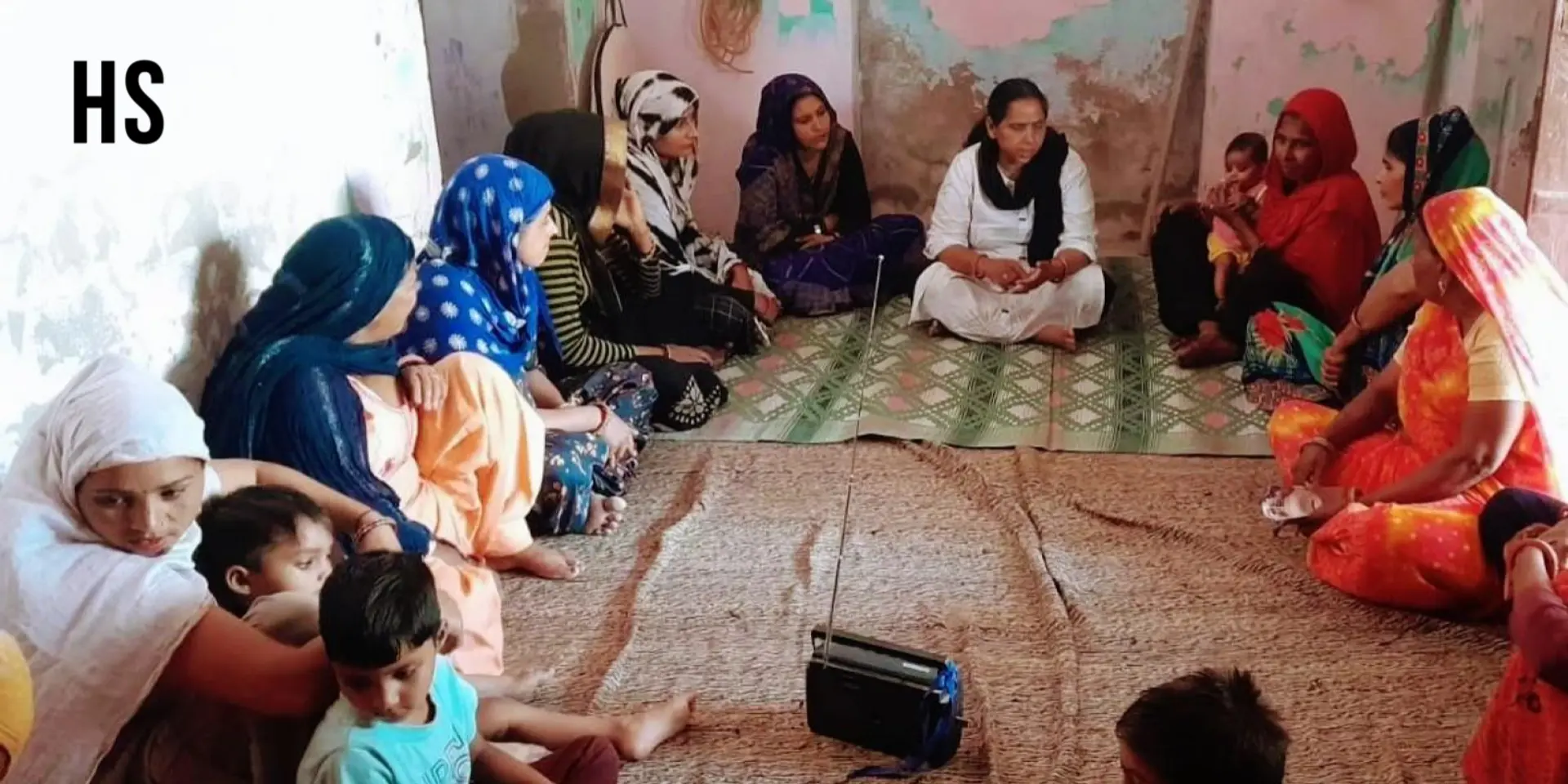

In a country flooded with breaking news and broadcast noise, community radio quietly does what mainstream media often doesn’t—it listens.
A few years ago, SMART (Seeking Modern Applications for Real Transformation) Community Radio—a network of hyperlocal stations operating across India—sparked conversation around tradition and lived realities, when a pregnant woman from Uttar Pradesh’s Khushi Nagar, was struggling with the dilemma of whether to fast during the Islamic holy month of Ramzan or eat well to manage her dangerously low haemoglobin levels.
When the news of her dilemma reached the reporters of a SMART-supported community radio, they went straight to the local imam, and moments later, he issued an advisory urging pregnant women to forego fasting during Ramzan.
For Archana Kapoor, Founder of SMART Community Radio, which supports various operating community radio stations across the country, these stories are a reflection of trust and ground reality in an age of media saturation and misinformation. Her own station, Radio Mewat, in district Nuh (earlier Mewat), Haryana, serves around 168 villages in the district, and has an approximate reach of 6.5 lakh listeners across four blocks. The community radio has served not only as a platform for information dissemination but as a tool for transformation.
“At the heart of Mewat, where rumours often travel faster than facts, Radio Mewat has become a trusted voice—debunking myths, countering fake news, and restoring faith through truth-telling. From vaccine fears to farming myths, their stories are not just reports—they are acts of public service, rebuilding trust where it has been fractured,” says Kapoor.
“Radio is our tool for engagement,” she tells HerStory, “It serves as a bridge between the community, the local administration, and the rest of the country.”
SMART’s local radio stations—broadcasting on 90.4 FM—address public health issues like tuberculosis, maternal health, sanitation, COVID-19 awareness, and governance. They also focus on gender rights, domestic violence, education, and financial literacy. Programmes like mental health focused programme Uljjhanein, and Mahilaon Ki Baat and Gaon Gaon Ki Baat create space for women and local residents to speak about the issues shaping their everyday lives. In collaboration with partners like UNESCO, Azim Premji Foundation, and Gates Foundation, SMART’s stations have tackled topics such as health, gender, civic participation, and climate change, often tailoring content in local dialects to maximise local impact.
What distinguishes SMART community radio is its deeply participatory model. Most content is produced by community members trained to lead talk shows, phone-ins, and create poetry, jingles, folk songs, and even street plays. The radio stations supported by SMART work with communities and individuals, markets, mosques, and schools, and develop a two-track communication—disseminating information and collecting feedback.
“Even in the clutter of social media, our stories are popular and believed, because community members engage with, and contribute to what they hear,” Kapoor says.

Not for headlines, but people
Before pioneering grassroots work, Kapoor was a documentary filmmaker. She made films on cotton farmers who died by suicide and families that buckled under systemic violence. “I sat with them, cried with them, had tea in their homes. But could never go back to check on them. And it felt deeply unfair,” she recalls.
It was this angst that seeded the early formation of SMART as an NGO in 1997.
Kapoor first visited Mewat—a region in southern Haryana, near Gurugram—in 1999. “I was in for a big shock. Just 70 km from Delhi, this place had no water, no roads, nothing. The winds from Rajasthan would slap our faces. The hostility towards NGOs was palpable,” Kapoor recalls. Yet, she found a wealth of voices from the region that needed to be amplified.
She began with ten informal education centres. “We realised girls aged 14 were embarrassed to sit with six-year-olds in the same class, which is what the system back then entailed. So we created groups, adapted, and even added a ‘learn and earn’ model from Sri Lanka. Women carried sewing machines on their shoulders to the centre,” Kapoor recollects.
Over time, this grew into 100 centres, employing as many local women. But government apathy and corruption were constant hurdles. “We did dharnas outside the DC’s office when they wouldn’t release our dues. Eventually, I met the Chief Minister and we got the funds.”
A 2007 magazine article shifted Kapoor’s focus entirely. It spoke of community radio as a powerful grassroots tool for change—an idea that resonated deeply with her. While the article claimed a station could be set up for just Rs 25,000, Kapoor soon discovered it actually required Rs 3-4 lakh.
With support from UNESCO, she launched Radio Mewat in 2010. “Sixteen ministries were involved—from Home to Defence to Telecom. It was no less than a trial by fire,” she says.
Stories from the ground
SMART’s model is needs-based. Sewing workshops, adolescent girl support groups, domestic violence intervention, access to health, and financial services—it all flows from what the community wants.
“Our approach was always to build stake. If they want their daughters to learn sewing, that’s where we start,” Kapoor says. “We provided lunch at our centre. We said, ‘come on time—even if just for roti’. It built rhythm and trust.”
One of the deepest transformations Radio Mewat facilitates is that of rural women becoming agents of change—radio reporters, storytellers, and advocates.
“We had a girl who used to write poetry—she left after marriage. Another girl, Farheen, became our health champion, got the COVID-19 vaccine despite fear, and is now a Confederation of Indian Industry (CII ) Exemplary Women award winner in the field of health. She took the reward money of Rs 3 lakh and married off her sister,” she says.
This transformation impacts their families too. “They go from being silent to being recognised by their voice. Shopkeepers say, ‘Yeh Radio waali hai’. That recognition changes something deep—it gives them autonomy,” Kapoor explains.
SMART’s funding is a patchwork. Azim Premji Foundation (APF) supports its domestic violence project. Ads are rare. Salaries range between Rs 10,000 and Rs 28,000 in Nuh, and Kapoor insists on fair pay. “If they’re happy, they’re honest,” she says.
SMART is doing a health programme supported by the Gates Foundation, with 44 stations in UP and Bihar. Also, UNICEF supports 25 stations and APF supports 13, plus a few on climate change.
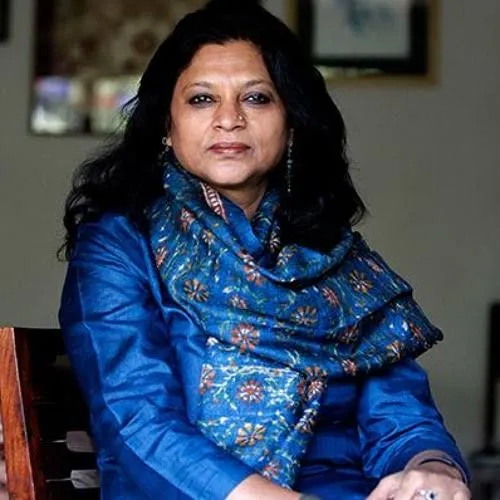
Archana Kapoor founded SMART Community Radio as a deeply participatory model wherein most content is produced by community members trained to lead talk shows, phone-ins, and create poetry, jingles, folk songs, and even street plays.
It has also built community games on financial literacy, misinformation, and nutrition, resisting the digital-only trend. “Digital games are individualistic. But when you play something like a board game, you talk. You remember. And that's where change begins,” she explains.
“In a world of virality, we remain accountable.”
Kapoor doesn’t mince words about the state of media today. “We have lost faith in the news. Big media retracts but never apologises. Where do people go for the truth?”
That’s where SMART Community Radio’s credibility lies. “We do not do desk reporting. Every story is from the ground,” Kapoor adds.
The radio, along with some others in their network, was recognised globally during the COVID-19 pandemic by the international nonprofit Girl Effect, Deutsche Welle’s film on India’s 75th anniversary, and the Discovery Channel’s series, ‘Desh ke Mahaveer’ for disseminating accurate health information, busting vaccine myths, and addressing domestic violence surges. Farheen became the Mewat district’s ambassador for vaccine awareness.
Kapoor summarises Radio Mewat’s uniqueness through what she calls the “Five Cs: community, context, content, connect, and credibility."
“What we do is low-tech, non-extractive, and very human.”
Edited by Kanishk Singh