



Breaking barriers: 25 women who made 2025 unforgettable
From grassroots activism to global leadership, 2025 belonged to women who broke barriers and set new benchmarks. Meet 25 women leaders who have reshaped industries, sports, education, and culture.
Rekha Balakrishnan
Friday December 26, 2025 , 16 min Read

The past year was remarkable for women across India, marked by resilience, innovation, and courage. From grassroots activism to global business leadership, from sporting triumphs to international cinematic acclaim, women broke barriers and set new benchmarks.
HerStory highlights 25 women whose achievements defined 2025, spanning activism, education, sports, entertainment, and business. Leaders like Chetna Gala Sinha and Safeena Husain transformed communities, while athletes such as Preeti Pawar, Nikhat Zareen, and Suruchi Phogat brought glory on global stages. Business trailblazers, including Roshni Nadar Malhotra, Leena Nair, and Bhawna Agarwal, exemplified visionary leadership, and creative voices like Payal Kapadia and Priyanka Chopra Jonas strengthened India’s cultural influence worldwide.
Together, they define a year of leadership, inspiration, and lasting impact.
Social impact, activism, and grassroots change
Chetna Gala Sinha, Founder, Mann Deshi Bank
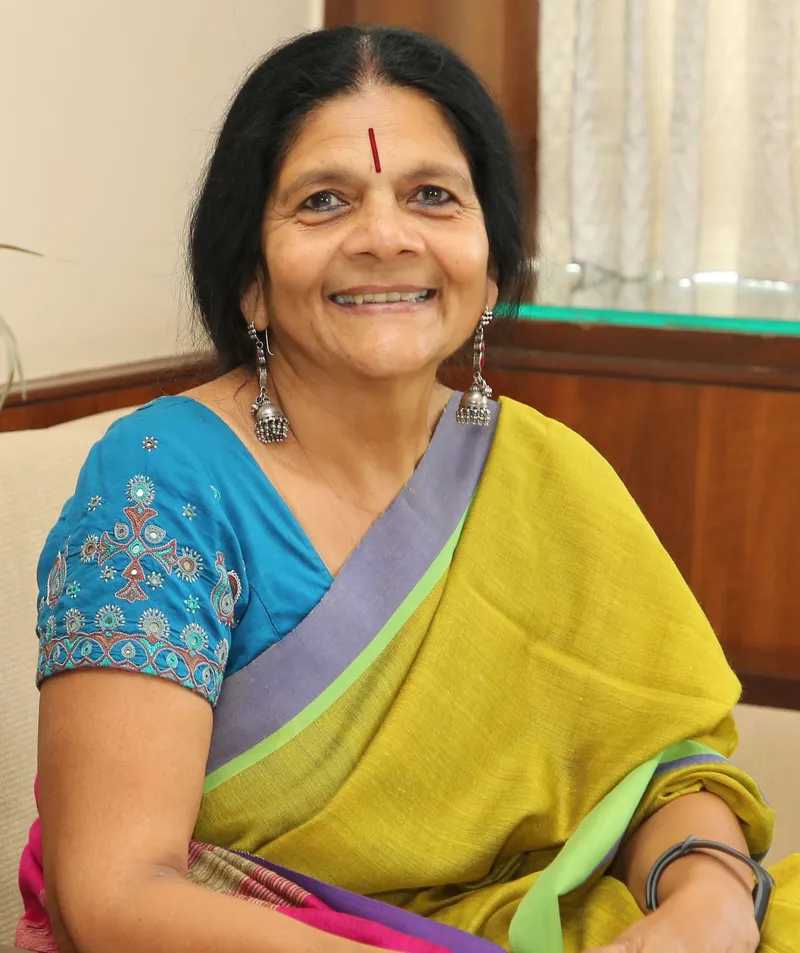
Chetna Sinha
Chetna Gala Sinha, recipient of HerStory’s SheSparks Lifetime Achievement Award, founded India’s first women-led rural bank, Mann Deshi Bank. Through Mann Deshi Bank and Mann Deshi Foundation, she has empowered over one million women, showing that confidence and opportunity often matter before access to money. Thanks to her initiative, women entrepreneurs use digital tools to access loans and markets, while girls save to pursue STEM education.
In 2025, Mann Deshi marked the milestone of empowering one million women entrepreneurs and is now expanding to support women farmers, strengthening Soil Sakhis and Bank Sakhis networks to help livelihoods, climate resilience, and sustainable rural futures.
Safeena Husain, Founder, Educate Girls
Safeena Husain founded Educate Girls in 2007 to enrol and retain out-of-school girls in rural and educationally backward regions of Rajasthan, Madhya Pradesh, Uttar Pradesh, and Bihar.
In 2025, Educate Girls received the Ramon Magsaysay Award for its work. The non-profit partners with government systems and a grassroots network of over 55,000 volunteers, helping more than two million girls return to school and supporting remedial learning for 2.4 million children across over 30,000 villages. Its Pragati programme offers second-chance education for adolescent girls and young women who missed formal schooling, providing flexible pathways to continue secondary education and overcome academic disruptions.
Kumari Shibulal, Founder and Chairperson of the Shibulal Family Philanthropic Initiatives
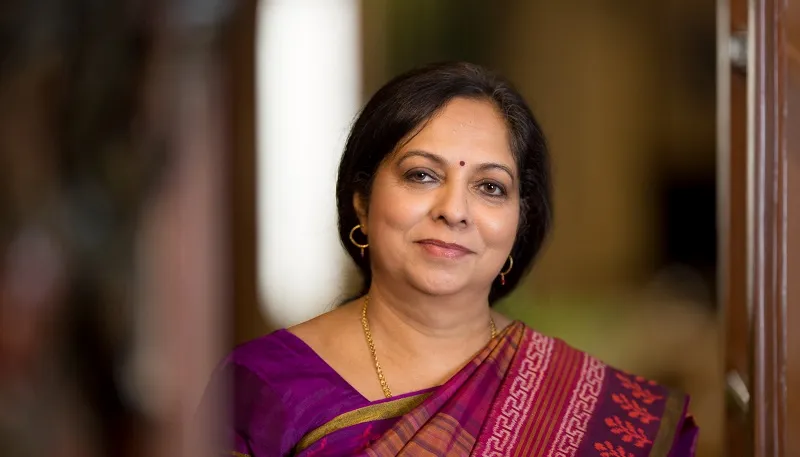
Kumari Shibulal, Founder of Sarojini Damodaran Foundation
Kumari Shibulal’s approach to philanthropy has been shaped by her own childhood in a small village in Kerala, where access to education was limited and many children—especially girls—balanced school with farm work. In 1999, she and her husband, Infosys co-founder S.D. Shibulal launched the Shibulal Family Philanthropic Initiatives (SFPI), starting with Vidyadhan, a scholarship programme supporting meritorious students from Class 11 through higher education.
Over 25 years, SFPI has expanded beyond scholarships through initiatives such as Ankur, Vidyarakshak, ShikshaLokam, and Shikshagraha, focusing on school leadership and strengthening government education systems. Central to this work is long-term community engagement. SFPI’s programmes have supported thousands of students, many of whom have gone on to become doctors, athletes, civil servants, and youth leaders.
Radha Bahin Bhatt, Gandhian environmental activist
For over seven decades, Radha Bahin Bhatt’s life has been dedicated to rural women’s empowerment and ecological protection in the Himalayas. She joined Lakshmi Ashram in Uttarakhand at the age of 16 and went on to lead vocational training centres for women, run ‘One Hour Schools’ for girls, spearhead anti-liquor movements, and organise large-scale afforestation drives across Almora and Pithoragarh.
A committed Gandhian, Bhatt was also a key figure in the Chipko movement, consistently opposing mining projects and large dams that threatened fragile Himalayan ecosystems. Her work has combined education, environmental action, and grassroots organising, shaping generations of women leaders while protecting mountain communities and their natural resources.
Varsha Deshpande, Founder, Dalit Mahila Vikas Mandal
For nearly 35 years, Varsha Deshpande has fought gender-based violence, discrimination, and systemic barriers, working to end child marriage, strengthen women’s property rights, improve conditions for informal sector workers, and combat sex selection through advocacy and legal reform. She founded the Dalit Mahila Vikas Mandal in 1990 to empower marginalised women with vocational skills, legal aid, financial independence, and rights awareness.
In 2025, Deshpande became only the third Indian to receive the United Nations Population Award (individual category), recognising her decades-long leadership in advancing gender equality and reproductive justice both in India and on the global stage.
Purnima Devi Barman, conservationist and community leader
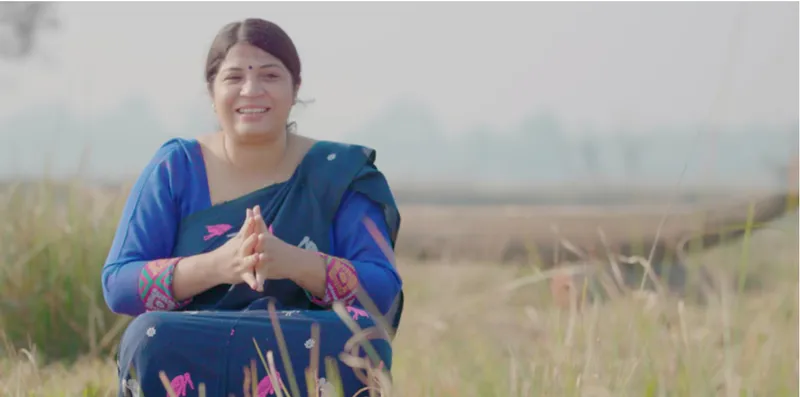
Purnima Devi Barman, a wildlife biologist from Assam, has devoted her life to protecting the endangered greater adjutant stork, one of the rarest birds in the world, and founded the Hargilla Army, a community initiative training local women to safeguard nesting sites and raise environmental awareness.
In 2025, she was named among Time magazine’s Women of the Year, the only Indian woman on the list, earning global recognition for her work. By linking conservation with women’s empowerment, Barman has demonstrated how grassroots action can create lasting ecological and social impact, inspiring local communities and the wider global conservation movement.
Sports
The Indian women’s cricket team
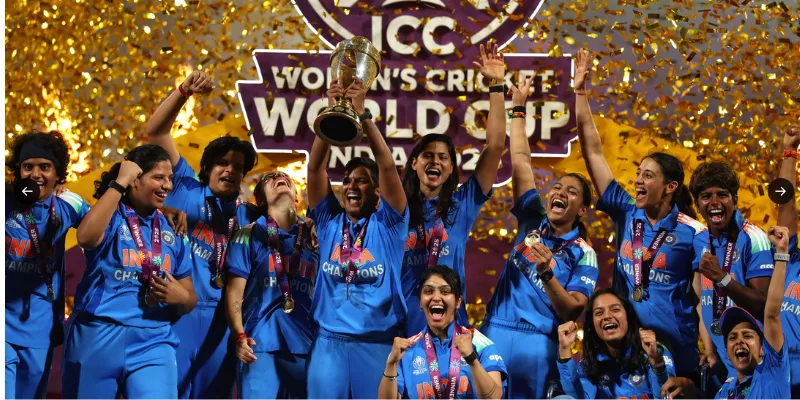
The Indian women's national cricket team delivered one of the most defining sporting moments of 2025, clinching a landmark international title and firmly asserting their place among the world’s elite. The victory marked the culmination of years of perseverance, steady investment in women’s cricket, and a team that has learned to thrive under pressure on the global stage.
Batters like Smriti Mandhana, Jemimah Rodrigues, and Shafali Verma brought flair, composure, and attacking intent, while the team’s overall discipline—across bowling, fielding, and game awareness—proved decisive in crucial moments. Beyond the field, the victory resonated far beyond sport. It inspired a new generation of girls to dream big, challenged gender biases, and reaffirmed that women’s sporting achievements deserve equal celebration.
The blind women's cricket team
The Indian blind women's cricket team etched their name in history in 2025 by winning the Blind Women’s T20 World Cup, a global title that placed Indian women with visual impairment firmly on the world cricketing map.
Led by captain Swati S. Ghodake, the team featured match-winning contributions from players such as Poonam Nishad and Roshni Goyal.
Relying heavily on sound, spatial awareness, and instinct, the team displayed exceptional coordination, tactical clarity, and mental strength. Their composure in high-pressure moments underscored the rigour and professionalism that define elite blind cricket.
The women’s kabaddi team
The Indian women’s national kabaddi team defended their title at the Women’s Kabaddi World Cup 2025, defeating Chinese Taipei 35–28 in the final in Dhaka, Bangladesh, after an unbeaten tournament run.
Led by captain Ritu Negi and vice-captain Pushpa Rana, the team combined tactical awareness with consistent execution in raids and defence, setting the pace throughout. Key contributions from Champa Thakur, Bhawna Thakur, and Sakshi Sharma added depth and balance, ensuring India maintained control in every match and successfully showcased their dominance on the world stage.
Preeti Pawar, boxing champion
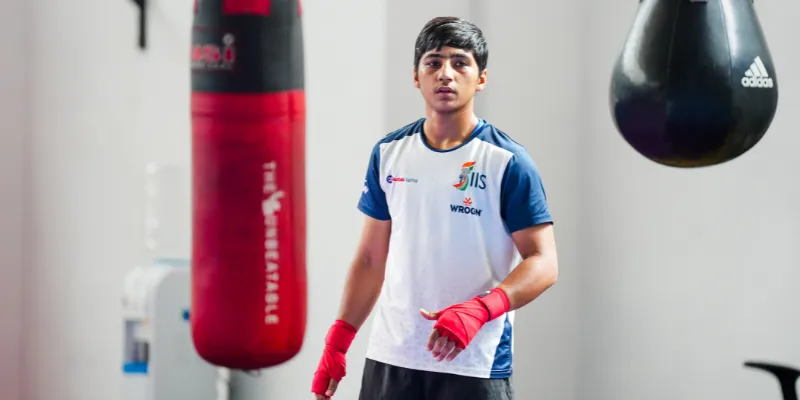
Preeti Pawar
Preeti Pawar made a remarkable return to international boxing in 2025, winning the gold medal in the women’s 54 kg category at the World Boxing Cup Finals after more than a year away from competition due to ill health. Her comeback was marked by resilience and determination, culminating in a standout performance in Greater Noida, where she defeated Italy’s Sirine Charrabi 5-0 in the final to clinch the title. Earlier in the tournament, she also secured a significant win against Olympic medallist and world champion Huang Hsiao-Wen in the semifinals.
Pawar’s prolonged absence from competition stemmed from a severe bout of Hepatitis A, which she contracted during a pre-Olympic training camp ahead of the Paris 2024 Olympics and which significantly disrupted her preparation and health. Although she competed in the Olympics, the illness took a heavy toll and sidelined her for much of the 2024-25 season.
Nikhat Zareen, boxing champion
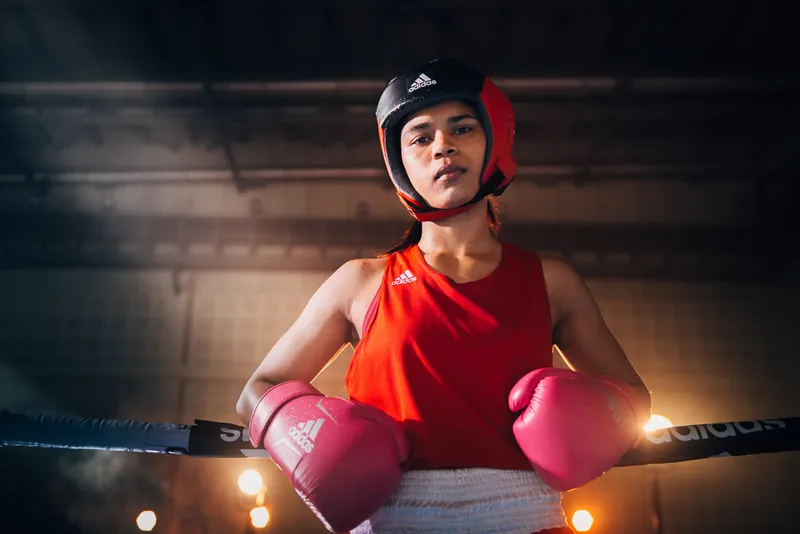
At the World Boxing Cup 2025 held in Greater Noida, Nikhat Zareen won gold in the 51 kg category, defeating Chinese Taipei’s Yi-Xuan in her first international competition of the year.
Zareen began boxing at 13, after watching local bouts and questioning why so few women were in the ring. Growing up in Nizamabad, Telangana, she faced strong social resistance to women in contact sports. With limited facilities, her father left his job to support her training. Early on, she trained with boys and faced criticism from relatives and the community.
Despite these challenges, Zareen rose through junior levels to international success. Choosing not to be defined by comparisons with Mary Kom, she has focused on her own path in the flyweight division, steadily building towards world championships and the Olympics.
Suruchi Phogat, Teenage shooting sensation
Suruchi Phogat closed 2025 with a series of major wins that underlined her rise in Indian shooting. In April, she defeated Olympic medallist Manu Bhaker to win her second individual gold at the ISSF World Cup in the women’s 10m air pistol event in Lima. In June, she followed this with her third consecutive ISSF World Cup gold in the same event in Munich.
She ended the year with another gold at the ISSF World Cup Finals in Doha, once again topping the women’s 10m pistol category.
Born in Jhajjar, Haryana, Phogat is among India’s brightest young shooting talents. Initially encouraged to take up wrestling, she chose shooting instead and began structured training in her early teens—a decision that quickly put her on a fast track in the sport.
Divya Deshmukh, Teenage chess trailblazer
Divya Deshmukh, the 19-year-old International Master from Nagpur, Maharashtra, created history by defeating Grandmaster Humpy Koneru 1.5–0.5 in the tiebreaks to clinch the Women’s World Cup title in July this year. With this win, she earned the Grandmaster title.
She joined an elite list, becoming only the third player to win the prestigious tournament after Grandmasters Alexandra Kosteniuk in 2021 and Aleksandra Goryachkina in 2023.
Even before her Women’s World Cup triumph, Divya had already built an impressive résumé. She was part of the Indian team that won gold at the 2022 Chess Olympiad in Chennai. She won an individual bronze in the same tournament. In the same year, she claimed the National Women’s Chess Championship. In 2024, she became the world U-20 chess champion.
Vaishali Ramesh Babu, chess Grandmaster
A chess grandmaster from Chennai, and one of India’s leading women players on the global stage, Vaishali Ramesh Babu earned the FIDE Grandmaster title in 2024, becoming only the third Indian woman after Koneru Humpy and Harika Dronavalli to do so. With her brother R Praggnanandhaa, she forms the first brother-sister GM duo in history.
In 2025, she made headlines by defending her FIDE Women’s Grand Swiss title, winning back-to-back championships and qualifying for the 2026 Women’s Candidates Tournament, which remains a historic achievement in elite chess competition.
Her rise from young talent to world-class competitor has made her a defining figure in Indian chess today.
Entertainment
Payal Kapadia, Filmmaker
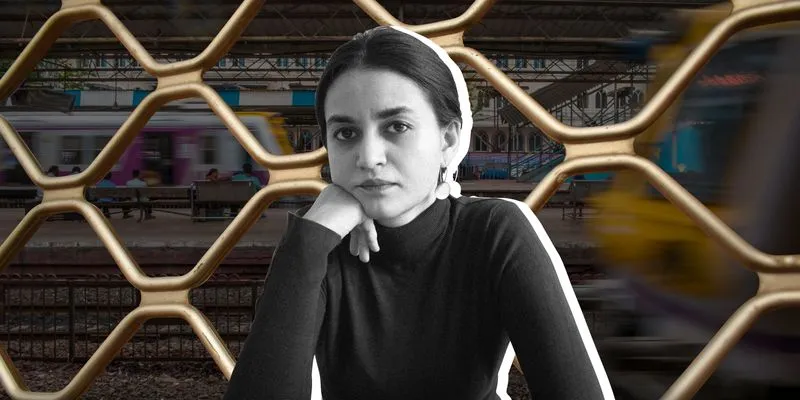
Mumbai director Payal Kapadia’s poetic, character-driven cinema gained international attention when her debut feature, All We Imagine As Light, won the Grand Prix at the 2024 Cannes Film Festival, the highest award after the Palme d’Or. In 2025, she was invited to serve on the jury of the 78th Cannes Film Festival, and her film also won Best Film at the Asian Film Awards 2025. Her work has made her a leading voice in Indian cinema today, connecting Indian stories with global audiences and inspiring a new generation of filmmakers.
Priyanka Chopra Jonas, Actor and Producer
In 2025, Indian actor and producer Priyanka Chopra Jonas served as executive producer of Anuja, a short film shortlisted for the Academy Awards. This marked her third Oscar nomination as a producer, following The White Tiger and To Kill a Tiger, reinforcing her focus on socially relevant storytelling. The year also saw her wrap filming SS Rajamouli’s Varanasi, which drew wide media attention and fuelled discussion about her return to Indian cinema. Internationally, she remained a prominent cultural figure, walking the Met Gala red carpet for the fifth time and making headlines at a pre-Met Gala event. By the year’s end, Chopra Jonas had strengthened her position as both a producer and performer, balancing global visibility with sustained involvement in meaningful film projects.
Samantha Ruth Prabhu, Actor and Producer
After publicly battling the autoimmune condition myositis and taking time off to focus on her health, Samantha Ruth Prabhu returned to work in 2025 with renewed purpose, announcing new projects and a health‑focused podcast that reflects her lived experience with chronic illness and wellbeing.

In 2025, she also partnered with UN Women India for the 16 Days of Activism against Gender‑Based Violence, focusing on ending digital violence against women and girls, using her platform to spotlight online abuse.
She celebrated 15 years in the film industry, won streaming awards for her performances, and continued to shape her career around quality work and wellness.
By the end of 2025, she had returned from health setbacks, strengthened her advocacy and set the tone for her next creative chapter.
Business and corporate
Falguni Nayar, Founder, Nykaa
In 2025, Falguni Nayar-led Nykaa reported a Rs 15,600-crore GMV for FY25, marking 25% year-on-year growth and a five-year CAGR of 42%. Its House of Nykaa brands crossed Rs 2,100 crore GMV, with multiple labels entering the Rs 100–200 crore range, while Nykaa Fashion delivered Rs 3,800 crore GMV.
Nykaa’s omnichannel expansion crossed 250+ stores in 82 cities while rolling out faster delivery models in major metros. These milestones reinforced Nykaa’s position as a diversified, high-growth lifestyle retailer and strengthened Nayar’s reputation as one of India’s top self-made women entrepreneurs in 2025.
Leena Nair, CEO, Chanel
In 2025, Leena Nair, an Indian-origin Global CEO of Chanel, gained international recognition as one of the few women of colour leading a major luxury brand. She featured on Forbes India’s “W-Power” list and was awarded the UK’s Commander of the Order of the British Empire (CBE) by Prince William for her contributions to the retail and consumer sectors.
Nair began her career at Hindustan Unilever in 1992, becoming its first female and youngest Chief Human Resources Officer before taking the helm at Chanel in 2022. Under her leadership, Chanel has advanced sustainability and gender equality, including net-zero targets by 2040 and expanded Fondation Chanel funding supporting millions of women and girls worldwide.
Roshni Nadar Malhotra, Chairperson, HCL Technologies
Roshni Nadar Malhotra, the Chairperson of HCL Technologies (HCLTech) and a leading Indian business leader, is known for guiding one of India’s largest IT services companies and for her philanthropic initiatives through the Shiv Nadar Foundation and The Habitats Trust, which focuses on wildlife and habitat conservation. She holds an undergraduate degree in Communications from Northwestern University and an MBA from the Kellogg School of Management.
In 2025, her father, Shiv Nadar, transferred approximately 47 per cent of his promoter holding in HCL entities to her, making her the largest shareholder in the group and solidifying her leadership role in shaping the company’s future. That year, she also emerged as India’s richest woman and debuted at No. 3 on the M3M Hurun India Rich List, the highest-ranking woman on the list.
Under her leadership, HCL Tech continued to focus on innovation, including AI-driven transformation.
Niveda Ravi, Founder, Bliss Natural
Niveda Ravi, founder and director of Bliss Natural, an intimate hygiene products brand, is revolutionising menstrual hygiene in India with fully plant-based, biodegradable products. What started as a student project in Coimbatore has grown into a brand tackling plastic waste and sustainability in femcare, proving that period care can be both eco-friendly and empowering.
In June 2025, Bliss Natural won the “Leading” category at Shiprocket Aarambh 2025, recognised among India’s top women-led startups for its innovative approach to feminine hygiene.
Under Ravi’s leadership, the company has expanded across retail and online marketplaces, setting a benchmark for sustainable innovation in femtech.
Preetha Reddy, Executive Vice-Chairperson, Apollo Hospitals
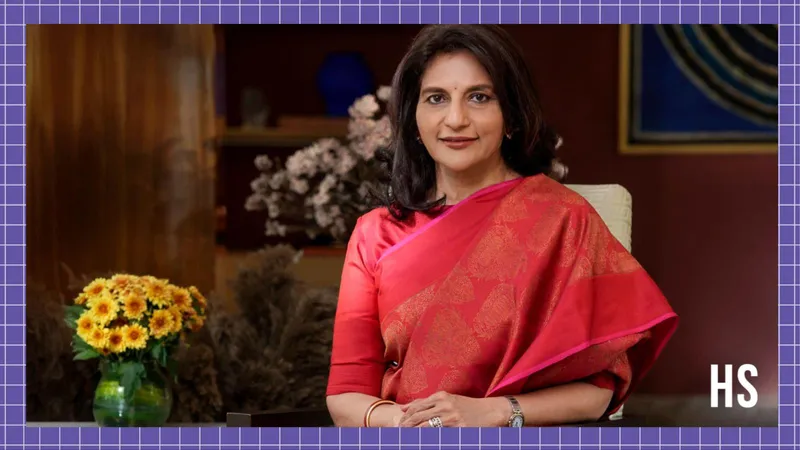
In September 2025, Preetha Reddy, Executive Vice Chairperson of Apollo Hospitals, launched Apollo Athenaa, a specialised cancer centre for women in Delhi. The centre addresses women’s specific health needs with expert training, collaborations, and care models, reflecting a move toward gender-sensitive healthcare.
Under her leadership, Apollo emphasises preventive care, early diagnosis, and routine screening, especially for breast and cervical cancer. Reddy has promoted awareness, accessibility, and public–private partnerships to ensure women, particularly from underserved communities, receive timely care. Apollo’s screening and preventive health programmes reflect this focus on early intervention and long-term outcomes.
Gita Gopinath, Indian-American economist
Gita Gopinath, the trailblazing Indian-American economist, made headlines in 2025 when she stepped down as the International Monetary Fund’s (IMF) Managing Director to return to Harvard University as the inaugural Gregory and Ania Coffey Professor of Economics. She is the first woman to have served as the IMF’s Chief Economist and second‑in‑command, a role in which she shaped global financial policies.
In 2025, she continued to guide discussions on India’s economy, predicting about 7% growth for the next financial year and highlighting changes needed to keep the economy growing. At the India Economic Conclave, she offered insights on geoeconomics, trade, and global supply chains, reinforcing India’s role in international economic discussions.
Kavya Maran, Co‑owner and CEO, Sunrisers Hyderabad
Kavya Maran, Co‑owner and CEO, Sunrisers Hyderabad, and Executive Director of Sun TV Network as well as its sister teams in SA20 and The Hundred, blends business strategy with sporting passion, driving digital initiatives and youth engagement across media and cricket.
In 2025, she became a social media sensation for her animated reactions during IPL matches, which she said reflected her deep emotional investment in the game. That year, she ranked #46 on Fortune India’s ‘Most Powerful Women in Business’ and featured on The Hollywood Reporter India’s ‘Women in Entertainment Power List 2025’, cementing her influence at the intersection of sports, media, and business.
Governance
Supriya Sahu
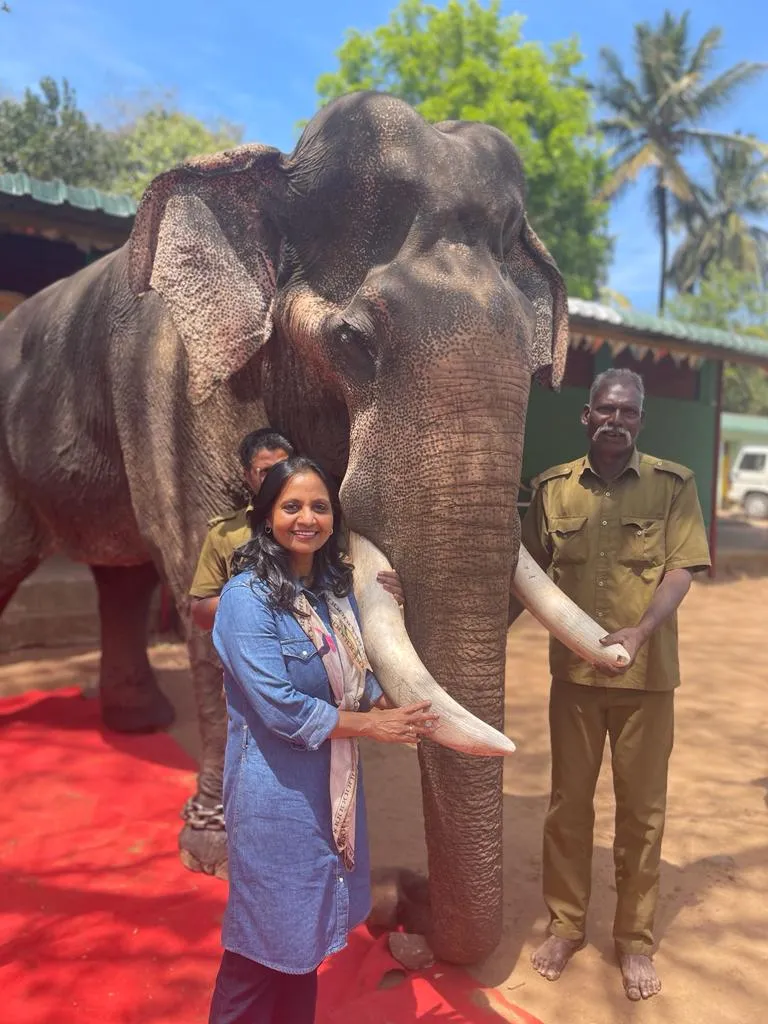
Supriya Sahu emerged as one of India’s most influential climate leaders in 2025 after being named a UN Environment Programme “Champion of the Earth”, the organisation’s highest environmental honour, for her work on sustainable cooling and ecosystem restoration in Tamil Nadu.
A 1991-batch IAS officer and Additional Chief Secretary for Environment, Climate Change and Forests, Sahu has led pioneering initiatives such as the Cool Roof Policy, large-scale wetland and biodiversity restoration, plastic-free conservation programmes, and community-led climate resilience models that have benefited millions while creating green livelihoods.
Her work, recognised globally in 2025, positioned Tamil Nadu as a model for climate action driven by policy, science, and grassroots participation.
Edited by Jyoti Narayan