



These gender inclusive startups in India are reshaping access, work, and health
A growing set of Indian startups is tackling gender inequality through technology, employment, health access, and funding. What sets these ventures apart is their scalable models that centre women not simply as beneficiaries, but as decision-makers and leaders.



From maternal health platforms and women-focused investment funds to logistics companies hiring female delivery workers and digital communities enabling women’s employment, these organisations are addressing structural barriers that have long limited women’s participation in the workforce.
Their work spans healthcare, finance, employment, education, and manufacturing, combining scalable technology or business models with community-grounded solutions. By tackling gaps such as access to capital, safe work opportunities, preventive healthcare, and reliable information, they are reshaping how inclusion is built into systems.
As investors and policymakers increasingly recognise gender equity as an economic priority, these startups demonstrate how targeted innovation can translate social change into on-the-ground impact.
Armaan, Mumbai
Improving maternal health outcomes is central to gender equity, and Mumbai-based Armaan is doing just that through scalable public -health technology.
Founded by urogynaecologist Dr Aparna Hegde, the non-profit works towards closing the gaps in maternal and child healthcare access for underserved women by combining mobile-based health messaging with frontline worker training. It tackles the lack of preventive health awareness and follow-up care among low-income mothers, which remains a major contributor to often avoidable illness among mothers and infants.
Working with India’s Ministry of Health and Family Welfare, Armaan runs Kilkari, a large maternal mobile-health programme, along with the Mobile Academy for frontline workers. Its initiatives have reached over 63 million mothers and children and trained over 5 lakh health workers across 28 states.
Most recently, Armaan created AI tools that identify women at risk of dropping out of care programmes. Dr Hegde’s leadership has earned global recognition, including a spot on the TIME100 Health list (2025) and the Skoll Award for Social Entrepreneurship.
She Capital (India), Delhi
Addressing gender gaps in startup funding is the core goal of She Capital, a New Delhi-based early-stage venture fund founded in 2018 by entrepreneur Anisha Singh. The firm focuses on backing high-growth startups led by women or startups building products for women.
Registered with the Securities and Exchange Board of India (SEBI) as a Category II investment fund, it supports founders not just with funding but also mentorship and industry connections to help them grow. So far, She Capital has invested in 14 startups across India; women make up about 62% of employees in its portfolio companies, and its wider founder community includes more than 10,000 entrepreneurs.
Through initiatives such as founder events and collaborative advisory support, She Capital aims to counter systemic funding bias while building companies with strong leadership, governance, and social impact practices.
Even Cargo, Delhi
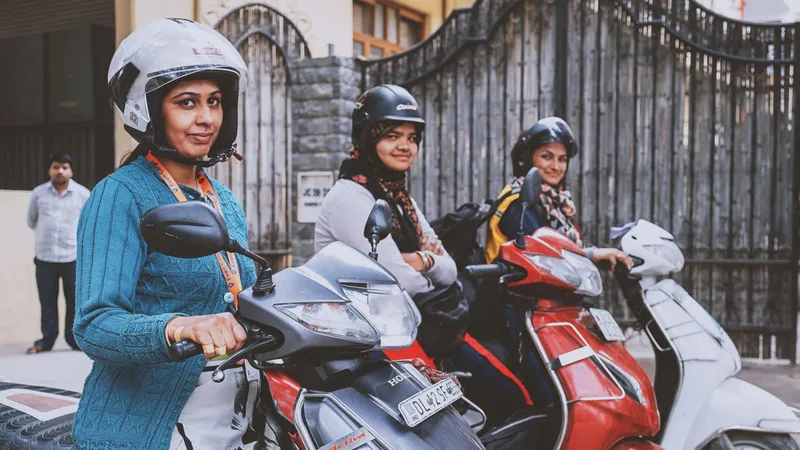
At the heart of Even Cargo is the goal to expand women’s access to public-facing jobs. The Delhi-based logistics startup, founded in 2016 by engineer-turned-social entrepreneur Yogesh Kumar, tackles the persistent gender gap in India’s workforce by training and employing women as last-mile delivery personnel in a sector historically dominated by men.
As an all-women e-commerce logistics platform, Even Cargo trains recruits in scooter driving, customer service, and safety skills before deploying them with major ecommerce clients. It has trained over 600 women and provided direct delivery jobs to more than 350, helping many achieve financial and digital inclusion.
The startup has also driven industry shifts, partnering with Hero Electric to build a women-only EV delivery fleet. In 2021, it was recognised with the Plan India Impact Award, given by Plan India, a non-profit organisation, for advancing girls’ rights through employment.
Sheroes, Delhi
In 2014, Sheroes, a women-centred platform aimed at expanding women’s access to work, resources, and safe digital communities, was founded by entrepreneur Sairee Chahal. The Delhi-NCR-based platform addresses a persistent gap in India’s workforce: women dropping out or struggling to re-enter due to limited flexible opportunities, safety concerns, and a lack of professional networks.
Sheroes combines a community network with career support, offering job listings, upskilling resources, peer forums, and helplines designed specifically for women. Over the years, it has grown into one of India’s largest women-only digital ecosystems, serving millions of users across cities and small towns.
The platform has been widely recognised in startup and gender-equity circles for building a scalable model that blends employment access, community support, and digital inclusion for women.
Myna Mahila Foundation, Mumbai
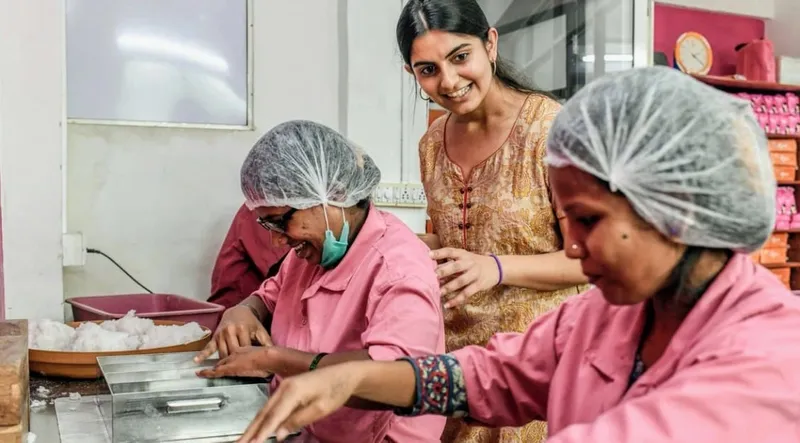
Improving menstrual health access and dignity for women is central to the work of Myna Mahila Foundation, a Mumbai-based non-profit founded in 2015 by social entrepreneur Suhani Jalota.
The organisation addresses a critical gender gap where millions of girls and women in India are left without access to affordable sanitary products and accurate reproductive health information, which often forces them to miss school or work.
Myna Mahila trains women from low-income communities to manufacture and sell low-cost sanitary pads while also leading education sessions on menstrual and sexual health. The model combines livelihood generation with health awareness, positioning women as both beneficiaries and changemakers.
Jalota’s work has received international recognition, including the Queen’s Young Leaders Award (presented by Queen Elizabeth II) in 2017 and a place on the Forbes 30 Under 30 Asia list in 2018. The organisation gained global visibility after being supported by Meghan Markle as a social impact initiative.
Edited by Suman Singh