



Women workforce participation and the burden of unpaid work–our top stories of the week
A roundup of the top stories on HerStory this week.


As Finance Minister Nirmala Sitharaman prepares to present the Union Budget 2026–27 in Parliament on Sunday, the Economic Survey tabled last week has offered freesh insights into women’s participation in India’s workforce.
While the increase in Female Labour Force Participation Rate (FLFPR) from 23.3% in 2017-2018 to 41.7% in 2023-24 show a positive trend, the Survey pointed out that limited mobility, lack of affordable and safe housing and rigid work arrangements that clash with caregiving restrict women’s access to employment.
It calls for more participation from women in STEM disciplines, better urban mobility and safety, access to secure and affordable housing, more skill development programmes to ensure that women enter and stay in the workforce.
The Economic Survey also touched upon the dual burden borne by women and its implications for their participation in the labour force. It pointed out that women continue to bear a disproportionate burden of caregiving and unpaid domestic work, constraints that affect both their ability to take up paid employment and their need for more flexible work arrangements.
Here are our other top stories of the week….
A signature saree challenge
On January 28, a 4-km-long saree unfurled across Mumbai’s Royal Opera House. Instead of motifs or zari work, its length carried something far more powerful: thousands of names—printed, stitched, and embroidered into the pallu—each one belonging to a survivor of gender-based violence.
Created by the Mumbai-based non-profit Red Dot Foundation, which works to prevent sexual and gender-based violence, in collaboration with designer Nivedita Saboo, the installation took the form of a “signature saree” — an imagined infinite garment that doubles as a living petition, calling for the removal of the marital rape exception from Indian law.
India’s youngest female Ironman
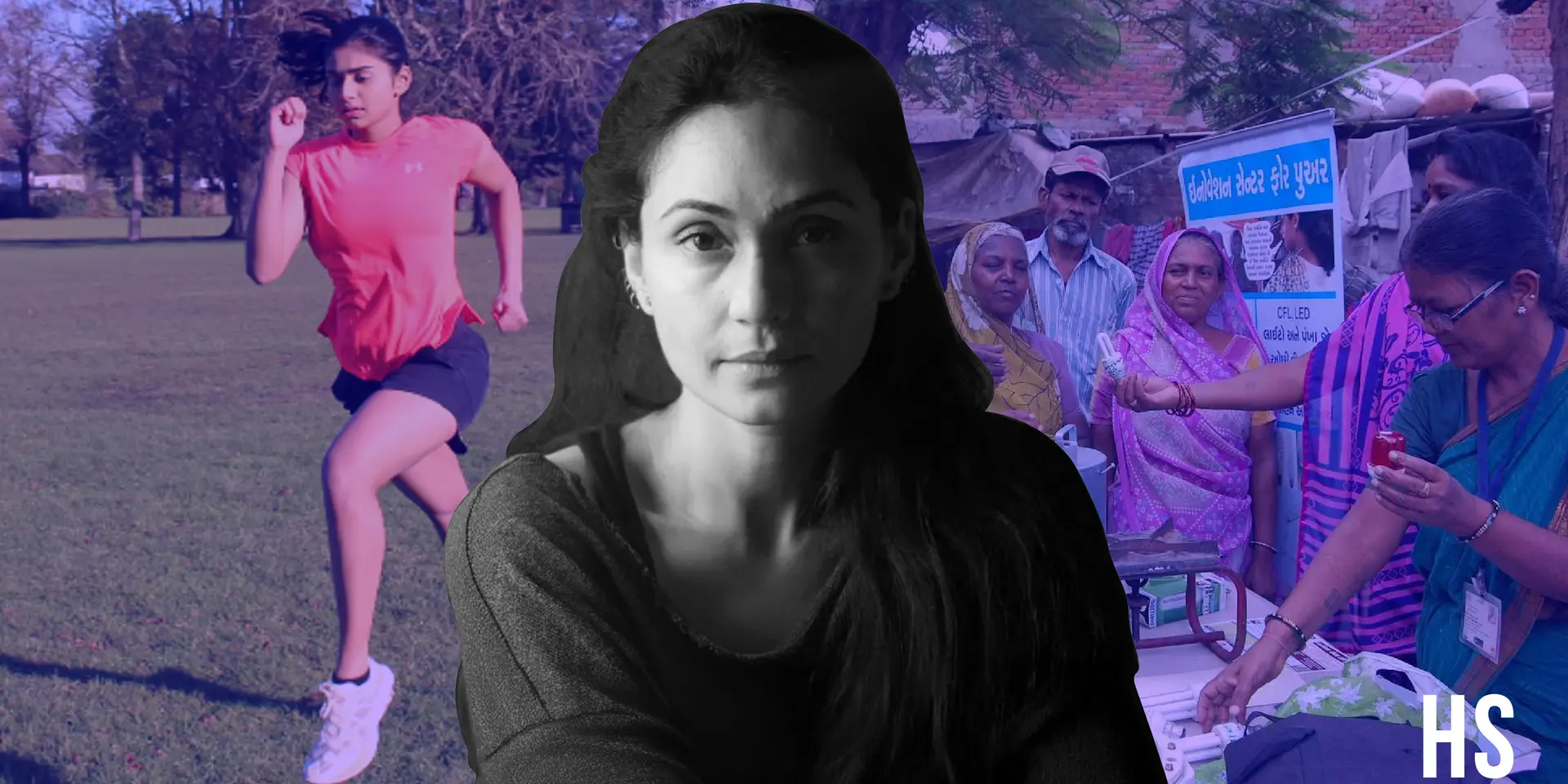
At 18 years, Renee Noronha completed Ironman New Zealand in 16.5 hours to become India’s youngest female Ironman. She bettered her timing last year, completing the Ironman European Championship in Hamburg in just 14 hours, pushing through a punishing hailstorm along the course.
The endurance athlete has now set her sights on completing six Ironmans before she turns 21. Noronha now has her sights set on breaking the record across both genders. She is training for the Ironman Philippines in May–June and plans to complete two more Ironman races this year, followed by another next year.
Organisations working within everyday systems
Women’s progress in India is often framed as loud, confrontational, or driven by sweeping policy change. Yet many of the most lasting shifts are shaped quietly by organisations working steadily within everyday systems — labour markets, public health, housing, urban safety, and knowledge production.
By grounding their work in women’s lived realities, these groups show what slower, relational, and practical change can achieve. Whether organising informal and migrant workers, embedding care within public institutions, or redesigning urban spaces for safety and access, they reveal feminism not as an abstract idea, but as something practised daily on the ground.
Edited by Affirunisa Kankudti