



How a Chandpur-based kraft paper unit embraced sustainability to evolve into a Rs 250 Cr packaging biz
Founded by Arvind Kumar Mittal in 1998, Chandpur Paper has evolved from a small three-acre kraft paper unit in Uttar Pradesh to a major player in India’s sustainable packaging industry, under the leadership of Amit Mittal.

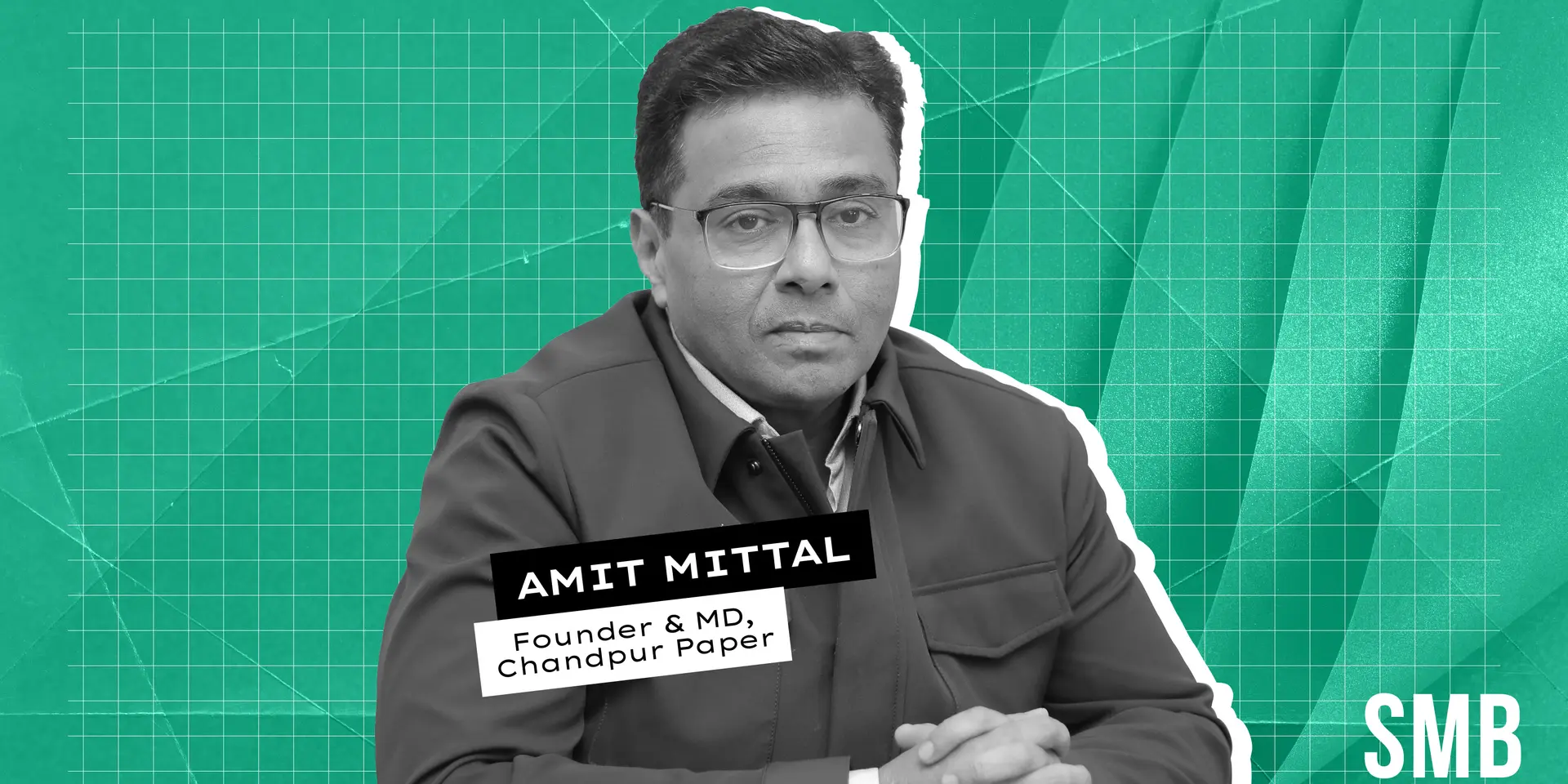

In 1998, when Arvind Kumar Mittal founded Chandpur Paper Limited in Uttar Pradesh, his dream was straightforward but ambitious—to create a quality and sustainability-driven paper manufacturing business that could stand on par with the best in the world.
At a time when India’s paper industry was still dominated by large urban players, Mittal’s vision to set up a manufacturing unit in a small town like Chandpur was aimed at building locally, generating employment, and tapping into the growing demand for packaging paper.
With an initial investment of Rs 4 crore, the unit manufactured 25 tonnes per day (TPD) of kraft paper on a three-acre plot.
Kraft paper is a durable, and coarse paper made from pulp produced by the kraft process, which uses chemicals to separate wood fibres from wood chips. It is used for wrapping fragile items, filling voids in boxes, and making sturdy bags and envelopes.
“The aim was to establish a quality and consistent paper manufacturing company, which could cater to India's increasing packaging and printing demand while following environmentally friendly practices,” Amit Mittal, Managing Director at Chandpur Paper tells SMB Story.
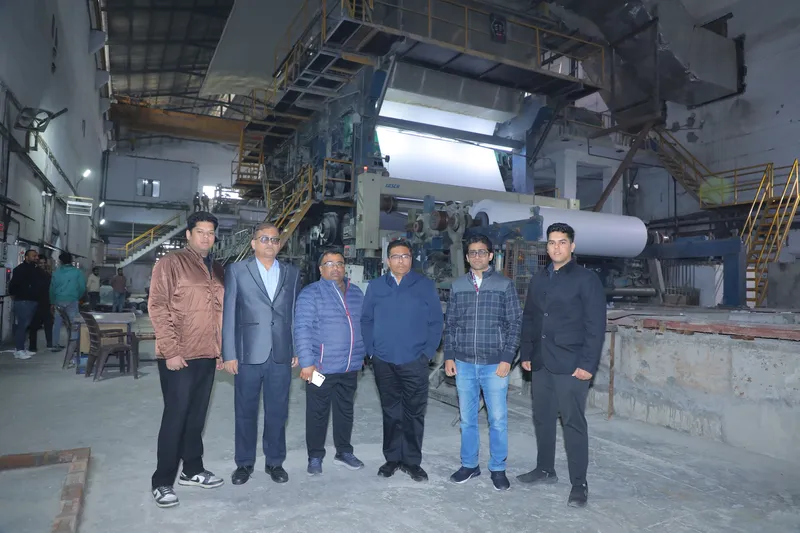
The leadership team at Chandpur Paper
Fast forward to today, Chandpur Paper operates on 18 acres of land, producing 120 TPD of high-quality MG Poster and Chromo (C1S) paper, with a turnover of Rs 250 crore.
Under the leadership of Amit Mittal, Arvind Kumar Mittal’s son, the company has scaled its operations and increased its team size from 50 to 400-plus staff. Today it supplies all kinds of packaging paper to FMCG businesses, ecommerce companies, quick-service restaurants, and retailers across India, through a network of over 30 dealers.
Blending legacy with innovation
While Arvind Mittal laid the foundation for the company’s strong operational ethos, his son Amit Mittal has been instrumental in driving modernisation and expanding the business’s reach.
Recognising the shifts in consumer demand and the sustainability imperative in the packaging industry, Amit led Chandpur Paper’s transformation from a kraft-focused manufacturer into a multi-products paper company with a focus on green innovation.
Chandpur Paper produces paper that can be used for thermal printing (used for POS systems, ATM slips, shipping labels, etc.), sublimation paper (used in the apparel industry for printing designs), soap wrapping paper, tobacco pouches, sugar sachets, food wraps, shoe wraps, labelling solutions, and gift wrapping, among others.
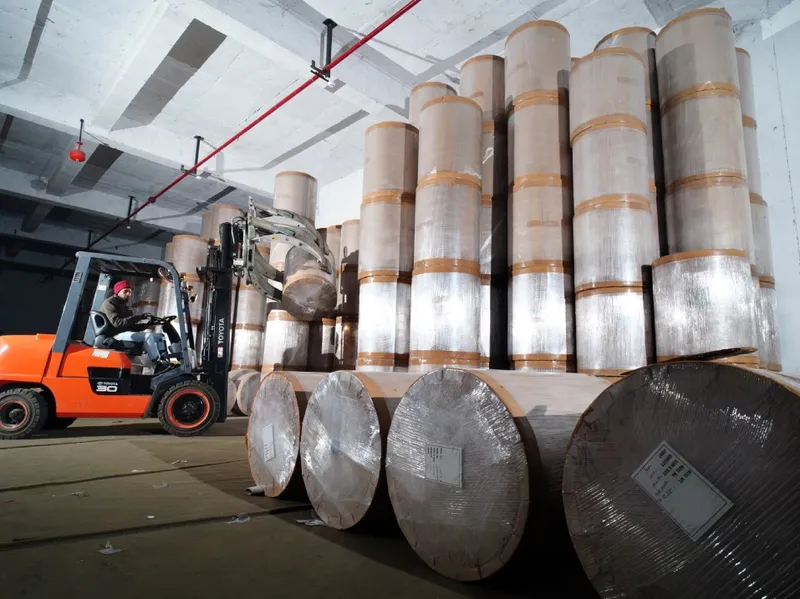
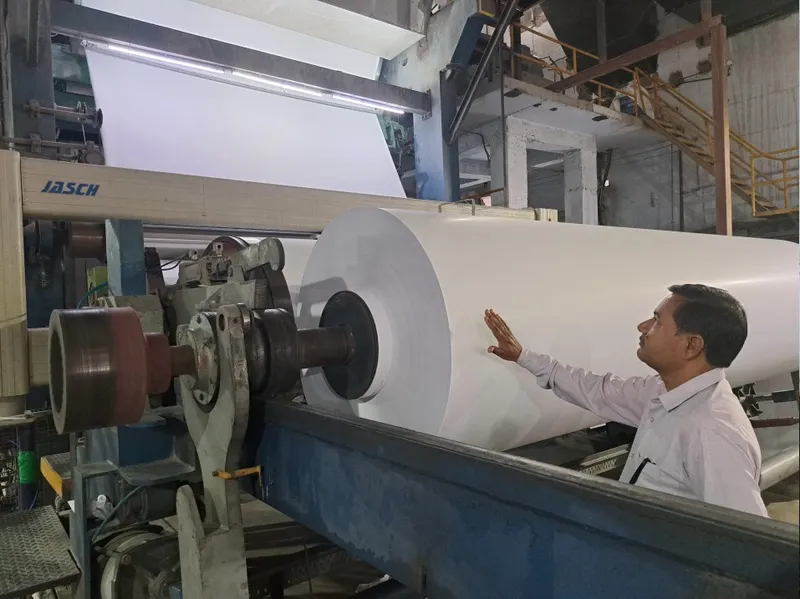
inside the Chandpur Paper factory

From enterprises to Indian homes: Sustainable packaging provider Bambrew readies for the next phase
“Our production process combines leading-edge machinery, standard industrial procedures, and rigorous quality control, guaranteeing homogeneity and better performance in MG (machine glazed) poster and Chromo (C1S) paper (a speciality paper with a unique coating for smoothness and print quality).
“In contrast to most competitors, we focus on ongoing improvement and technology uptake, allowing us to increase efficiency, minimise waste, and address the changing demands of our customers,” explains Amit.
The production process starts with the selection of raw materials such as recycled paper and wood pulp. The materials are then pulped, washed, and cleaned to create uniform strength, texture, and colour. Advanced paper-making machines shape, press, and dry the sheet while maintaining precision and efficiency.
Finally, every batch passes rigorous quality inspections before cutting, finishing, and packaging to ensure the products meet quality standards for durability, performance, and customer satisfaction.
Over the years, the company has invested in technology upgrades, waste management systems, and energy-efficient operations. It has partnered with the likes of Alliance International Services, Andritz, Crompton, Dalian Mingzhu Machinery, Forbes Marshall, and Havells, among others, for tech advancements.
Scaling up with purpose
Although it operates in an industry that uses chemicals, the company ensures it follows practices that reduce its carbon footprint.
Amit elaborates the company’s sustainability initiatives.
Chandpur Paper uses 100% recycled raw materials and processes wastepaper and agricultural residue to manufacture paper that minimises the company’s carbon footprint. The factory’s water management system allows for high levels of reuse and recycling, while eco-friendly chemicals ensure compliance with environmental standards.
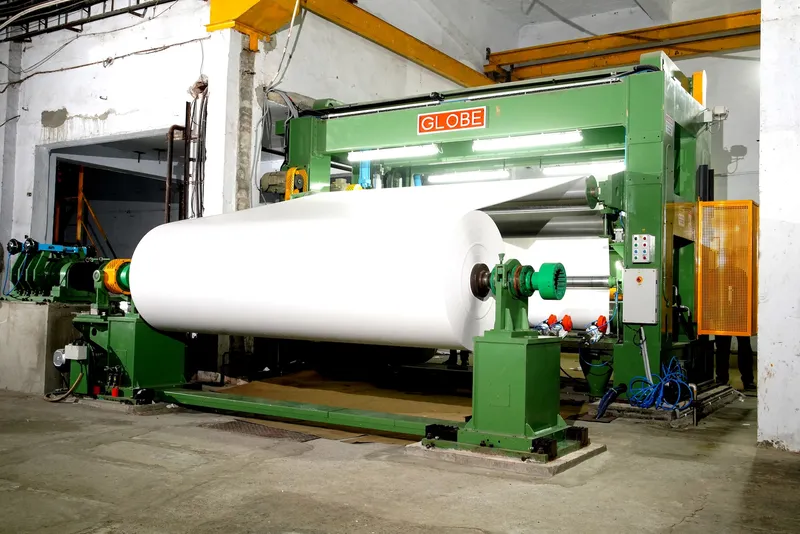
Inside the Chandpur Paper factory
Chandpur Paper recycles 35,000 tonnes of used paper every year, ensuring large reductions in the consumption of virgin materials. It also treats 500,000 litres of water per day for irrigation, benefiting local crops, and has shifted to renewable energy sources to drive its operations.
The factory uses biowaste like bagasse from a local jaggery unit and waste from regional plywood workshops as a sustainable alternative to virgin wood pulp.
“By combining innovation with environmental practices, we are able to ensure that our products meet modern industry standards without sacrificing our environmental responsibility,” says Amit.
Chandpur Paper currently works with around 200 B2B clients annually, mostly in the National Capital Region and the eastern and western markets of India.
Market overview
According to Infomerics Valuation and Rating, India is the 15th largest paper producer globally, contributing 5% to the world’s paper market.
The India Brand Equity Foundation pegs the paper packaging market in India at $19.07 billion. It is set to grow at a CAGR of 19.48% to reach $46.43 billion by 2030.
In a market with vast opportunities, Chandpur Paper competes with the likes of JK Paper, Century Pulp and Paper, and Ballarpur Industries.
“One of the greatest challenges faced by the paper industry is the rising quality expectations from customers, who now increasingly compare domestically produced products with imported ones.
“We have overcome this challenge by adopting continuous innovation, enhancing machinery, and streamlining our manufacturing processes to match and surpass international norms, along with strict quality testing and sustainability efforts, this strategy guarantees that our MG poster and Chromo (C1S) paper provide exceptional performance (ability to produce high-quality paints) on a consistent basis,” explains Amit.
Chandpur Paper routinely invests in adopting cleaner technologies and optimising production efficiency. The company runs two modern paper machines with a combined capacity of 140 TPD, supported by in-house pulp preparation and power generation facilities.
How a small Ghaziabad business grew into a Rs 190 Cr appliance brand
Future plans
As demand for sustainable paper and packaging materials continues to grow, driven by quick commerce, ecommerce, food delivery, and sustainability mandates, Chandpur Paper is preparing for its next phase of growth.
The company is focused on achieving operational excellence, ensuring customer satisfaction, and consolidating its position in the market. It is also planning to launch high-strength packaging paper that can potentially replace plastic.
Chandpur Paper also plans to improve its manufacturing process, introduce new product lines based on the changing market needs, and expand to newer markets in South India. It is eyeing the international markets too in the future.
Edited by Swetha Kannan