



How Bengaluru’s Empire restaurant built a Rs 560 Cr food business, serving 45,000 customers every day
Founded in 1966, NKP Empire, helmed by third-generation entrepreneur Shakir Haq, is now eyeing its next big leap—building a Rs 1,200-1,400 crore F&B business by 2030.


Bengaluru is as much about its craft beer as it is about the culture that’s brewed around it. And no matter how the night unfolds, whether it is a house party that runs too late or pub hopping in the city, it almost always leads to one place—the iconic Empire Restaurant.
The order remains the usual too—steaming short-grained ghee rice, dal fry, with a side of crispy kebabs, the simple biryani, or the coin parotta and butter chicken combo.
Empire Restaurant has carved out a place for itself in the hearts of Bangaloreans—in some as a habit, others as a memory, and for many, a saviour meal at odd hours.
In a way, this was how Abdul Rahim Haji, Founder of parent company NKP Empire, had envisioned the brand when he set out to start the food and beverage (F&B) venture in 1966.
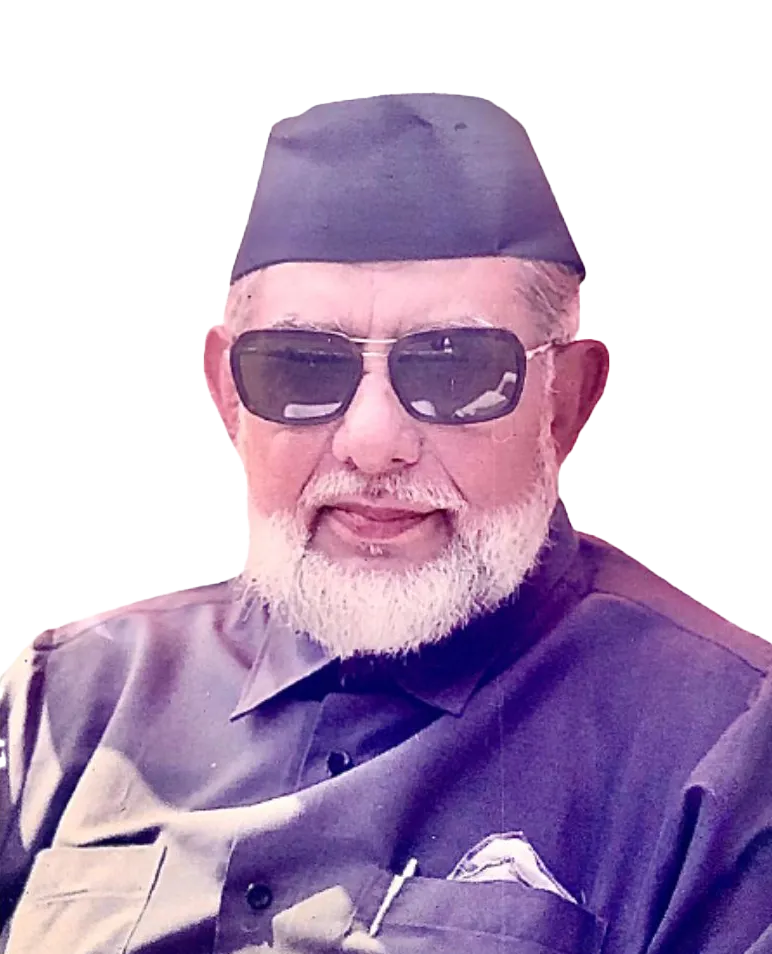
Abdul Rahim Haji, Founder of NKP Empire
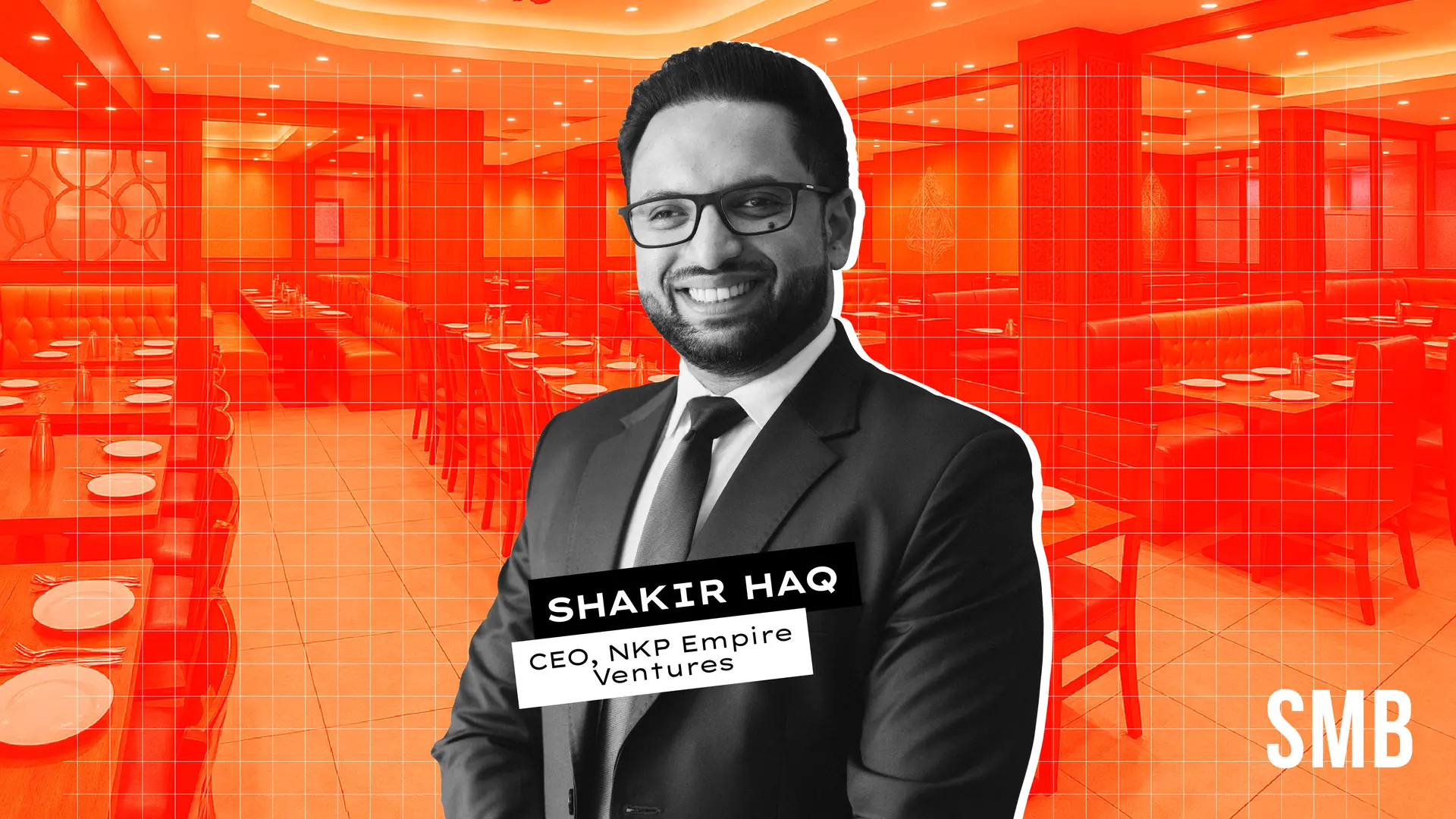
“Empire has always been a brand where you don’t plan (and go), you end up in Empire. It has been a go-to saviour for a lot of customers,” Shakir Haq, third-generation entrepreneur and present CEO of NKP Empire, tells SMB Story.
Over the last five-plus decades, the Bengaluru-based F&B company has built a Rs 560 crore (as of FY25) food empire, offering comfort-food through its various brands—Empire Restaurant, EasyBites, Empire Juice, Karama, and Vegetarea. Its presence today spans 45 physical outlets, 14 cloud kitchens, and nine kiosks across Bengaluru and its outskirts, backed by a team of close to 4,000 employees.
With close to 30,000 customers walking into an Empire restaurant every day, the brand fulfills around 15,000 online orders on a regular basis.
The inception story
A Kerala-born Malaysian citizen, Rahim ran eateries in the Southeastern country. During one of his travels back home, he visited Bengaluru—the closest trading point from his hometown Thrikaripur in Kasaragod district. “We had a lot of our fellow people from town working here in Majestic..opening restaurants, supermarkets, grocery stores, or chai shops,” Shakir says.
With the same intent and aware of his growing age, Rahim decided to start a food business in Bengaluru, with the eventual goal of settling down in India. Interestingly, his choice of location was sold off to another entrepreneur by the time he arrived in the city to close the deal. Disappointed, Rahim decided to head back to Kerala, when one of his close friends reached out with the proposal of a partnership at an existing restaurant in Central Street in the city. Thus, Rahim took up 50% share at an eatery near the old Opera Theatre.
The menu was unassuming and limited to basics like parotta, samosa, and chai.
After travelling to and fro between Malaysia and India for a few years, Rahim moved back to India and decided to take up full ownership of the eatery in 1974, and renamed it Hotel Empire, inspired by the name of old Empire Theatre in MG Road.
In 1978, his son (also Shakir’s father), Abdul Haq, took over the business and started experimenting with dishes that would later define Empire's identity.
Sticking to the basics
Innovation stuck Empire in the most unexpected way.
In late-1980s, when the parotta master at the restaurant rolled out a mini parotta from leftover dough, Abdul’s friend, also a regular customer at the restaurant, insisted on trying it and dipped it into his chai, accidentally terming it as the ‘coin parotta’—one of the cult dishes in the menu today.
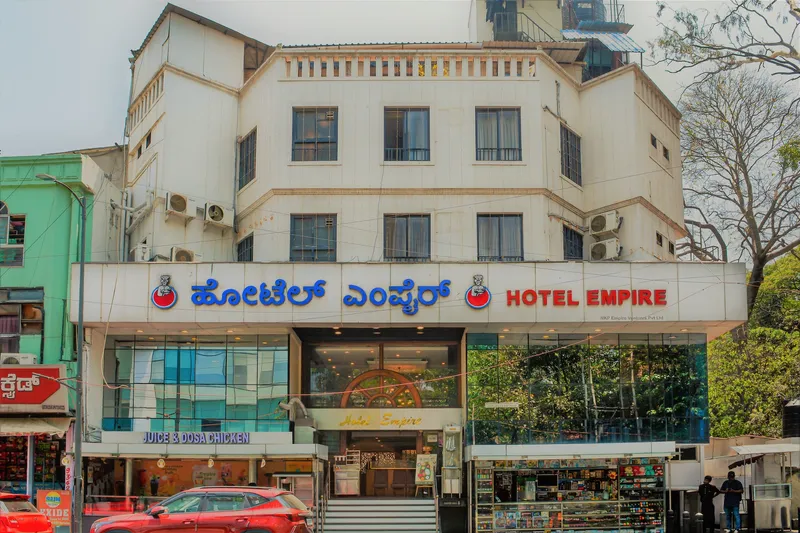
Empire's first ever outlet in Central Street, Bengaluru
Adbul was a perfectionist and frequent traveller, bringing ideas from across regions and countries into Empire's kitchens.
In 1995, he imported the rotisserie machine—one of the first ones in the country to do so, and introduced the grilled chicken at Rs 69. “This continues to have a cult following even today and is one of the bestsellers till date,” Shakir says.
The non-vegetarian thali followed soon, inspired by Abdul’s travels to Tamil Nadu, and eventually the dosa chicken came in too—inspired by a local street vendor’s experiment, but adding a twist of chicken keema.
While the brand continued to experiment with trends from across the world—shawarma and boba tea, Empire’s core menu remained timeless. “Over time, from coin parotta to grilled chicken and chicken dosa, the signatures continue to contribute to 65% of the total business,” Shakir reveals.
However, Empire has stayed away from the temptation of following every fad on the internet today. “People don’t like changes when they come to Empire…What they would want to change is the seating or service, but the food had to remain the same,” he adds.
The turning point
The turning point for NKP Empire came in 2003 when it opened the second outlet, its flagship store, on Bengaluru’s popular neighbourhood, Church Street.
“Banglaore got introduced to the IT boom, the BPOs and call centres were set up and the city also came to be known for its pub culture…People were venturing out late in the night, Church Street was frequented by millions on a weekend…and we were one of the few restaurants that were open late, post the clubbing and partying time,” Shakir shares the secret sauce behind the success.
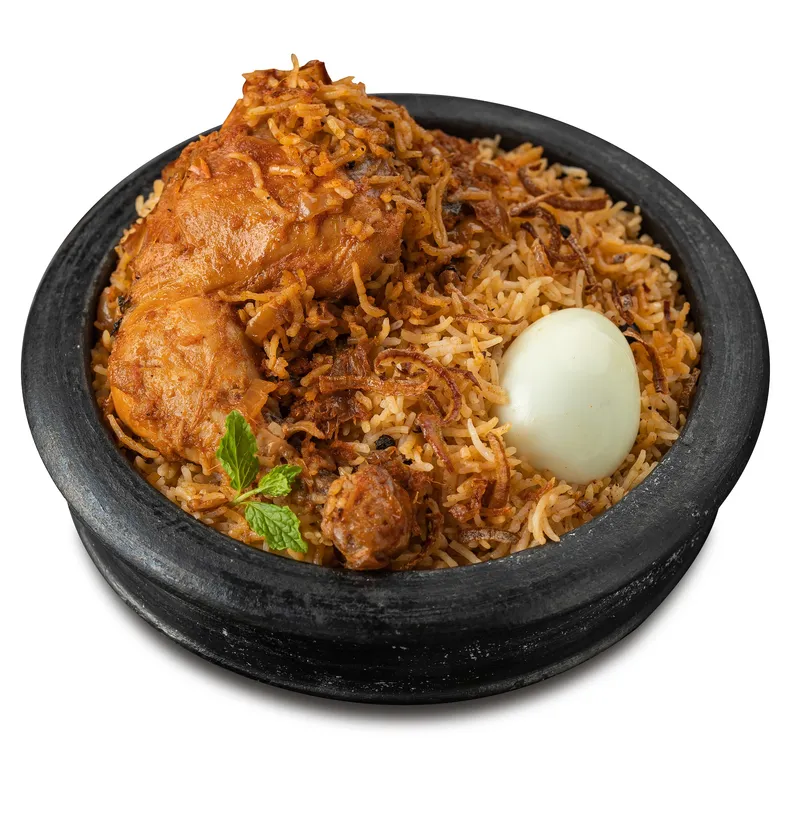
Chicken biryani by Empire
The 22-year-old restaurant, although recently revamped, continues to cater to customers in the busy street.
Shakir joined the company in 2009 after completing his graduation. As a third-generation entrepreneur, he has carried forward the values set by his grandfather—”Passion, people, and process”, ensuring that the food, service, and customer-first experience remains unchanged even as the brand modernises with time.
Under his leadership, NKP Empire scaled up from a single flagship into a multi-brand group comprising Empire, EasyBites, Karama, Empire Juice, and Vegetaria.
While Empire served comfort everyday food, Karama serves food inspired from Arabic, Karachi and Punjabi cuisines. Launched in 2015 in Frazer Town, Karama offers delicacies like mandi (slow-cooked meat and rice dish), hummus, pita, breads, rich gravies, and curries.
EasyBtes by Empire was launched as a QSR (quick-service restaurant) focused on fried chicken, ,burgers and sandwiches, and was an immediate success. “We priced fried chicken at Rs 49 for 85-90 gram (of chicken), while KFC was selling at Rs 75 and Five Star was selling at about Rs 60,” Shakir explains how the competitive pricing helped grow the brand.
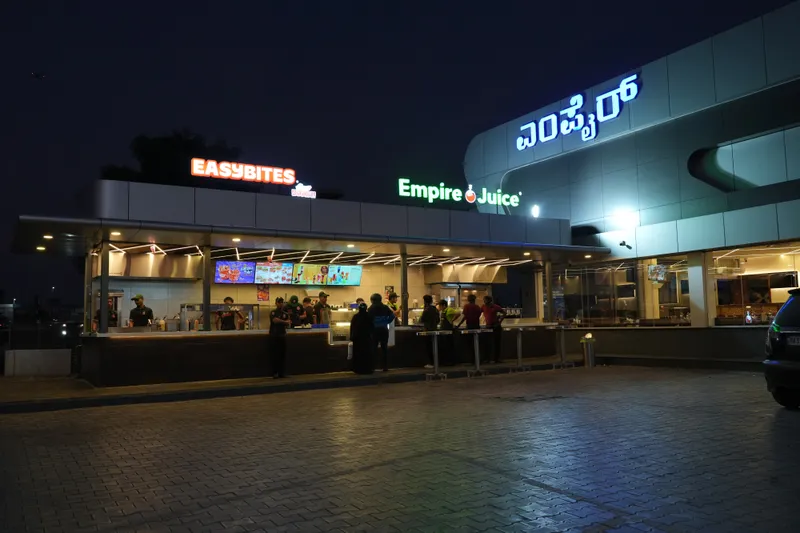
NKP Empire's Easybites and Empire Juice in Devanahalli, Bengaluru

The Anand Sweets legacy: 37 years of giving the humble mithai a premium twist
Today, about 80% of the company’s revenue comes from its flagship brand, Empire, while the remaining 20% from its other brands. Of the total revenue, 60% comes from offline orders, with the rest coming from online channels such as Swiggy, Zomato, ONDC, and its in-house home-delivery service.
Over the last few years, Shakir has also pushed for back-end systems, supply chain integration, cloud kitchens, and process-led efficiency. “Today we can calculate our wastages to 96% accuracy,” he adds.
During COVID-19 pandemic, when all F&B business came to a standstill, Empire went cash-flow negative. Shakir led the tough decision of shutting down four outlets, negotiating with vendors and landlords, and steering the company back to profitability.
“We have added more than 50% of the outlet numbers than what we had before COVID-19. Employee strength has gone up by about 80%,” Shakir says. He further adds that out of the 54 outlets (physical outlets and kiosks) that NKP Empire operates, 53 of them have been profitable since the last three years.
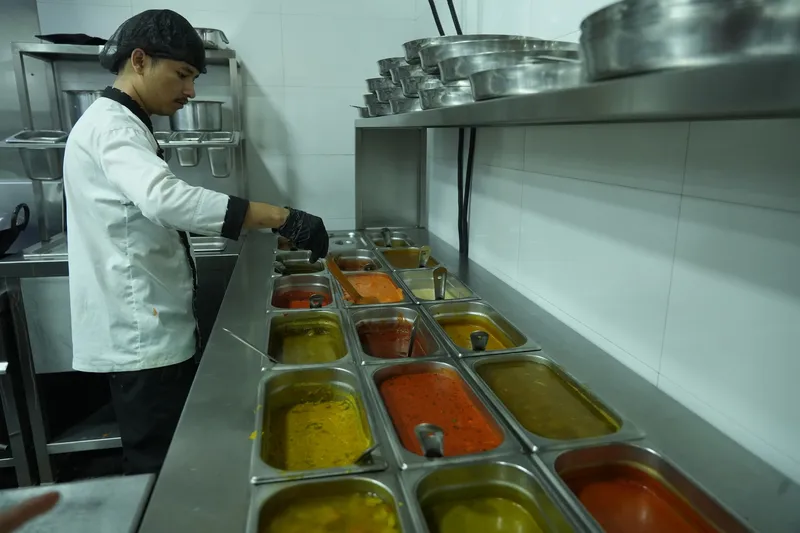
Inside an Empire kitchen
Vision 2030
Despite its scale, Empire has stuck to full ownership of outlets. Infact, “We do not wish to even offer any franchises going forward,” Shakir says firmly. Brand ownership, he explains, ensures quality control and consistency—two non-negotiables in Empire’s growth story.
The company is now eyeing its next big leap. Shakir aims to grow NKP Empire from an existing Rs 560 crore business to a Rs 1,200-1,400 crore company, and also plans to expand to the Tier II and Tier III cities of Karnataka, and expanding to Chennai and Hyderabad as well.
“Phase one expansion will also include backend strengthening. Phase two is going to be a global outreach, merchandise, and ready-to-use or ready-to-cook formats,” he says, adding that NKP Empire is also looking at entering international markets in the Middle East and Southeast Asia.
“Vision 2030 is not just numbers, but about a cultural and structural shift…Empire is a brand of the people, for the people, and by the people,” he says.
Edited by Megha Reddy