



Outlook 2026: How India is building early intervention systems for youth mental health
As the country grapples with rising adolescent distress, 2026 could be a year when we shift from crisis response to proactive, early intervention embedded in schools, communities and peer networks.

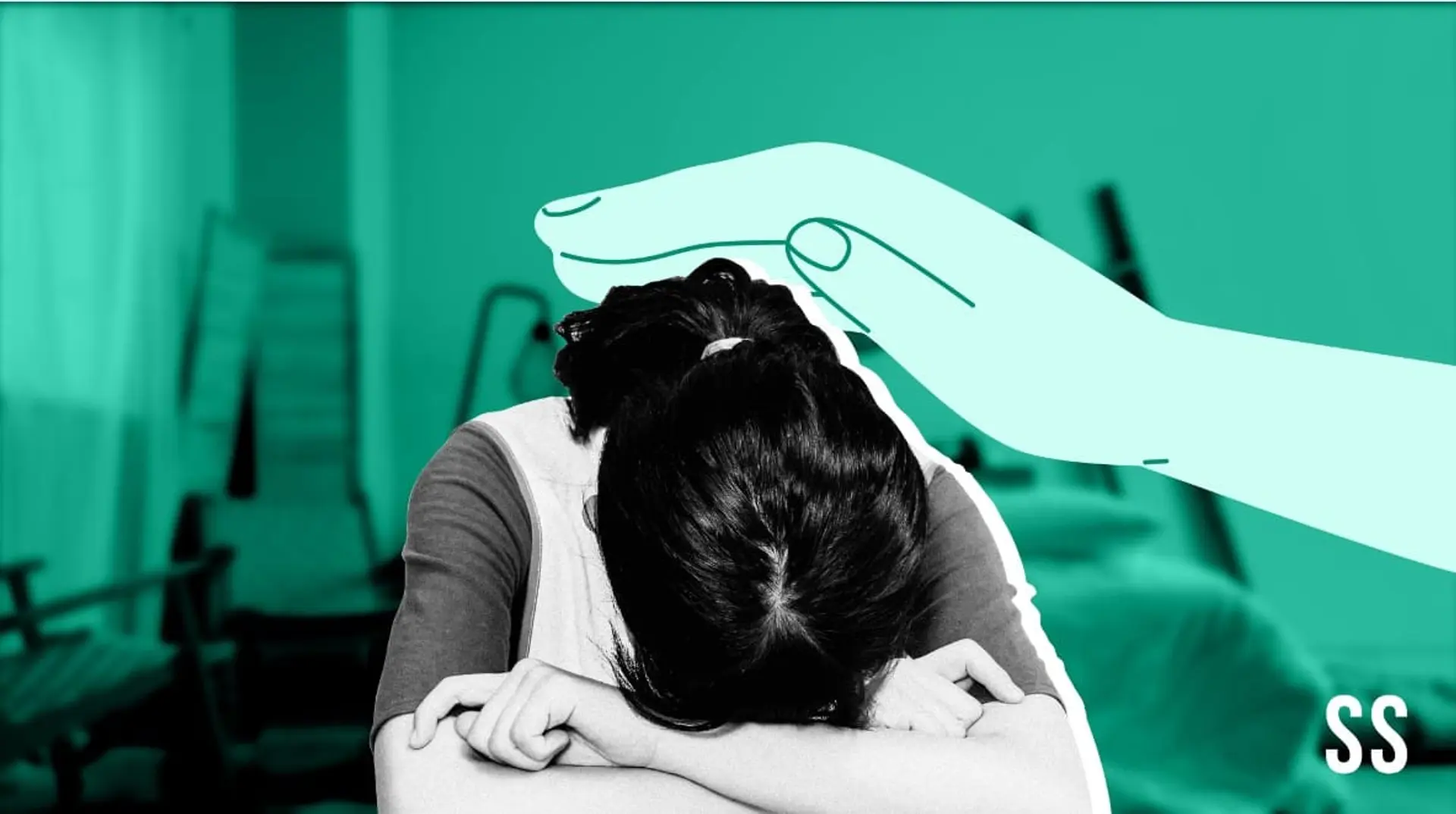

Youth mental health in India has been largely reactive. Only after underlying socio-cultural and economic factors escalate distress, families and systems scramble to respond.
However, over the past few years, this has been shifting. Policymakers, schools and civil society have begun seeing the need to invest in structured awareness, early-intervention and preventive support aimed at young people before distress turns into crisis.
This emerging ecosystem linking national government programmes, state initiatives and community-embedded psychosocial learning signals a fundamental shift in how India approaches youth mental health. This means that instead of waiting for needs to escalate, India’s education and health frameworks are now focusing on early identification, peer support, capacity building and emotional skills development.
Peer support and ‘I Support My Friends’ module
Recognising that adolescents often turn first to peers when in distress, in July 2025, the Ministry of Health and Family Welfare (MoHFW), in collaboration with UNICEF India and NIMHANS, launched ‘I Support My Friends’, an adolescent peer support module at a national consultation in Bhopal. Its curriculum—rooted in a ‘Look, Listen, Link’ framework—trains adolescents to recognise signs of emotional distress in peers, foster empathetic communication and guide them towards further help.
“We are building a society where young people are heard, supported and equipped to thrive,” said Rajendra Shukla, Deputy Chief Minister, Madhya Pradesh. “Adolescents today face immense pressures, be it from academics, families, or their social environments. We must create systems that allow them to speak up, be heard, and feel supported. Investing in their mental well-being is not just a policy priority; it is a moral responsibility and a commitment to our shared future,” added Shivaji Patel, Minister of State for Health, Madhya Pradesh.
The ‘I Support my Friends’ initiative strengthened the state’s existing adolescent peer-support component under the Rashtriya Kishor Swasthya Karyakram (RKSK), embedding youth-centred psychosocial literacy within an established health platform.
Experts hope that structured peer learning—once confined to classrooms—will ripple outward, creating supportive networks that identify early distress and normalise conversations around it.
Manodarpan: Government’s school-focused psychosocial backbone
In July 2020, in the midst of the COVID-19 pandemic, the Ministry of Education launched ‘Manodarpan’, a national mental health and psychosocial support initiative designed primarily for students, teachers and parents, as part of its Atmanirbhar Bharat Abhiyan. Designed during the pandemic with an aim to provide psychosocial support for the mental health and well-being of students, teachers and families across schools and colleges, it has since expanded into a broader awareness, resource and referral platform.
“With specific focus on children and adolescents, there are emerging mental health concerns that are often reported in such situations. Children and adolescents may be more vulnerable and may experience heightened levels of stress, anxiety and fearfulness, along with a range of other emotional and behavioural issues,” Ramesh Pokhriyal ‘Nishank’, the then Minister of Human Resource Development, said.
At its core, Manodarpan includes a national toll-free helpline for tele-counselling, advisory guidelines for students and families, educational webinars, online resources (FAQs, videos, posters) and a directory of counsellors for referral.
The initiative reflects a shift from ad-hoc crisis talk to structured psychosocial support embedded in school ecosystems—from classrooms to home settings.
As part of this expansion, the Manodarpan Cell and partners conducted a large-scale mental health and well-being survey to understand students’ perceptions and patterns of distress. The survey, involving 379,842 students in classes VI–XII from multiple states and Union Territories, was released in 2022. Its key findings included high levels of academic anxiety, exam stress and mood swings across grades, helping to justify the need for sustained psychosocial engagement.
In recent times, under Manodarpan, NCERT counselling services have started a tele-counselling network of around 270 counsellors, and daily interactive sessions to offer guidance on emotional well-being to school students via DTH and digital platforms.
This shift aligns with the National Education Policy (NEP) 2020’s vision of mental health integration into education—particularly by equipping teachers and platforms to engage with the emotional and psychosocial needs early on, rather than waiting for advanced symptoms.
Tele-MANAS and helpline networks: 24×7 support for schools and states
Complementing Manodarpan, the National Tele Mental Health Programme, Tele-MANAS, launched by the Government of India in October 2022, has become an important touchpoint for youth support. Operated under the Ministry of Health and Family Welfare, it provides 24×7 free, confidential mental health counselling with trained professionals, a mobile app and a video consultation feature.
To this date, the programme has handled over 23 lakh calls across 53 centres, with services in multiple languages, underscoring a rising demand for accessible early support. The Central Board of Secondary Education (CBSE) has explicitly directed affiliated schools to integrate Tele-MANAS helpline visibility into their campus communications through newsletters, assemblies and parent-teacher meetings.
In addition, mental health helplines like KIRAN (by the Ministry of Social Justice and Empowerment) and board-specific counselling services for students have further expanded early support resources.
State responses: Kerala’s Jeevani and Punjab’s new fellowship
States have also built bespoke responses around local contexts.
Kerala’s Jeevani Mental Health Programme places dedicated counsellors within college campuses to offer ongoing psychosocial support. Jeevani’s framework has so far expanded into dozens of colleges, serving tens of thousands of students with on-site counselling by trained psychology professionals.
In November 2025, Punjab launched a two-year government-backed Mental Health Fellowship, aimed at strengthening community-level capacity by training young specialists in psychology and social work. Partnering with institutions like AIIMS Mohali and TISS Mumbai, the programme deploys fellows into villages, schools, colleges and community centres to build integrated models spanning prevention, treatment and rehabilitation.
“To counter the rising epidemic of drug abuse, Punjab needs talented and compassionate youth to lead our fight against ignorance, stigma, and apathy,” said Balbir Singh, Punjab’s Health and Family Welfare Minister.
These state initiatives represent a shift from centralised, institution-bound services to localised, contextual support that meets youth where they live, learn and interact.
Strengthening youth mental health across spaces
Beyond government action, civil society groups are embedding social-emotional learning (SEL) within education as an active preventive strategy.
NIMHANS, for instance, collaborates with government and civil society partners, to strengthen youth mental health, including technical input into initiatives such as the ‘I Support My Friends’ peer support strategy under the Rashtriya Kishor Swasthya Karyakram (RKSK), India’s national adolescent health programme launched by MoHFW. NIMHANS is also centrally involved in the National Mental Health Survey‑2 (NMHS‑2) - the ongoing national study in nearly a decade that includes adolescents aged 13–17 - with an aim to provide robust, age‑specific data on prevalence, disability and service coverage across India.
Apni Shala Foundation, a Mumbai-based non-profit, offers experiential SEL programmes using art, drama and games, to foster emotional awareness, empathy, relationship-building and decision-making skills across schools. Its SEL certification programme ‘SEL Shala’ trains educators and caregivers to integrate mental-well-being competencies into school cultures and teaching practices.
Complementing direct SEL work in schools, The Banyan Academy of Leadership in Mental Health (BALM)—the academic and training arm of The Banyan—focuses on capacity building for those who support mental wellbeing in communities, including children and vulnerable youth. BALM’s mission is to prepare students, peer leaders and professionals with practical skills and community-driven approaches that bridge gaps in access to care, especially for marginalised groups. Its practice-led programmes include diplomas, certificate courses and master’s level training that equip learners to work in integrated mental health systems, emphasising inclusion, lived experience and contextually grounded care.
New innovations and hope for 2026
India’s growing ecosystem of early mental health interventions does not exist in isolation. Longstanding programmes such as Delhi’s Happiness Curriculum, which teaches mindfulness and relationship skills to primary school children, predate many newer initiatives and show how wellbeing can be interwoven into everyday learning. Meanwhile, state efforts like Rajasthan’s Khushi Shala—a mindfulness and compassion programme for young learners—point to further spread of early‑stage psychosocial education in school settings.
Beyond the urgency to scale, Dr Narasimhan urges the field to look deeper at how interventions are designed and whom they truly serve. She highlights that evidence shows that school‑based programmes for all students may sometimes backfire, and there’s concern that teaching broad mental health concepts could lead to over‑medicalising normal emotions. This calls for awareness to be balanced with developmental sensitivity and cultural grounding.
Dr Narasimhan also stresses the need to understand familial, relational and socio‑structural contexts in which mental health experiences emerge, rather than placing interventions solely in the realm of responding to individual distress.
She also points out that “the presence of a counsellor or even peer support is inadequate if educational environments and experiences by themselves remain untransformed.”
These reflections resonate with emerging data that underscore why early, systemic approaches are urgent. Government figures shared in late 2025 indicate that about 7.3 % of adolescents aged 13 - 17 across 12 states experience mental health disorders.
In the coming year, India can be expected to build further on its preventive, proactive architecture, deepening integration of social‑emotional learning (SEL) into curricula, scaling peer support training, investing in capacity building for educators and community practitioners, and leveraging new data streams like the ongoing NMHS-2 designed to provide robust, age‑specific data on prevalence, disability and service coverage that will guide policy more precisely.
If data and policy shifts are anything to go by, India is slowly but decisively moving from crisis management to pre‑emptive mental health support for its youth. By combining government platforms like Manodarpan and Tele‑MANAS, peer‑driven modules, state‑level innovations and early SEL frameworks, the country is laying the groundwork for mental health landscapes where distress is recognised, supported and addressed as early as possible.
Edited by Jyoti Narayan