



How Launch Girls is helping girls in 16 countries own their economic futures
Launch Girls helps adolescent girls develop the skills, confidence, and agency they need to succeed. Its customised, girl-centered entrepreneurship programmes prepare them for life beyond school.

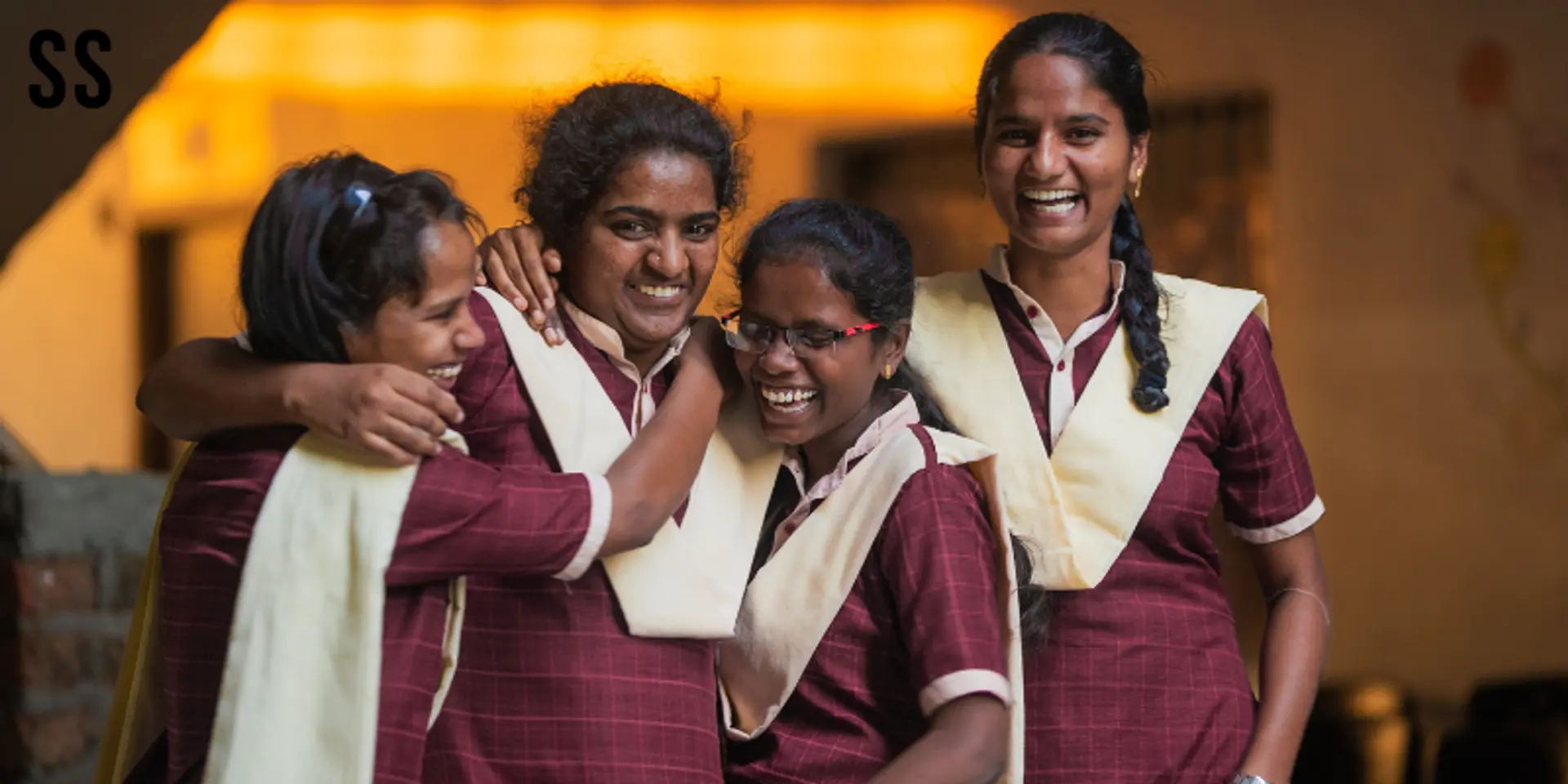

“I'm the first one from my village to be here.”
Neha Sahu has heard this sentence countless times, spoken by young women in college classrooms across rural India.
Unlike traditional interventions that celebrate such a milestone as the finish line, co-founders Averil Spencer and Neha Sahu see this statement as a starting point of a much longer journey.
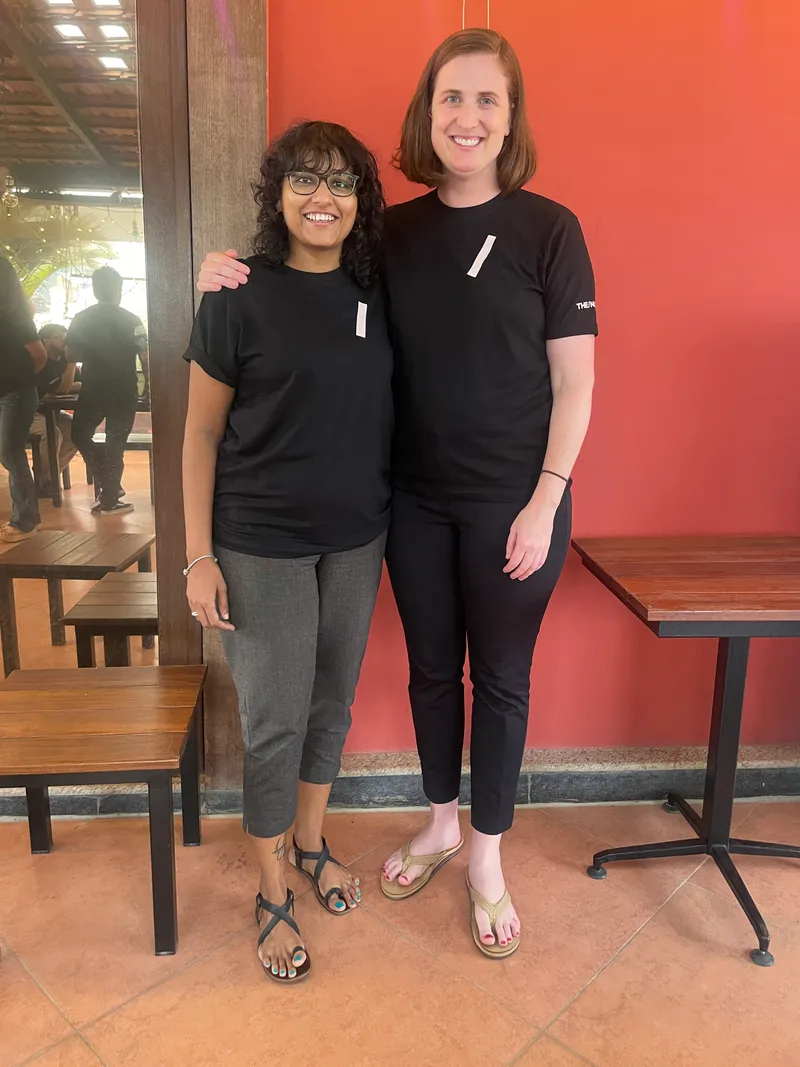
Neha Sahu and Averil Spencer - Co-founders of Launch Girls
Founded in 2020, Launch Girls helps adolescent girls in 16 countries develop skills, access economic opportunities, and challenge perceptions so they can shape their own futures.
After studying psychology and education in New York and working with public schools in the US, Sahu returned to India in 2010 with a question: why was the Indian education system so far behind?
She joined Teach for India’s second cohort, working with 48 second and third-graders in Dadar, Mumbai.
“My students played brilliant football. They came to school to play more than to sit in class. I said, "Let's take our lessons to the field.’”
Sport for development
She founded Just For Kicks, an organisation that used football as a curriculum to develop teamwork, collaboration, and leadership for kids aged 8 to 16.
"Getting 10 to 20 girls to play was a massive struggle. They didn't know they could play or were allowed to play. School stakeholders had never faced having a girls' team. Parents from Mumbai's Govandi to rural Karnataka, would say, 'My eight-year-old daughter can't break any bones or become darker because I'm preparing her for marriage.'"
That's when Sahu realised that working with girls and women couldn't be just a project; it had to be a full-time commitment.
By 2018, Just For Kicks merged with another organisation to become Enabling Leadership, expanding to include music and other life skills.
Sahu took a nine-month sabbatical to reflect on what she had learned over a decade of work. Three realisations crystallised during those months:
First, she was the lone woman NGO founder since 2011, making decisions in rooms full of men. Even with her loud voice and position of power, the isolation was real.
Second, there were no specific programmes for the girls and women she worked with.
Third, and most urgently, she wanted to understand what happened to the girls from her programmes. She started tracking them down—girls who had been part of Just For Kicks and Enabling Leadership for 10 or 11 years.
The pattern was consistent. Whether in rural Karnataka or big cities like Mumbai and Pune, brilliant girls who had scored more than 80% in their exams, who played sports, and seemed destined for success hit the same wall after 10th standard. They got deprioritised over boys because of finances or mindset. They didn't know where to go for help or who could guide them.
During that sabbatical, Sahu expanded her research beyond India, talking to networks in Africa. She found out that the broader universal challenges related to gender were similar. Girls in Kenya and Cameroon were facing the same barriers as girls in Telangana and Karnataka.
How two paths converged
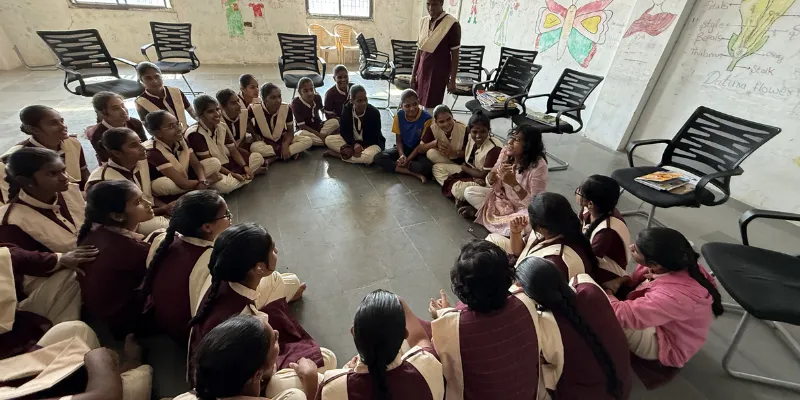
A session in progress
It was during this period that a job posting appeared in her Teach for India WhatsApp group.
Half a world away, in the US, Spencer was on a similar journey. She first came to India on an IDEX scholarship and worked with private affordable schools in Hyderabad where she understood the state of girls’ education.
With a grant from Nike Foundation, Spencer started VOICE for Girls, an NGO focused on voice, choice, and rights for girls across Telangana and Andhra Pradesh. After four years, she returned to the US, completed an MBA and MPA, and worked with Deloitte for a year before realising that she wasn’t cut out for consulting. In 2020, she quit, researched the gap in school-to-work transitions and started Launch Girls.
Between March and December 2020, Launch Girls conducted surveys with 500 girls and held online classes with 300 of them from 13 different countries. Spencer was testing a hypothesis: were the barriers facing girls universal across the Global South, or were they unique to each context?
She found that girls had dreams, but lacked confidence regardless of their academic achievements.
They faced resistance from families. They needed skills training, and also fundamental shifts in how they saw themselves and how their communities saw them.
The Girl Boss Business programme was launched online in 2020 but Spencer realised that girls needed in-person mentorship and relationship building. This led to Girl Boss Basics in 2021, a 40-hour programme that introduces girls to entrepreneurial education, mindsets and skills.
“We thought the girls would use pitches for internships and leadership positions, but many used them to negotiate with parents. Parents told us they had never heard their daughters talk and had no idea what they wanted,” Sahu says.
In 2021, Launch Girls worked with over 1,700 girls across 10 countries.
Spencer needed a partner who understood the Indian context deeply, had worked in systems change and shared a commitment to empowering girls and women.
The job posting on the Teach for India WhatsApp group got Spencer and Sahu talking for three months. She joined the organisation, transitioning from COO to Co-founder and Co-CEO.
Launch Girls partners with governments in India and NGOs in Africa, building capacity to deliver Girl Boss programmes in three areas.
# Develop work-readiness skills
# Develop personal agency and economic agency
# Help girls and young women build support systems and networks
“We work with girls between the ages of 14-24, helping them evolve from education to earning. Our vision is for girls to own their futures. We are building inclusive economies where women's economic participation increases,” explains Sahu.
The Girl Boss journey
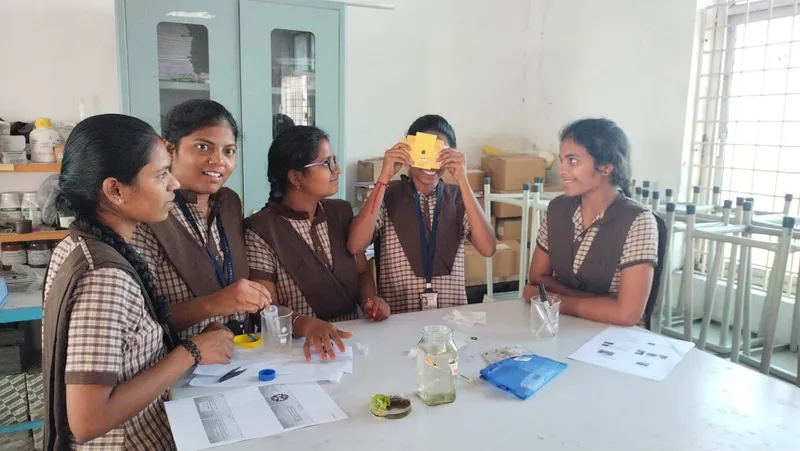
In India, they organised pilots across 14 states over five years. Launch Girls has partnerships with state governments in Telangana and Karnataka, working with higher education departments that run degree colleges.
The intervention spans three years:
During the first year, girls develop understanding of themselves, their strengths, values, and potential career pathways. They learn to negotiate with families and navigate obstacles.
In the second year, they gain exposure to entrepreneurship and different career pathways, paired with mentorship through exposure visits and external mentors.
In the final year, they work on projects, complete internships, and get ready to start employment or a business.
The programmes are delivered by college teachers, and Launch Girls has trained more than 700 of them across government systems. The training isn't just about curriculum delivery.
“When we train these teachers for three days, most are women from the area who went through similar education systems. It's more about whether they are in their late twenties or late fifties, having their aha moment about their own lives, what they have overcome, and how they can now do something different for the girls around them,” Sahu shares.
It has impacted 25,000 girls so far, out of which 18,000 are from India. With 32 partners, 750 Girl Boss Advisors, and 200 student leaders, Launch Girls is building a strong ecosystem to support girls’ leadership and entrepreneurship.
In Africa, the model spans 15 countries, where NGOs receive intensive support in the first year, tapered funding in the second, and by the third year, take full ownership of programme implementation.
“We train their trainers, give them toolkits online, and run monitoring and evaluation,” Sahu adds.
How girls became bosses
Sai Nikitha from Vallabhi, a small village in Telangana’s Khammam district, is currently pursuing her first year MBA in Hyderabad and is also working with Magic Bus. Her journey began in 2022 at TSWRDC Khammam College when she joined the Girl Boss Basics programme by Launch Girls.
The programme introduced her to concepts such as personal value proposition, goal setting, personal branding, and personal finance, helping her gain clarity and confidence. It sparked her interest in sustainability. Noticing eggshell waste in her college cafeteria, she explored ways to repurpose it into eco-friendly products.
“The Girl Boss Basics programme helped me recognise my strengths and believe that I can create value,” she says.
Through a pilot of Girl Boss Clubs, Launch Girls and World Economy Skills and Agro Development (WESAD) Cameroon supported 20 Girl Boss alumni to address deforestation caused by firewood use.
With mentorship, the group developed fuel briquettes as a cleaner alternative and secured approval for a briquette-making machine, now operational in Barmeda. The initiative has grown into a women-led microenterprise, Green Lady Bosses, engaging young girls and older women.
The project is reducing deforestation, improving access to clean cooking fuel, and creating income opportunities.
As part of The Nudge/Institute’s incubator and accelerator programmes, Launch Girls gains access to a robust network of industry practitioners, investors, and experts spanning finance, fundraising, legal, and scale strategy.
Other donors include State Street Foundation, Hartex, NSRCEL Incubator, Hodge and Schuyler Family Foundation and Rati Forbes.
Launch Girls learned a critical lesson that being hyper-focused on girls alone doesn't work.
They started conducting workshops with boys to gender-sensitise them. They began inviting family members to community showcases. They worked with college principals and administrators.
The framework now includes seven key competencies: digital literacy, financial literacy, strategic thinking, change readiness, effective communication, collaboration, and support networks—all through a gender lens.
Globally, the target is reaching one million girls, a critical mass that can spark a genuine movement.
It's also about systemic change.
"I don't want to celebrate five women from a village of 300, I want all 300 women to be decision-makers in their own lives. I want to see women running kirana shops proudly with acknowledged payments, not as unpaid labour. Women choosing where they work. Women starting businesses from backgrounds unlike mine,” she emphasises.
Edited by Megha Reddy