



This month in AI: Mega funding, lean unicorns, and cracks in reasoning models
From AI giants OpenAI and Meta securing fresh capital worth billions to growing concerns over the reasoning limits of large language models, AIStory brings a recap of major developments and emerging trends in the sector.



June saw a fresh wave of billion-dollar deals in AI.
While capital continues to pour into the sector—with OpenAI, Meta, and Glean chasing billion-dollar bets—Apple’s new research is beginning to question the reasoning capabilities of even the most advanced models, with Gartner issuing reality checks on AI's long-term viability.
At the same time, AI-native startups are rewriting the playbook for scale, with lean teams building products that reach unicorn status in record time. However, SaaS giant Freshworks is riding on a new mid-market advantage, while Binny Bansal-backed ShopOS is pushing AI-native strategies for the ecommerce sector.
AIStory brings a recap of major developments and emerging trends in the sector.
Enterprise AI playbook
As enterprise SaaS adjusts to AI disruption, companies like Freshworks and LeadSquared are restructuring their internal playbook to surf the wave.
Freshworks CEO Dennis Woodside on staying ahead in the AI race

It’s been a little over a year since Dennis Woodside took the steering wheel at Freshworks, and he’s been swerving the Chennai-founded company into the fast lane of the software-as-a-service (SaaS) industry as artificial intelligence (AI) seeps into every business process. Like any other SaaS firm, AI has become central to Freshworks’ playbook too.
After taking the reins as CEO from Girish Mathrubootham, Woodside has configured the organisation chart to align with its AI-integrated services. Its product and engineering teams now sit inside an all-AI unit as the firm places a bet on specialised, low-friction automation, separating it from a crowded SaaS pack.
We will be IPO-ready in 12-18 months: LeadSquared’s Prashant Singh
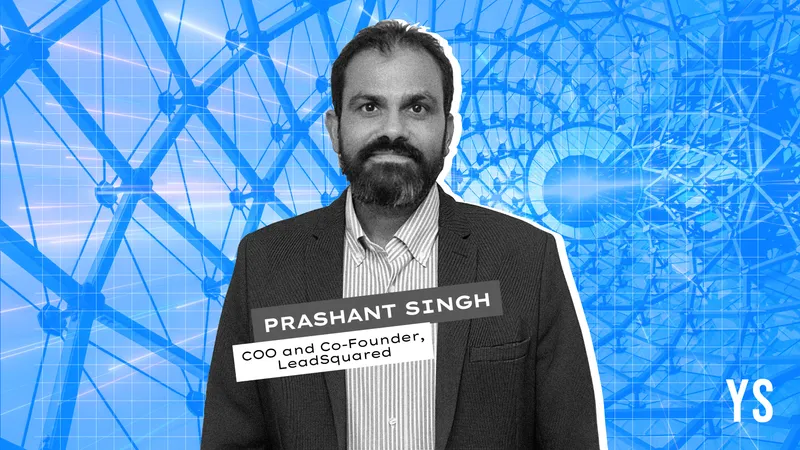
While some industry veterans warn of an “AI winter” threatening traditional SaaS models, Indian SaaS unicorn LeadSquaredis charting a different course. Rather than seeing artificial intelligence (AI) as a threat, the company views it as a means to build sharper products and deliver more measurable outcomes.
“We are cognizant of the fact that we don’t have to use AI for the sake of AI. It’s not FOMO. It’s ultimately about what value you pass to the customers,” Prashant Singh, Co-founder and COO, LeadSquared, tells YourStory.
As several companies scramble to safeguard their businesses from AI disruption, LeadSquared is busy AI-powering theirs, betting that its purpose-built intelligence will separate winners from the merely surviving in the next wave of enterprise software.
The next unicorn could be run by a solo entrepreneur with AI

It took five funding rounds spread over five years for the software powerhouse Salesforce to hit a billion-dollar valuation, a feat that legacy enterprise software giants like SAP and Oracle had taken decades to achieve. With AI, companies are scaling within months and with leaner teams.
These AI-native startups—think AI image generator startup Midjourney and coding platform Cursor—are posting eye-popping annual recurring revenue, ranging anywhere from $10 million to well over $100 million. While it sounds unreal, a new-age coder with a rack of GPUs and co-pilots could, in theory, spin up a product, ship globally, and sprint to $100 million ARR before a traditional SaaS giant can even finish its next headcount planning cycle.
Startup spotlight
Not every founder is chasing the AI hype—startups like QNu Labs and Resilience AI are targeting high-impact opportunities with the new technology.
QNu Labs is betting big on quantum physics, not AI

About a decade ago, when demonetisation pushed billions of Indians onto digital payment platforms, Sunil Gupta saw an issue nobody was talking about: digital trust. While the attention was on cashless transactions, Gupta was focused on building India’s own digital security platform. He was convinced that the country’s digital future couldn’t be built on borrowed security tools or imported products.
“While a billion users were going to come onto the digital platform, India needed its own sovereign and self-reliant digital security platform. There’s no digital economy without digital trust,” Gupta tells YourStory in an exclusive interaction.
As he pondered over how he would build this trust, he chose not to join the AI gold rush. Instead, he bet on quantum cryptography: an advanced approach that uses the fundamentals of quantum science for encryption to build a sovereign cybersecurity platform.
Resilience AI shows how risk-prone your city’s buildings are

Flooded streets in Bengaluru, heat-induced power outages in Delhi, landslides cutting off towns in Himachal—these are no longer anomalies but seasonal expectations. While the frequency and intensity of climate disasters continue to rise, most infrastructure systems across the country are outdated, built for a world that no longer exists.
The cost of this mismatch is huge, in terms of both money and human lives, and it’s mounting each day. While data can be used to forecast climate-related events and risks, a lot of it is unstructured and fragmented. And the data seldom translates to action.
Kosmc.ai’s no-code, all-in-one social revenue platform is empowering creators

What if building a business on social media didn’t require millions of followers or a big team? Delhi-based Kosmc AI is creating a no-code, all-in-one social commerce platform that helps everyday creators and brands in Tier II and Tier III cities translate influence into revenue.
Founded in 2024 by Ankur Gupta and Manavta Narula, the founders’ goal was very clear: to allow anyone with a social media presence, whether the users have 500 followers or 5 million, to monetise it. Gupta believes that people “don't have to have a million followers to monetise.”
AI funding spree
OpenAI in talks to raise $40B from Reliance, Saudi’s PIF, others
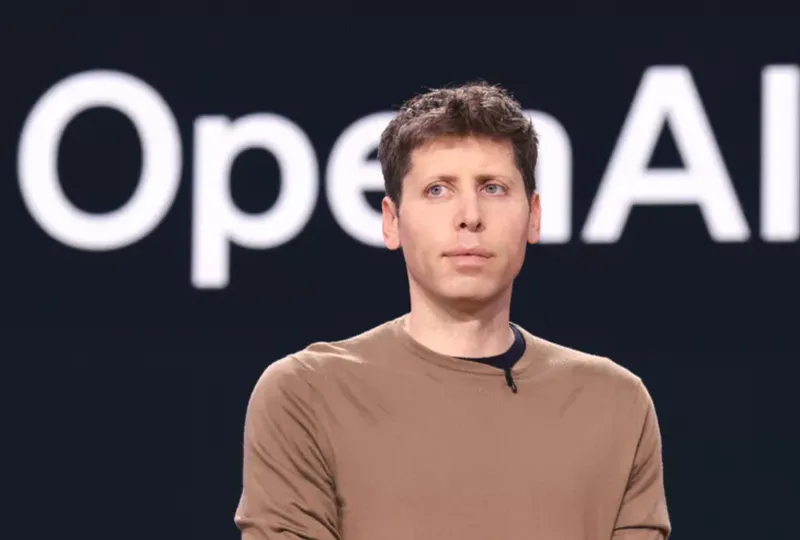
OpenAI is in discussions to raise up to $40 billion in funding, holding talks with Saudi Arabia’s Public Investment Fund (PIF), Reliance Industries, and UAE-based MGX, reports The Information. Each investor is expected to contribute at least several hundred million dollars, with SoftBank reportedly leading the round. The funds will support Sam Altman-led firm’s next phase of model development and its large-scale data centre project, Stargate.
OpenAI has also approached other major backers, including Coatue Management and Founders Fund, each expected to invest at least $100 million. The company is targeting an additional $17 billion in financing by 2027.
Meta in talks to acquire 49% stake in Scale AI for $14.8B: Report

Meta Platforms is planning to acquire a 49% stake in Scale AI for $14.8 billion, according to a report by The Information on Tuesday. The deal, yet to be finalised, will see Meta’s cash investment go directly to Scale’s existing shareholders, the report said.
It added that as part of the agreement, the 28-year-old CEO of Scale AI, Alexandr Wang, is expected to take a senior leadership position within Meta. The transaction marks a windfall for Scale’s early backers, including Accel, Index Ventures, Founders Fund, and Greenoaks Capital, as well as current and former employees.
Enterprise AI startup Glean raises $150M in Series F round at $7.2B valuation

Enterprise AI platform Glean has secured $150 million in Series F funding, pushing its valuation to $7.2 billion.
The round was led by Wellington Management, with new backers including Khosla Ventures, Bicycle Capital, Geodesic Capital, and Archerman Capital. Existing investors such as Altimeter, Capital One Ventures, Citi, Coatue, DST Global, General Catalyst, ICONIQ, IVP, Kleiner Perkins, Latitude Capital, Lightspeed Venture Partners, Sapphire Ventures, and Sequoia Capital also participated in the round.
The fresh capital infusion will fuel product development, expansion of its global partner ecosystem, and support its international growth plans.
Flipkart Co-founder Binny Bansal invests $20M in ecommerce AI startup ShopOS
AI startup ShopOS has raised $20 million in a funding round led by Flipkart Co-founder Binny Bansal’s 3STATE Ventures. The Bengaluru startup plans to use the funding to expand its platform development, grow its product and engineering teams, and acquire new international brand partners.
“ShopOS is an AI-native operating system for ecommerce. It’s an agent-driven stack that lets brands make, market, and manage their stores,” Ajay P V, Co-founder of ShopOS, told YourStory.
Trends to watch out for
Several industry reports and financial milestones paint a clearer picture of where AI is headed and who's winning.
‘It’s game time for AI’: Bond VC's Mary Meeker on her latest AI trends report
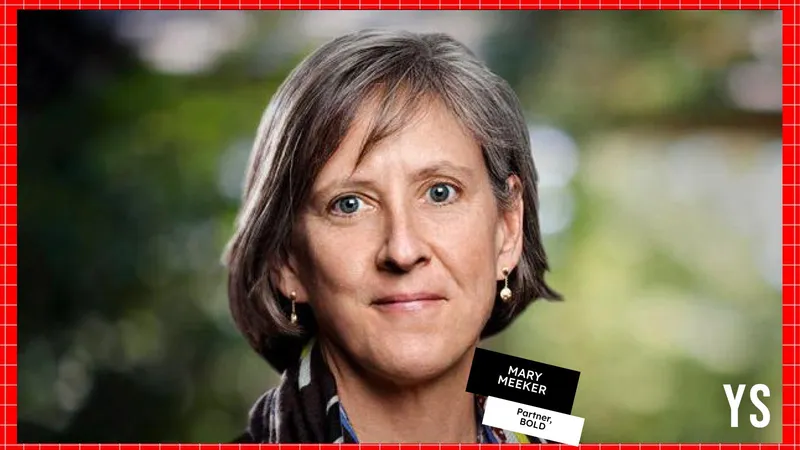
US venture capitalist Mary Meeker, famously known as the “Queen of the Internet” for her influential Internet Trends reports, last week released a deep analysis of artificial intelligence.
In a 340-page report titled ‘Trends – Artificial Intelligence’—which comes five years after her last analysis, Meeker outlines key takeaways on how AI is influencing economic structures, global behaviour, and business models, with the word “unprecedented” appearing over 50 times. Now founder and general partner at VC firm Bond, the investor previously led Kleiner Perkins’ growth fund, backing giants like Facebook, Twitter (now X), Spotify, and Block (formerly Square).
OpenAI clocks $10B in ARR driven by ChatGPT adoption
OpenAI has reached $10 billion in annual recurring revenue (ARR), more than doubling from around $5.5 billion last year, as demand for its ChatGPT products continues to surge.
This development comes less than three years after the San Francisco startup first launched the viral AI chatbot. According to a company spokesperson, the ARR figure includes revenue from OpenAI's consumer subscriptions, business offerings, and API usage, but excludes Microsoft licensing income and large one-off deals, reported CNBC.
AI note-taking app Fireflies reaches $1B in valuation, partners with Perplexity

AI-powered meeting assistant Fireflies.ai has crossed a $1 billion valuation following its first tender offer. The company said the tender offer will provide liquidity to early team members who have been with Fireflies for several years, with the offer being extended to 10-15% of the workforce.
The San Francisco-based startup has also partnered with AI startup Perplexity to add real-time, voice-activated web search into meetings. This joint effort has led to the creation of a new feature called “Talk to Fireflies,” allowing users to pull up information without leaving meetings.
Microsoft ready to exit OpenAI deal over strategic disputes: Report
Microsoft is reportedly preparing to step back from high-stakes negotiations with OpenAI after an escalating standoff over terms governing their future collaboration. According to Financial Times and Reuters, talks have hit a near-impasse over fundamental issues including equity, revenue-sharing, and access to core technology.
Microsoft first poured a reported $13 billion into OpenAI, securing exclusive access to its advanced AI models and integrating them across Azure, GitHub Copilot, Bing, Edge, and more. The partnership rapidly positioned Microsoft as a formidable force in the AI landscape.
AI at caution
While the hype is at an all-time high, concerns around reasoning and safety are paralelly getting louder.
Apple research predicts reasoning models may fall short with complex problems
A new study by Apple has revealed that reasoning AI models may not be as capable as their fancy benchmark scores suggest, facing a ‘complete accuracy collapse’ when faced with complex tasks.
In its latest paper titled ‘The Illusion of Thinking: Understanding the Strengths and Limitations of Reasoning Models via the Lens of Problem Complexity’, the iPhone maker argues that while the models may perform well with detailed explanations and responses, they still lack general reasoning.
The paper cites popular AI models like OpenAI’s o1 and o3, DeepSeek-R1, Claude 3.7 Sonnet Thinking, and Gemini Thinking, known for their thinking capabilities, such as extended chain-of-thought (CoT) and self-reflection.
Godfather of AI Yoshua Bengio launches non-profit LawZero to keep AI from lying
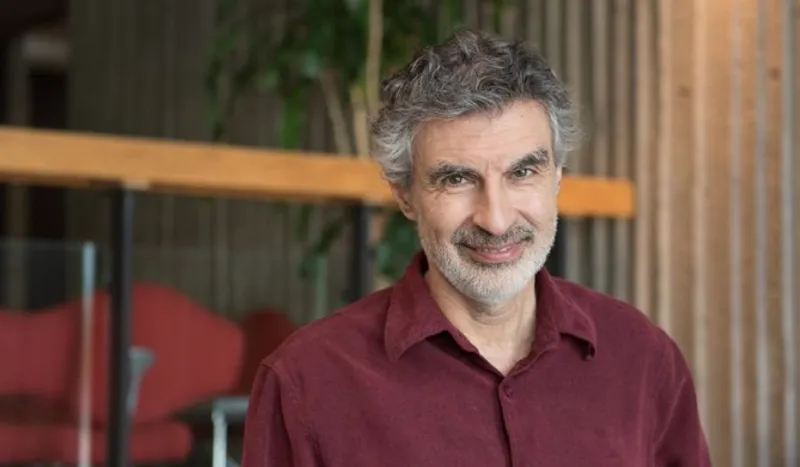
Yoshua Bengio, popularly known as one of the 'Godfathers of AI', on Tuesday launched LawZero, a non-profit organisation to build safer AI systems. The new venture brings together leading AI researchers to focus on safety-first development, addressing growing concerns about dangerous capabilities emerging in AI models. "LawZero is the result of the new scientific direction I undertook in 2023, after recognising the rapid progress made by private labs toward Artificial General Intelligence and beyond, as well as its profound implications for humanity," said Yoshua Bengio, President and Scientific Director at LawZero.
Over 40% agentic AI deployments will be abandoned by 2027: Gartner
According to research and advisory firm Gartner, more than 40% of agentic AI initiatives will be abandoned by the end of 2027. The research comes amid increasing interest in the emerging subfield of AI, which aims to build systems capable of proactive, autonomous decision-making with minimal human supervision.
Gartner defines “agentic AI” as a category of artificial intelligence models that can autonomously perform complex tasks such as planning, learning, and goal achievement. These models go beyond traditional generative AI by not just producing content but by taking action on behalf of users or systems.
Popular examples include AI agents for scheduling, autonomous software workflows, and self-directed digital workers.
Edited by Kanishk Singh