



How these family-owned businesses are reinventing themselves in India
From sweets and milk to sarees and carpets, India’s legacy family businesses are embracing digital tools, ecommerce, and global markets to stay relevant.

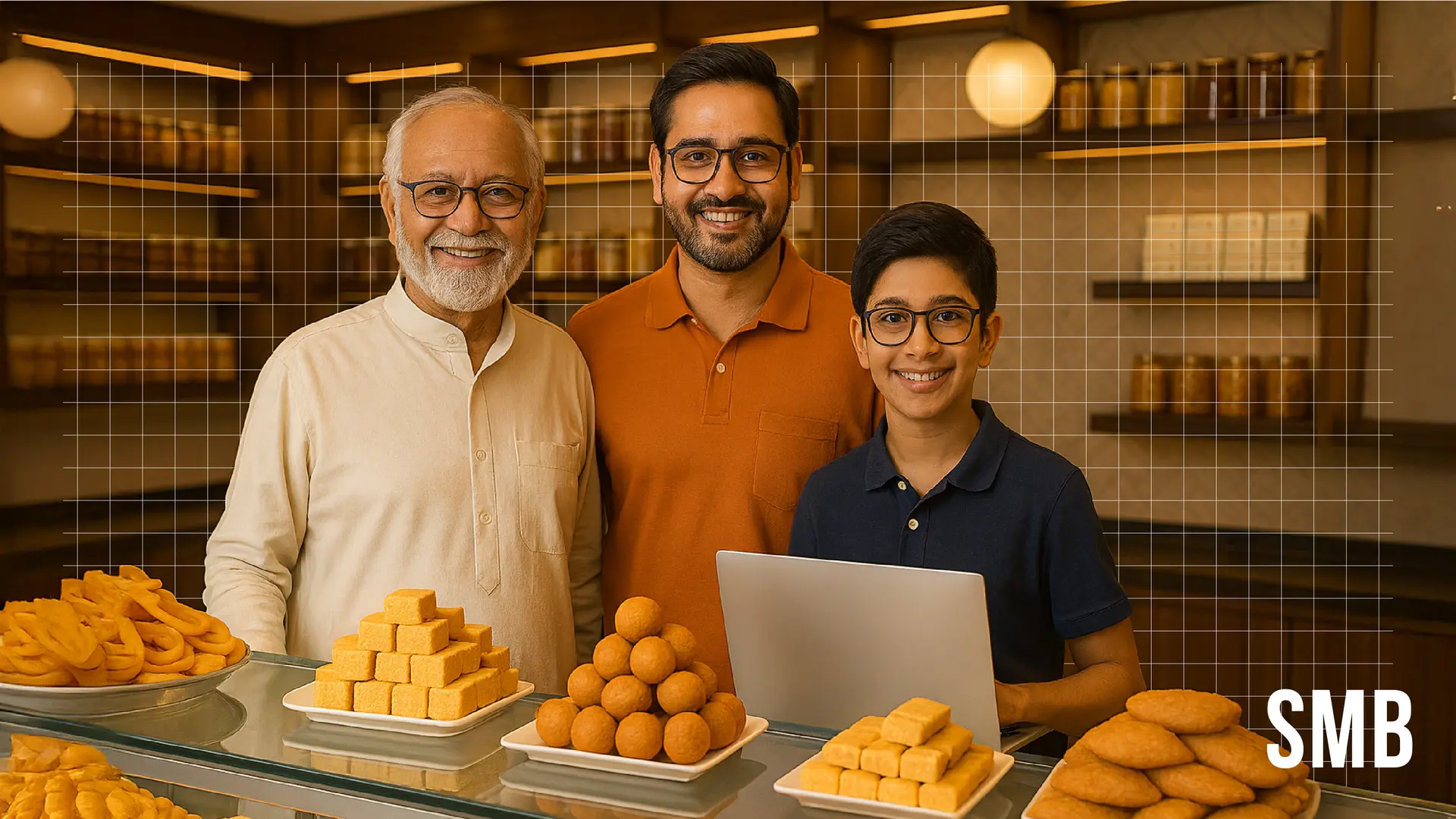

For generations, India’s economy has rested on the shoulders of family-owned small and medium businesses (SMBs). These brands were built in neighbourhood markets, workshops and home kitchens, providing livelihoods across generations while shaping India’s cultural and economic fabric.
Traditionally, they operated within close-knit family structures, relying on word-of-mouth, loyal customer bases, and conventional retail formats. But the ground has shifted. The rise of ecommerce, digital payments, and social media has reshaped how consumers discover, shop, and interact with brands.
Now, a new generation of heirs, often armed with global education and digital-first mindsets, are increasingly pushing legacy businesses to modernise. At the same time, rising disposable incomes and aspirations in Tier-II and Tier-III cities have opened up new growth avenues.
This shift is not just about going online; it’s about rethinking the business model. Family-run SMBs are experimenting with direct-to-consumer (D2C) channels, embracing influencer-led marketing, optimising supply chains with tech, and exploring international markets. In doing so, they are preserving their heritage while finding relevance in a fast-changing market.
Here are some of the legacy businesses leading the charge and reinventing themselves in the digital age.
Haldiram’s
Once a regional snack brand from Bikaner, Haldiram’s has grown into a global name. The family-owned business has expanded beyond sweets and namkeens into packaged foods, quick-service restaurants, and online retail, catering to both Indian and international markets.
The company, founded in 1937 by Ganga Bhishen Agarwal, has manufacturing plants in Nagpur, New Delhi, Gurugram, Rudrapur, and Noida.
The third-generation family business run by Delhi-based brothers Manohar and Madhusudan Agarwal and Nagpur-based Shiv Kishan Agarwal has embraced modern retail formats, packaging innovation, and international exports, while also experimenting with online delivery platforms and ready-to-eat packaged meals.
Today, Haldiram’s competes with global FMCG players, but continues to be anchored in its traditional recipes and brand trust built over decades.
Parsi Dairy Farm
Once a small milk delivery business in Marine Lines, Mumbai, Parsi Dairy Farm has grown into a 100+ year-old legacy brand loved for its dairy products, sweets, and kulfis.
Founded in 1916 by Nariman Ardeshir with just a single can of milk, the family-run business is now led by the fourth generation—Sarfaraz K Irani, Bakhtyar K Irani, Zeenia K Patel, and Parvana S Mistry. It has expanded from milk to a portfolio of 80+ products, including ghee, paneer, kulfi, mithai, and yoghurt.
With a 300-acre production unit in Talasari in Maharashtra, it has partnered with hotels and premium retailers, and has a growing presence across ecommerce and quick-commerce platforms.
Anand Sweets
Once a single mithai shop in Bengaluru’s Commercial Street, Anand Sweets has grown into a premium sweets and savouries brand with a strong presence across retail, airports, and quick-commerce.
Known for its Mysore Pak, the brand has repositioned traditional mithai as modern, giftable products through premium packaging and design.
Anand Sweets was founded in 1988 by Anand Dadu, and the company is now led by second-generation entrepreneur Arvind Dadu. Over the years, it has expanded into savouries, fusion mithai, and restaurants under the Purani Dilli brand, while also partnering with Rebel Foods for cloud kitchens.
With a 1,500-member strong team and centralised production facilities, Anand Sweets serves both domestic and international markets, including the Middle East, North America, and Southeast Asia.
Apart from being a household name in Bengaluru, Anand Sweets has also become a corporate gifting powerhouse, known for blending heritage recipes with contemporary formats and packaging innovation.
Nalli Silks
Founded in 1928 in Chennai by Nalli Chinnasamy Chetti, Nalli Silks began as a single saree store catering to South India’s silk traditions.
However, under the leadership of fifth-generation entrepreneur Lavanya Nalli, the 95-year-old family business has taken a bold digital turn.
After her MBA at Harvard and a stint at Myntra, Lavanya returned to the family business in 2016 with a focus on ecommerce. She launched Nalli.com to give the brand a strong online presence and reach loyal customers across the world, even where no Nalli store existed.
Today, the brand has 40+ stores across India and abroad (including New Jersey and California) and is preparing to expand into new international markets like Dallas, Chicago, and Toronto.
The brand continues to be synonymous with weddings and festivals, but has adapted its collections and marketing to appeal to global Indian diaspora communities as well.

Jaipur Rugs
Rajasthan-based Jaipur Rugs was founded by Nand Kishore Chaudhary in 1978. As the founder and Chairman, he remains the central figure and visionary behind Jaipur Rugs. The company is structured as a family business, with all of Nand Kishore's children holding key leadership positions.
The company employs more than 40,000 weavers and artisans from 600 villages across the country, and exports carpets to more than 60 countries.
Jaipur Rugs specialises in hand-tufted and hand-knotted carpets. Its carpets are priced between Rs 5,000 and Rs 5 lakh, and the company has its own stores in Delhi, Mumbai, and Jaipur.
The company has also scaled and digitally transformed over the years. It has implemented ERP systems and uses computer-aided design (CAD) for designing and printing, which has reduced the load of manual work.
Jaipur Rugs also launched an app, Tana Bana, in 2018, which means ‘the warp and the weft’.
The app helps monitor the activities of weavers, including the rate at which work is getting done and the availability of raw materials and dyes. The app further sends alerts to the head office in real time and helps solve problems at the grassroot level without physical intervention.
Edited by Megha Reddy