



From Sonipat to the world: DryM Foods bringing 'ghar-ka-khana' to Indian students abroad
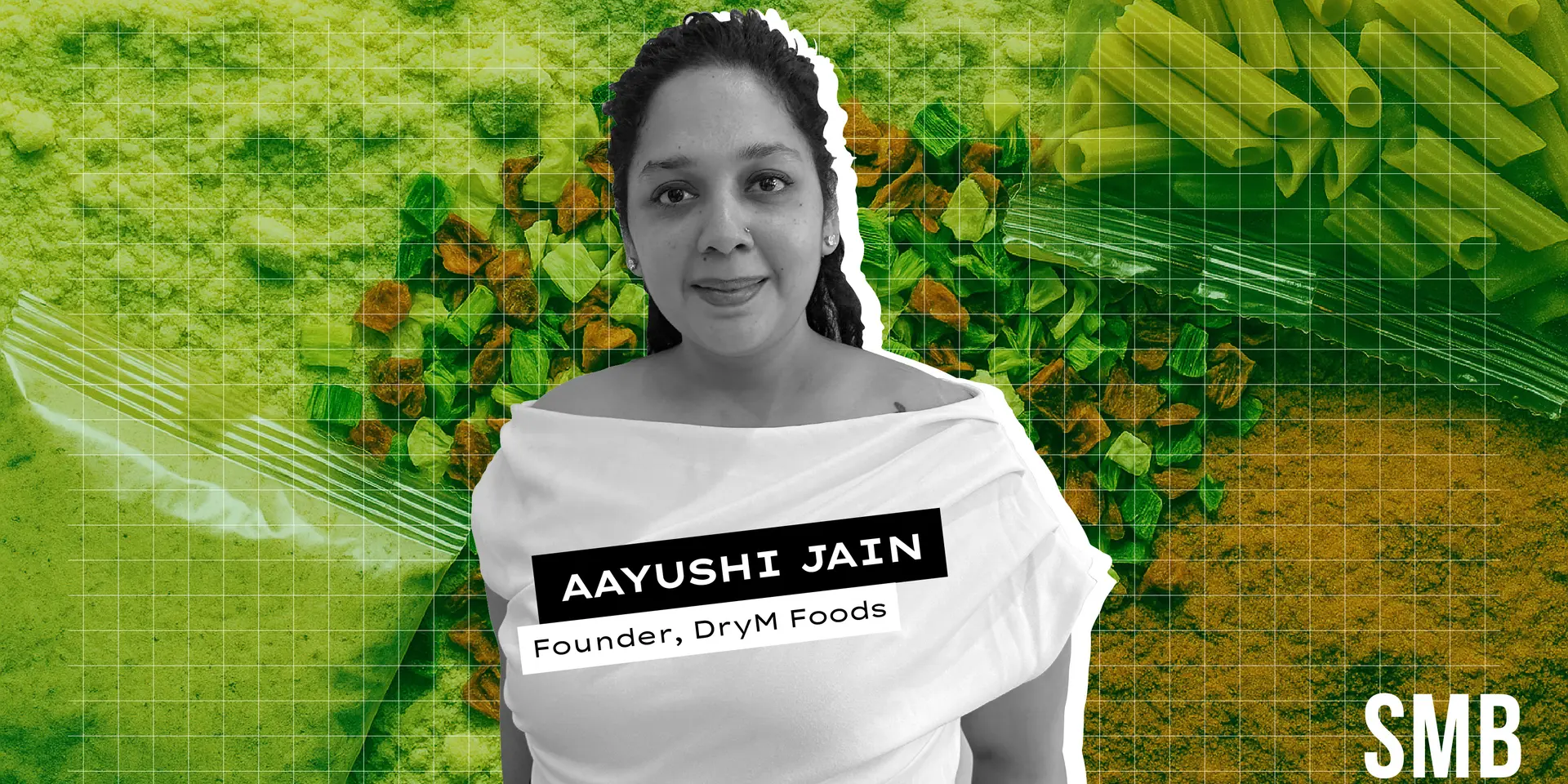
Founded by mother-daughter duo Mrinalini and Aayushi Jain, Sonipat-based DryM Foods is redefining ‘ready-to-eat’ food through freeze-drying technology—bringing authentic Indian home-cooked meals to students, travellers, and families across eight countries.


When Indian students head abroad for higher education, homesickness often manifests first in their food cravings. In 2024 alone, close to 7.6 lakh students moved overseas for education. As of last year, 13.35 lakh Indians were pursuing higher studies abroad—over 13 lakh of them in the United States.
A sit-down meal at an Indian restaurant in the US often costs between $20 and $50 (Rs 2,200–4,400). Even casual dining can set one back $10–25 (Rs 900–2,200). A Reddit thread on Indian food abroad captures the sentiment well—one user shared paying $18 (Rs 1,580) for a dosa, another cited $24 (Rs 2,100) for a curry.
For many students and families navigating this trade-off between convenience, cost, and authenticity, Sonipat-based DryM Foods offers an alternative.
Founded in 2017 by Mrinalini and her daughter Aayushi Jain, the company uses freeze-drying technology to preserve the taste, nutrition, and purity of home-style Indian meals, minus preservatives or additives.
“Our core vision of ‘bringing Mummy-wala khana (mother’s home-cooked meals) to the world’ has remained constant. What has evolved is the way we scale and serve it,” Aayushi tells SMB Story.
Craft home-cooked comfort
The first line of products was launched in 2017 and comprised quintessential Indian gravies—dal tadka, khichdi, dal makhni, rajma, and kadi chawal. As the brand grew, DryM Foods expanded into travel-friendly single-serve packs, family-size combos, toddler meals, and regional specialties. The portfolio now spans 80 recipes across vegetarian meals, parathas, and rice dishes, starting from Rs 25.
DryM Foods serves customers across India, the USA, Canada, UAE, Germany, Spain, France and the UK. The company has a strong feedback loop through WhatsApp, D2C reviews, and sampling programmes. Many of its product improvements, including portion size and spice level adjustments, came directly from customer feedback.
Eureka moment
The idea was born out of a personal struggle. In 2016, while Aayushi worked in the cleantech sector in Los Angeles and her sister studied in Edinburgh, both missed their mother’s freshly cooked meals. “Families would pack theplas and pickles the night before flights; travellers would feel food fatigue in a week,” Aayushi recalls.
Finding ready-to-eat options either too oily or synthetically preserved, “Even when we carried food from home, it would last just a few days,” she adds.
It was then that Aayushi, along with her mother, began experimenting at home. Their breakthrough came with freeze-drying—a process traditionally used in space and defence rations but rarely for Indian cuisine.
With an initial investment of Rs 1 lakh and an infusion of Rs 2 crore in 2023, DryM has grown organically at 20–50% year-on-year since inception. From generating Rs 10 lakh in the first year of operation, the company’s revenues have grown to Rs 1.5 crore in FY2025.
The process
Freeze-drying is a gentle dehydration process where food is flash frozen to -40 degrees Celsius, to preserve freshness and then subjected to vacuum. “Instead of boiling off water with heat, which destroys nutrients, free-drying turns the ice directly into vapour, locking in the food’s original structure, taste, and nutritional profile,” Aayushi explains.
The result is food that looks, tastes, and feels freshly made when rehydrated, and lasts 12–18 months without preservatives.
DryM Foods operates its own production facility in Sonipat to maintain quality control and sources all ingredients from local farms and FSSAI-certified vendors. Each recipe begins in a home kitchen before being standardised with precision using recipe management software, automated cooking systems, and stringent sensory testing.
Aayushi adds that each batch of ingredients is tested for microbial safety and quality. The team also performs quarterly testing post-drying, as per FSSAI guidelines. For instance, for paneer, the team performs iodine (detects the presence of starch) and toor dal (presence of urea or other contaminants) tests to ensure that there’s no adulteration.
Balancing Indian recipes for freeze-drying took a year of R&D. “Indian food depends on how ghee, spices, and water interact,” Aayushi explains. “We had to re-engineer every dish so that it rehydrates perfectly.”
DryM primarily relies on its D2C website and export network for sales. While it experimented with platforms like Amazon and BlinkIt, Aayushi realised that the “category needs education and trust—unlike impulse snacks.”
Now, exports account for 30% of its revenue, led by the US, UK, and Canada. Domestic D2C and travel retail channels are growing 10% annually. The brand aims for a balanced 50-50 split in two years.
Initially focusing on families sending food abroad, the problem statement broadened over the years. Presently, “It is not just about solving for convenience abroad, but about building a category of clean, freeze-dried Indian meals that redefine how the world perceives ‘processed food’,” she says.
Market overview
The Indian frozen foods market reached Rs 191 billion in 2024, and was projected to grow to Rs 593 billion by 2033, growing at a CAGR of 13.4%. This growth is fueled by rapid urbanisation, rising demand for ready-to-eat foods, improved cold chain infrastructure, and changing dietary preferences.
Popular brands in the Indian frozen food market include McCain Foods, Forstar Frozen Foods, Godrej Tyson Foods, and ITC, among others.
DryM Foods uses a recipe standardisation software, automated cooking cycles and batch traceability to ensure consistency in quality. Each product also goes through sensory testing before dispatch. “Even with technology, we retain human oversight…Final tasting is always done by our in-house culinary panel. This dual system of tech plus taste helps maintain consistency across every batch,” Aayushi says.
Additionally, DryM Foods has developed custom rehydration profiles for Indian dishes, meaning each product has a unique freeze curve and moisture optimised for taste recovery. “Our R&D constantly works on improving retention of colour and aroma, which is often lost in conventional dehydration,” Aayushi explains.
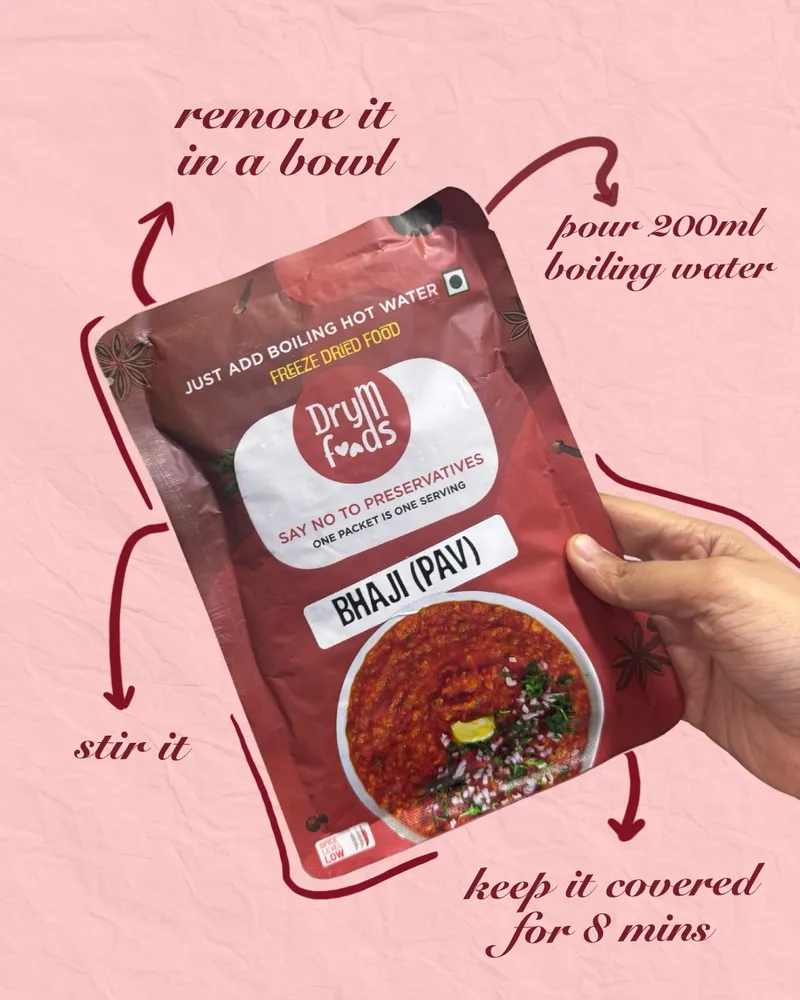
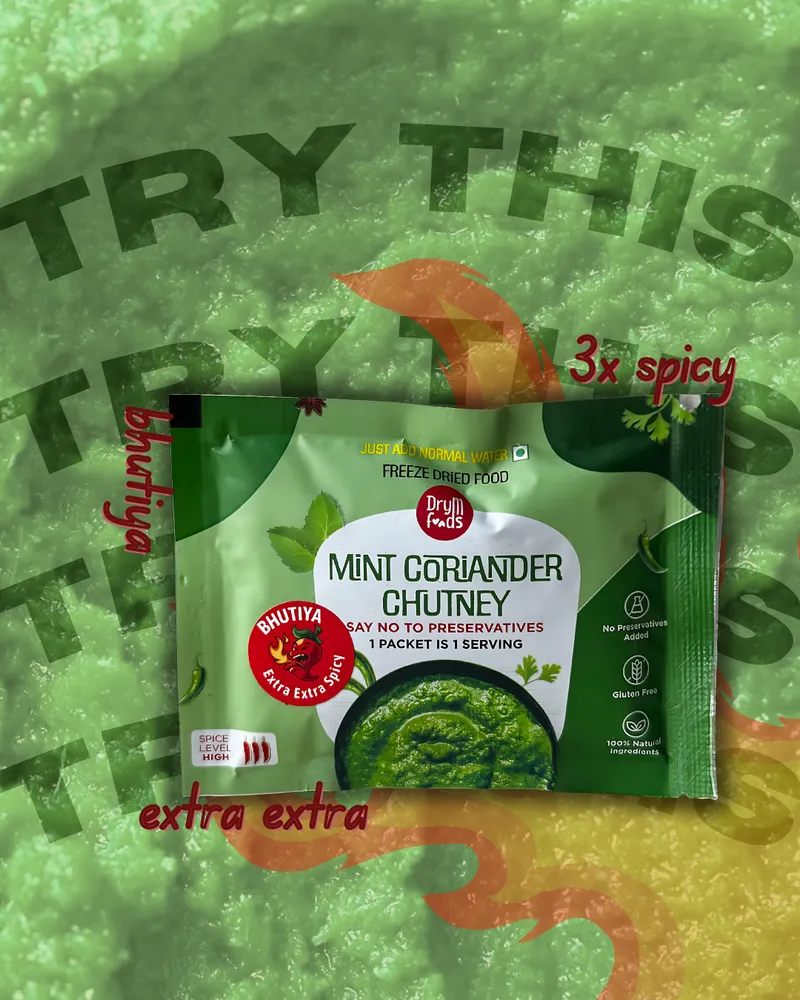
DryM Foods’ best-selling products are north-Indian gravies like dal makhni, rajma, bhaji, kadi chawal, biryani, poha, and chutneys. Regional dishes like gajar matar and sambar also perform well. Its biggest growth drivers continue to be word-of-mouth, repeat customers, and export partnerships.
At present, students and young professionals living abroad form DryM Foods’ largest customer segment. However, travellers and working couples are a rapidly growing segment in India, Aayushi reveals, “Especially post pandemic, as people seek reliable, healthy and travel-ready food options.”
DryM Foods is in talks with travel and airline catering partners, premium retail chains, and export distributors in the Middle East and Europe. The company is also exploring a partnership with Indian defence and wellness institutions for specialised nutrition packs.
It is working on new product segments—ready-to-cook, travel pack formats, and expanding into soups, more regional Indian cuisines, and other cuisines like Thai. “We have reinvested our earnings to grow organically. Our strategy has been capital efficiency, customer trust, and operational control,” Aayushi says. The company is targeting to achieve Rs 3 crore by FY2026.
Edited by Jyoti Narayan