


A weekend street school in Delhi’s slums and a craft collective with a mission: Top social stories of the week
In our Catalysts of Hope series, SocialStory brings you a roundup of uplifting, inspiring, and impactful stories of the week.

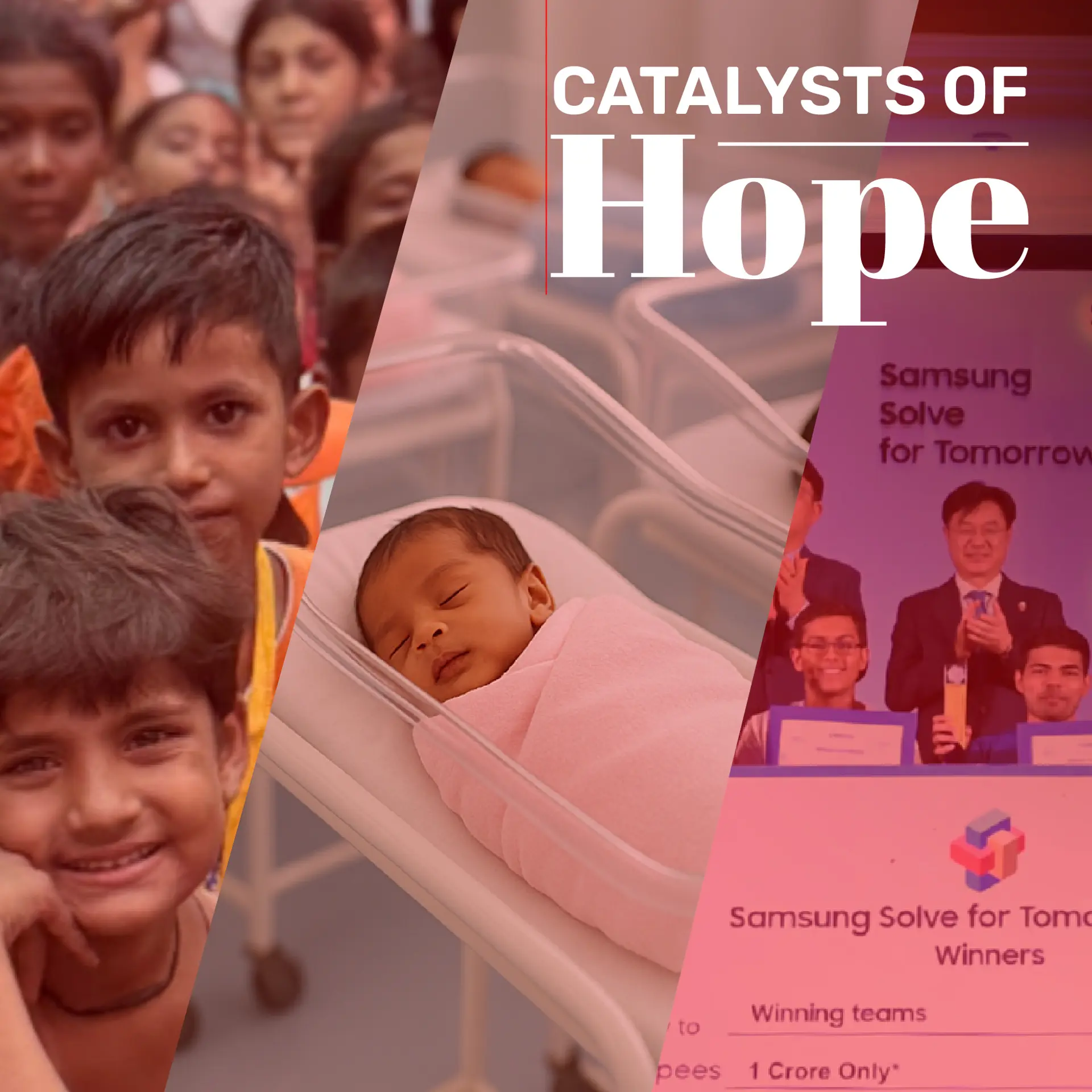

A single hour of learning can change a child’s life. In Delhi’s informal settlements, weekend classes are helping children fight ignorance and inequality. Conducted by Pehchaan - The Street School, these weekend classes go beyond academics—teaching children essential life skills and giving them the power to dream.
Supported by an 800-strong volunteer team, Pehchaan is impacting 1,600 children residing in the slums of GTB Nagar, Mukherjee Nagar, Noida Sector 35, Sunder Nursery, Rohini, Dilshad Garden, Kamla Nagar, Indraprastha Metro Station, Gol Gumbad, and IIT Metro Station.
At Pehchaan, learning is topic-based rather than syllabus-driven. For every grade and subject, the team has identified key foundational concepts. For instance, 15 essential English topics for third-graders, where volunteers revisit and teach them throughout the year until each child truly understands and masters them.
Read how Pehchaan is changing lives, one weekend class at a time.
Other top social stories of the week:
A pragmatic approach to craft survival
Karthik Vaidyanathan founded Varnam Craft Collective with a mission that sidesteps the usual buzzwords of the craft world, “sustainability” and “slow fashion”. He is focused on something more concrete: ensuring fair, steady livelihoods for artisans in India.
The Bengaluru-based entrepreneur backs a model built around design-driven and artisan-first principles, focused on ensuring people who are actually turning the lathe in the historic craft town of Channapatna get a fair share of profits and steady work.
The craft cluster in Channapatna, despite its GI tag, is in distress: artisan numbers have dwindled, younger people don’t want to join manual lathe work, and the promise of revival has not reached many at the grassroots.
Varnam responded by working with a select handful of artisans who get consistent support, removing intermediaries, and even managing their own retail channels so that artisans are less dependent on seasonal or erratic orders.
Vaidyanathan believes products must be functional (salt & pepper shakers, towel holders, lamps, etc.) rather than statement pieces that win design awards but don’t earn livelihoods. According to him, artisans must decide their prices, know their costs, and Varnam respects that. Many artisans have stayed for over a decade under his model because they feel they are treated with dignity and fair wages.
Improvement in the sex ratio at birth
Over the period 2016–18 to 2021–23, India’s sex ratio at birth (SRB) improved from 899 girls per 1,000 boys to 917. Eleven Indian states and Union Territories now report SRBs at or above the national average, with some regions such as Chhattisgarh (974) and Kerala (971) nearing a “natural” sex‐ratio benchmark.
The improvement reflects concerted efforts at the national and state levels to curb gender‐biased sex selection and bolster female births. However, sustaining and furthering this progress remains a critical challenge.
Several states with historically poor sex ratios, like Haryana, Punjab, and Rajasthan, still fall below the national average, pointing to deep‐seated social norms and systemic barriers. For SRB numbers to improve further, the country must focus on improved access to health services, stronger local governance accountability, and targeted incentives for girls.
Building scalable solutions for communities
Samsung recently announced the winners of the fourth edition of its Samsung Solve for Tomorrow 2025. The programme invited students from all over India to use tech to create solutions for challenges faced by local communities.
This year, the top four winning teams, including Percevia (Bengaluru), NextPlay.AI (Aurangabad), Paraspeak (Gurugram), and Prithvi Rakshak (Palamu), have received Rs 1 crore in incubation grants.
They will continue working on their prototypes and scale them into real-world solutions with mentorship support at IIT Delhi’s FITT Labs.
Powering India’s social sector through leadership
To tackle the non-profit sector’s pressing challenge of a leadership talent gap, India Leaders for Social Sector (ILSS), in partnership with the Harish and Bina Shah Foundation, launched the Harish and Bina Shah Centre for Talent and Leadership in August this year.
Going beyond conventional training, the new centre seeks to build a robust leadership ecosystem to drive India’s social transformation—from grassroots change to national impact. By 2030, it aims to empower over 1,000 leaders through an integrated model of learning, mentorship, and community engagement.
The centre’s strategy focuses on three pillars: learning and development, strengthening communities, and building voice—each designed to nurture talent and leadership capacity within the social sector.
Edited by Suman Singh