



Fiji beyond the postcard: Adventures that make the islands come alive
Jet boat spins, dolphin encounters, waterfall swims, bamboo raft rides, bustling markets and coral planting. This is Fiji in motion, a guide to the activities that turn postcard views into lasting memories.

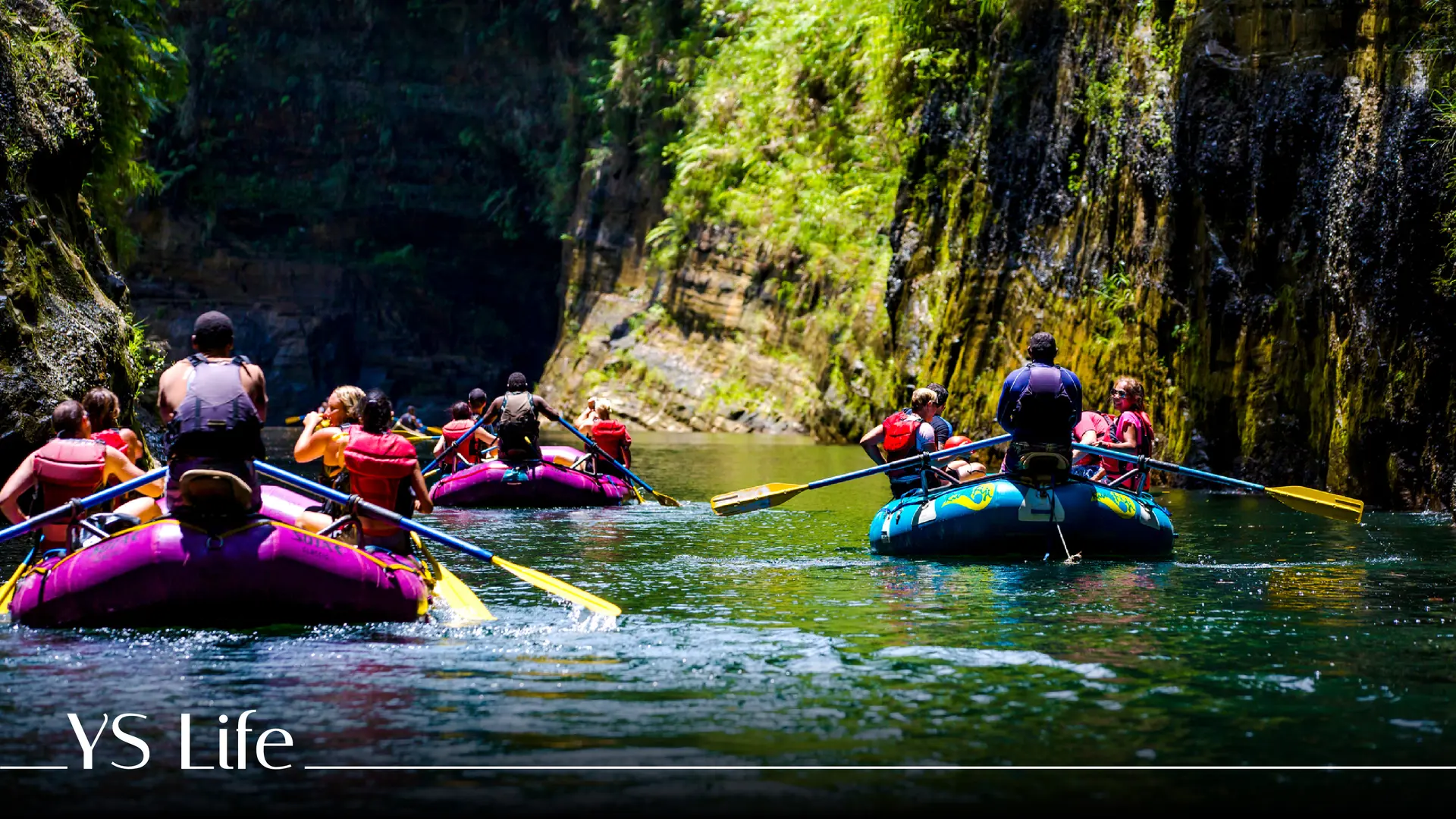

Fiji is an invitation to step out of the postcard and into the story. Every curve of coastline, every ripple of river, every smiling bula holds a memory waiting to be made.
I have already written about the villages that welcome you like family with a cheerful bula (hello in Fiji), the soulful stays and spa rituals that restore you, and the food that lingers long after the last bite. But there is another layer.
The thrill of a captain spinning his jet boat with a mischievous grin. The hush of a waterfall spilling like brushstrokes from a watercolour painting. The laughter of children waving from the banks of a river. The unforgettable sight of spinner dolphins leaping beside our bow. Even planting coral in clear waters, leaving behind something that will grow long after you are gone.
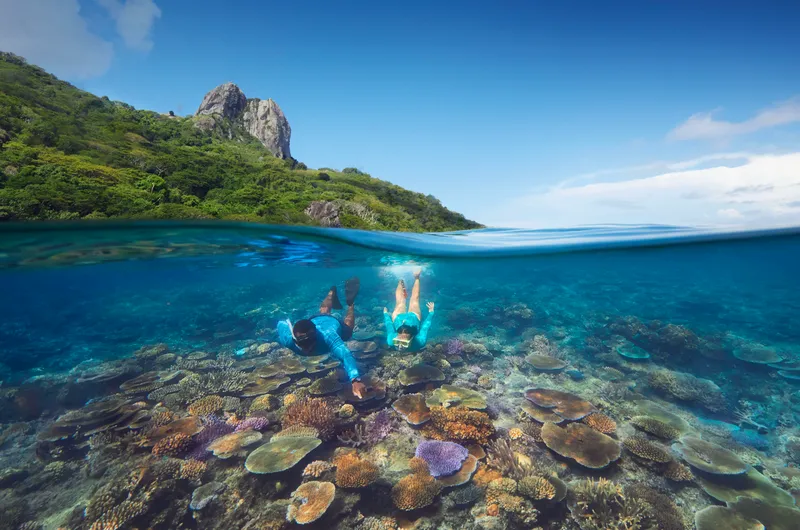
Vibrant coral thrives in the clear, sunlit waters, teeming with life. | Image: Tourism Fiji
The activities I describe are not just things to tick off. They are the means by which the islands open up to you.
River safari on the Sigatoka
The real adventure began a day after I landed. Rested, well fed and already touched by Fijian warmth, I set out to meet the islands from the water on a jet boat safari up the Sigatoka River on Viti Levu. Rising on the western slopes of Mount Victoria and running 120 kilometres to the Coral Coast, the Sigatoka is the island’s longest river and one of its great lifelines.
Our captain was equal parts navigator and raconteur, sprinkling stories of food, culture and river lore as we skimmed past mangroves and villages. Once, this river was the only reliable route to the interior, a three-day journey downstream that only grew longer on the return. Even today, it remains vital as locals gather mussels, fish and prawns from its waters, irrigate crops, and retell memories of floods when the river rose to frightening heights.
Children waved as we passed and fishermen tended their nets. The safari shifted between calm stretches that invited reflection and sudden bursts of speed that sent spray into the air. On the way back, our captain cranked up the thrill, slicing through choppy water, spinning the boat in 360-degree turns, and leaving us breathless with laughter, hair tangled by the wind, and adrenaline still rushing.
Photographers snap your departure and return, so you can carry home more than just the memory of a wild, unforgettable ride.
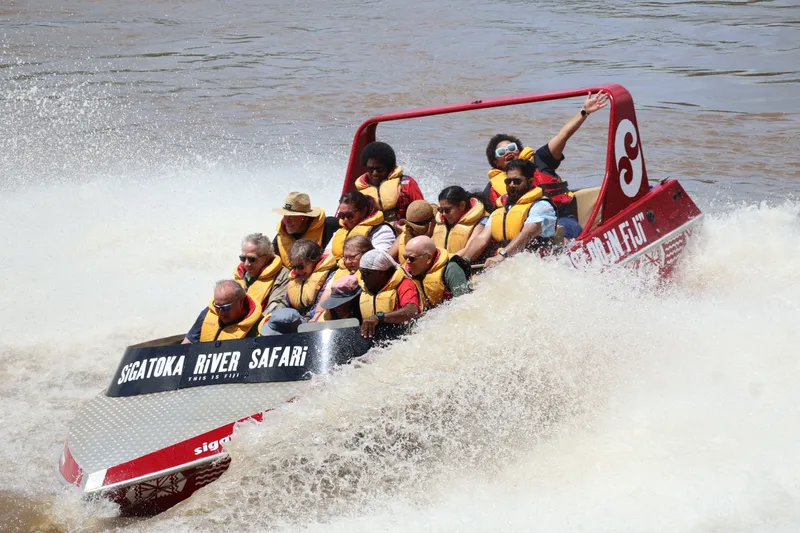
Our captain spun the boat in 360s, the river spray mingling with our exhilaration. | Image: Tourism Fiji

Navua River, waterfall swim
The Navua River promised a different kind of adventure. Our longboat threaded slowly into rainforest gorges, past overhanging trees and birdsong. Its pace was far gentler than the Sigatoka which meant more time to take in the lush scenery. A narrow path led us to a broad waterfall, tumbling into deep rock pools that seemed made for plunging.
The water was cold, the rocks slick underfoot, and life jackets were offered for those less confident in the water. I waded in anyway, letting the spray hit my face, and felt that rare exhilaration only a waterfall delivers.
The downstream section included a ride on a bilibili raft, bamboo platforms once essential for villagers travelling between settlements and carrying crops to market. Our guide explained the art of poling, pushing against the riverbed with long sticks to steer or slow the raft.
The afternoon unfolded in a nearby Raiyawa village. We were welcomed with a traditional kava ceremony, then shared a riverside lunch of hearty lovo and other communal dishes. Nemani, from the village, showed how to weave a basket from coconut leaves, his fingers moving with patient ease.
Natalei Eco Lodge and Moon Reef
The next day drew me out to sea. Natalei Eco Lodge, a beachfront retreat in Dawasamu, sits on a stretch of grey-black sand and serves as the gateway to Moon Reef. After tea, snacks and a safety briefing, we skimmed across calm water towards a place that locals speak of with pride. Crescent-shaped and facing the Lomaiviti Group, Moon Reef is home to a resident pod of spinner dolphins.
They arrived as if on cue, leaping and twisting beside the boat, even seeming to move to the rhythm of the music playing on board. Watching them dance in the wild was unforgettable—the kind of sight that fixes itself in memory.
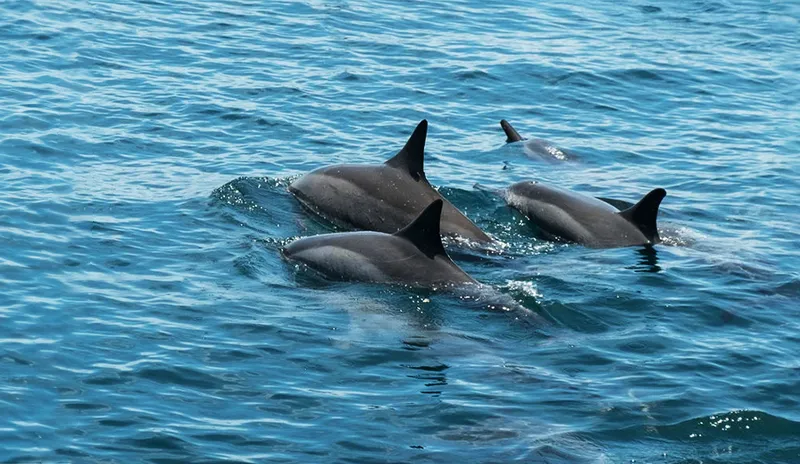
Spinner dolphins leapt and twisted beside the boat, dancing to the rhythm of the music on board. | Image: Tourism Fiji
Then came snorkelling: a plunge into coral gardens teeming with fish, where colours shifted with the light and time seemed to slow down. For 30 or 40 minutes, I floated in another world, surfacing with that rare feeling you cannot quite name. Perhaps this is what Hrithik Roshan’s character felt after his first dive in Zindagi Na Milegi Dobara—exhilaration laced with calm, a sense of having touched something vast.
The return journey had its own rewards. I took the wheel briefly under the captain’s watchful eye, steering the boat as the coastline grew closer. Cold Fiji Gold beers and soft drinks were passed around, the breeze warm, the horizon scattered with clouds and green hills. Back on land, a simple home-style meal ended the trip on a note of easy generosity.
Self-drive along the Coral Coast and small discoveries
From Suva, we picked up a rental from Avis and set off on a self-drive to Yanuca Island, home of the Shangri-La. Cars in Fiji are right-hand drive and traffic keeps to the left, which felt familiar to me and easy enough to adapt to.
The journey is about 140 kilometres, usually a two-and-a-half-hour drive, but we stretched it. The roads were mostly smooth, traffic was light, and the scenery kept unfolding in waves with glimpses of coastline, and flashes of turquoise water. A self-drive here is more than transport. It is freedom to pause for a photo, or stand still and breathe it all in.
On the Coral Coast, on the Queens Highway, we paused at Hot Glass Fiji, the country’s first and only glassblowing studio. Inside, the furnace glowed and the air carried the dry heat of fire as molten glass was coaxed into bowls, vases and dishes.
Watching the process was mesmerising, a dance of fire, colour and control. Then it was my turn. Guided patiently by a local glassblower, I shaped a tumbler—awkward at first, but slowly transforming under careful turns and puffs of air. It felt like a souvenir both practical and personal. For those who prefer to browse, the studio shelves are filled with ready-made glassware, each piece unique, but there is something unforgettable about creating your own.
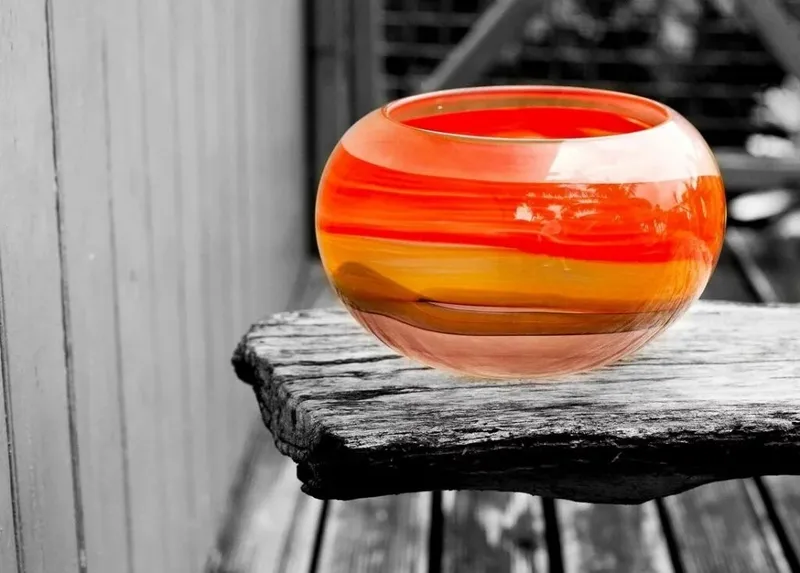
Molten glass is shaped into a delicate dish. | Image: Hot Glass Fiji
Just outside Sigatoka, we stopped at Bula Coffee, Fiji’s first and only fully local coffee company. Born from the discovery of wild coffee in the highlands, the business now works with thousands of villagers, many of them women, who harvest beans sustainably and turn them into a steady livelihood.
The “crop to cup” tour walked us through the entire journey, from cherry to roast, with the aroma of fresh beans never far away. At the tasting bench, six different brewing methods revealed how the same bean can sing in so many ways.
It felt less like a factory visit and more like a story of people, land and passion poured into a cup. I left with a bag of beans, of course, but also with the sense that every sip of Bula Coffee carries with it the warmth of the Fijian highlands.
No trip is complete without a market visit. Sigatoka Market is a lively spot to pick up woven mats, wooden carvings, bula shirts, fridge magnets, Fiji Gold for beer enthusiasts, and a wide range of locally produced goods.
Haggling is light and friendly; cash is convenient, though many stalls now accept cards. For authentic souvenirs, seek out hand-made items from local shops rather than mass-produced imports.
Naidiri Marine Biodiversity Park
Community-led projects are at the heart of Fiji’s tourism, and the Naidiri Marine Biodiversity Park in Nahoho Village is a perfect example. The park runs coral nurseries and giant clam hatcheries, inviting visitors to snorkel in shallow, crystal-clear waters and try their hand at coral planting.
The gentler currents make it ideal for first-timers, while the vibrancy of the reef—colourful corals swaying, tropical fish darting—makes every stroke under the surface captivating. Local guides lead the activities, sharing knowledge, offering encouragement, and, as always, making you feel welcome. Planting coral here is hands-on and rewarding, leaving you with a lasting connection to the reef and the community that cares for it.
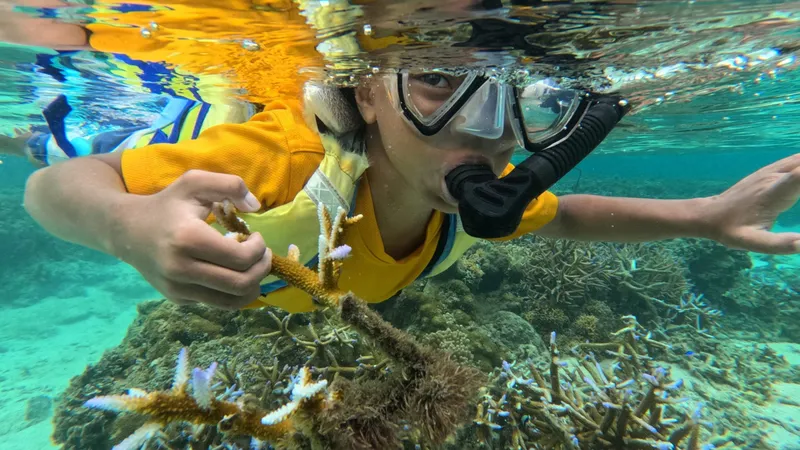
Snorkelling among vibrant corals. | Image: Naidiri Marine Biodiversity Park
A cultural stop near the airport
On the way out from Nadi, it is easy to stop at the Sri Siva Subramaniya Swami Temple, one of the largest Hindu temples in the southern hemisphere. It is fifteen to twenty minutes from the airport and stands out for its vivid Dravidian architecture and ornate wood carvings. The complex is dedicated to Lord Murugan and also houses shrines to Ganesh, Meenakshi and Shiva. I stopped here en route to Natadola Bay and the colours, carvings and calm offered a cultural pause.
Fiji as a final note
In travel writing, there is always the temptation to catalogue, to tick off experiences. This piece lists possibilities, but it is also a reflection on the islands themselves. Travel here is physical: you step into warm water, taste the smoke from an earth oven, feel the spray of river mist, let the sun dry your hair after snorkelling. It is also emotional: you are welcomed, invited to join in, and allowed to leave a little changed.
If you have the time, use this guide as a loose map rather than a strict timetable. Let the islands surprise you, and be ready to alter your plans when someone waves from a riverbank, offers a story, or shares a bite of food. That, more than any itinerary, captures the heart of Fiji.
(Cover image designed by Nihar Apte)
Edited by Affirunisa Kankudti