



Who will build India’s next 100 chip companies? Giving robots a sense of direction
At Semicon India 2026 in New Delhi, MeitY Secretary S. Krishnan highlighted the rapid momentum of the India Semiconductor Mission (ISM), which has successfully transitioned from a policy framework to operational semiconductor factories within four years.


Hello,
The economics of semiconductor business is staggering. According to Sandeep Kumar, CEO of L&T Semiconductor Technologies, companies can expect to “make 50, 60, 70% gross margin.” The time is critical. At Semicon 2026, Kumar emphasised that India will require hundreds of domestic semiconductor companies to build a globally competitive chip industry.
On the topic of semiconductors, industry executives are shifting focus toward building a local supply chain for materials, gases, and components as semiconductor plants across India begin commercial production.
Speaking across public forums at Semicon 2026, representatives from Kaynes Semicon, Merck, INOX Air Products, and L&T Semiconductor Technologies highlighted this next buildout phase as a critical opportunity to deepen India's domestic manufacturing ecosystem.
Meanwhile, if corporate India were a high-stakes drama series, Bombay House would be at the heart of the story. The latest sequence of events at Tata Sons is serving boardroom drama, regulatory pressure, and multi-generational rivalry to keep viewers on the edge of their seats.
While the Tata leadership is locked in an internal struggle, their long-time rival and minority owner, the Shapoorji Pallonji (SP) Group, led by Shapoor Mistry, has just dropped a statement that it is all for public listing of Tata Sons as directed by the Reserve Bank of India.
Shapoorji Pallonji Group’s decision puts Noel Tata in a tough spot as the Board of Tata Sons have also voted in majority for the public listing. This makes Noel Tata a single individual who is against the decision to list.
Elsewhere, Asiana Fund, the investment platform of the Dani Family Office, and JC Capital, a Taiwan-based venture capital firm, have launched a Rs 1,000-crore fund focused on India’s technology and advanced manufacturing ecosystem.
Lastly, as if the world wasn’t wary enough of Anthropic’s AI models and their potential risks, the company has quietly set up a biology lab to bring the power of AI to drug research, Reuters reports.
In today’s newsletter, we will talk about
- A calling chip designers of India
- Giving robots a sense of direction
Here’s your trivia for today: What video platform began its life as an online video dating service with the tagline "Tune in, Hook up"? (Scroll down for answer)
Interview
India wants 1 lakh chip workers
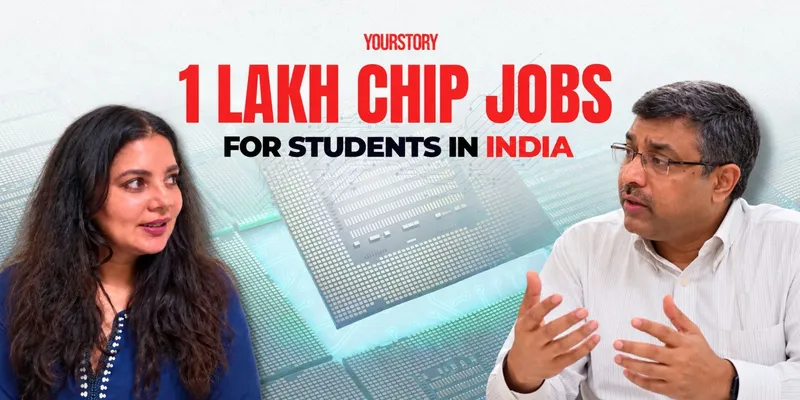
At Semicon India 2026 in New Delhi, MeitY Secretary S. Krishnan highlighted the rapid momentum of the India Semiconductor Mission (ISM), which has successfully transitioned from a policy framework to operational semiconductor factories within four years.
With three semiconductor plants already in commercial production—including Micron’s ATMP facility in Gujarat—and several others coming online soon, the mission has exhausted its initial Phase 1 budget and moved into ISM 2.0. Approved with an outlay of Rs 1.27 lakh crore, this expanded phase widens the scope beyond chip design and fabrication to encompass equipment, chemicals, gases, raw materials, R&D, and large-scale talent skilling over a 12-year timeline.
Key takeaways:
- Phase 1 committed nearly all of its Rs 76,000 crore outlay within roughly three years, approving 12 projects representing over Rs 1.64 lakh crore in cumulative investment.
- Krishnan attributed Phase 1’s speed to a narrow target (focusing strictly on fabs and OSAT/ATMP packaging units), hands-on collaborative application refinement, and direct approval from the Union Cabinet.
- Approved in July with a Rs 1.27 lakh crore budget, ISM 2.0 shifts from isolated manufacturing to building a complete domestic supply chain.
<Top Funding Deals of the Week>
Startup: UGRO Capital
Amount: Rs 380 Cr
Round: Undisclosed
Startup: Flam
Amount: $40M
Round: Series B
Startup: DheyaTech
Amount: Rs 43 Cr
Round: Undisclosed
Startup
Giving robots a sense of direction
Yaanendriya is a Bengaluru-based deeptech startup that designs and manufactures high-precision inertial sensors, control software, and navigation systems for autonomous machines. Founded after nearly two years of research, the company aims to reduce India’s reliance on imported sensor technologies—especially for critical sectors such as defence, aerospace, automotive, robotics, and medical devices.
Key takeaways:
- The startup sells its hardware and software at 25% to 33% of the price of foreign equivalents, ranging from Rs 7,000 to Rs 80,000 per module.
- Its tech is already active in Karnataka State Police surveillance drones, surgical robots, cricket simulators, and defense hardware.
- Funded by a Rs 15 crore seed round, the company plans to launch GPS-free navigation by 2027 and manufacture its own indigenous sensor chips (MEMS) by 2028.
News & updates
- End of an era: Warren Buffett is stepping down as chairman of Berkshire Hathaway. The 96-year-old legendary investor announced the move in a letter to shareholders Friday. Buffett has led the sprawling conglomerate worth $1 trillion since 1965.
- Semiconductor deal: Tata Electronics has signed five strategic partnerships with Sumitomo Chemical, Kelington, Enomoto, Sojitz Corporation & NRS CORPORATION, and L&T Semiconductor.
- Electronics hub: Odisha has approved a Rs 452-crore National Industry Co-Development Hub on Integrated Power Electronics at IIT Bhubaneswar, Chief Minister Mohan Charan Majhi said at SEMICON India 2026 in New Delhi on Friday.
What video platform began its life as an online video dating service with the tagline "Tune in, Hook up"?
Answer: YouTube
We would love to hear from you! To let us know what you liked and disliked about our newsletter, please mail [email protected].
If you don’t already get this newsletter in your inbox, sign up here. For past editions of the YourStory Buzz, you can check our Daily Capsule page here.