


Living with disabilities, a Made in India bionic hand, and addressing the collective wisdom gap–our top social stories this week
In our Catalysts of Hope series, SocialStory brings you a roundup of uplifting, inspiring, and impactful stories of the week.

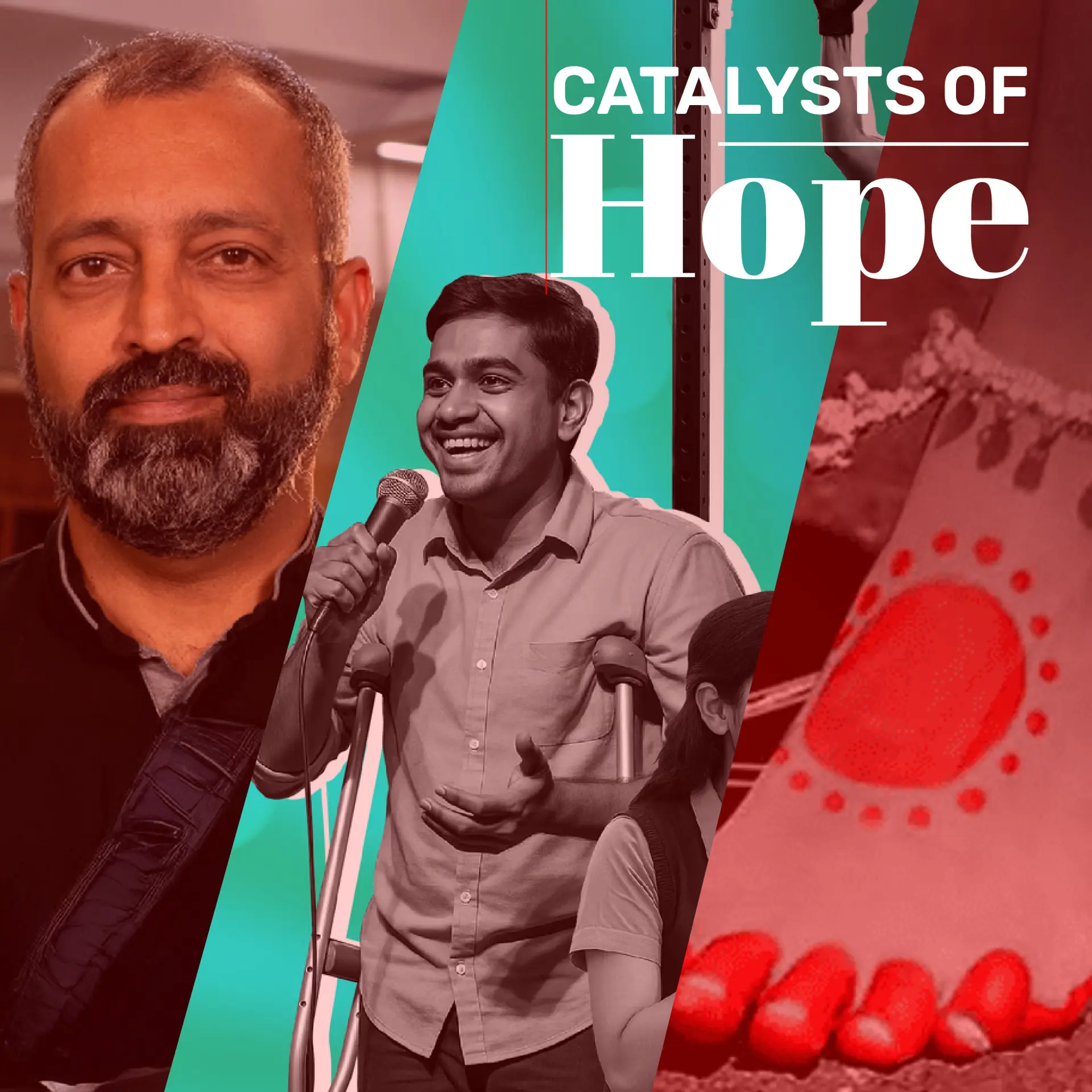

December 3 was commemorated as International Day of Persons with Disabilities. Despite the barriers they face, persons with disabilities continue to break ground, thriving in their professions, nurturing families, travelling the world, excelling in sports, and shaping vibrant communities.
Their resilience deserves recognition, but it also raises a crucial question: how often do we truly listen to them?
We asked persons with varying disabilities what’s one thing about their life or experience that they wish people understood better. Here are their thoughts.
Here are our other social stories of the week:
Problem-solving in the development sector
Apurva.ai, a not-for-profit, is quietly transforming how India, and soon, the world approaches development challenges. Founded by Anand Rajan, Apurva.ai is building something radical yet intuitive: an AI-enabled public-goods platform that puts community wisdom at the centre of decision-making.
Development programmes often falter not because of a lack of intent, but because they overlook the voices that matter most. Apurva.ai calls this blind spot the “collective wisdom gap.” Its mission: listen to communities, learn from their lived realities, and help institutions act with insight—not assumptions. Learn more about how its “listen, learn, and act” framework is embedding lived experience into the heart of development.
India’s most affordable bionic hand
Hyderabad-based Makers Hive, founded by Pranav Vempati, has built KalArm, a 3D-printed bionic hand designed to give upper-limb amputees greater independence and dignity.
Vempati’s inspiration came from meeting an amputee who told him he lacked even “basic dignity.” This moment pushed him to leave his R&D job and commit to creating a world-class yet affordable prosthetic made in India.
KalArm stands out for being one of the most affordable functional bionic hands in the world, priced at around Rs 4.5–6 lakh—nearly one-tenth of international alternatives. To keep costs low without compromising quality, Makers Hive engineered key components in-house, including cost-effective EMG sensors that detect muscle signals to move the fingers. The arm is manufactured at scale, while each user receives a customised forearm socket to ensure comfort and fit.
The bionic hand offers a range of natural movements, adaptive grip strength, and the ability to handle everyday tasks—whether holding delicate items or lifting heavier objects.
The heroes of India’s social sector
In 2025, India’s changemakers pushed the boundaries of what social impact could look like across classrooms and clinics, forests and farmlands, courtrooms and digital platforms. Whether in education, mental health, disability justice, environmental restoration, road safety, or digital livelihoods, they worked to transform everyday realities for millions.
This momentum was matched by a stronger policy push from the government. Budget 2025 increased investment in disability welfare, expanding allocations under the Deendayal Disabled Rehabilitation Scheme and boosting support for assistive devices, scholarships, and rehabilitation services. A renewed emphasis on inclusive education and state-level proposals to reserve seats and jobs for persons with disabilities signalled a deepening institutional commitment to equal access.
We spotlight ten individuals who shaped India’s social sector in 2025.
'
Despite steady progress in reducing child marriages, India still carries the world’s largest burden, a consequence of its vast population.
Programmes such as Beti Bachao Beti Padhao, Bal Vivah Mukt Bharat (Child Marriage–Free India), Childline 1098, along with Child Welfare Committees (CWCs), District Child Protection Units, and other institutional mechanisms have been rolled out to tackle gender bias, promote girls’ education, and prevent child marriage.
The Ministry of Women and Child Development (WCD) has stepped up efforts under the “Bal Vivah Mukt Bharat” mission: On December 4, 2025, the WCD rolled out a 100-day Intensive Awareness Campaign, marking one year of the national mission.
The campaign is planned in three phases and coordinated with multiple ministries including Health & Family Welfare, Panchayati Raj, Rural Development and Education.
Edited by Megha Reddy