


From deserts to villages: how women entrepreneurs are reimagining rural livelihoods
Meet the women entrepreneurs building businesses, transforming livelihoods, and communities in rural India.

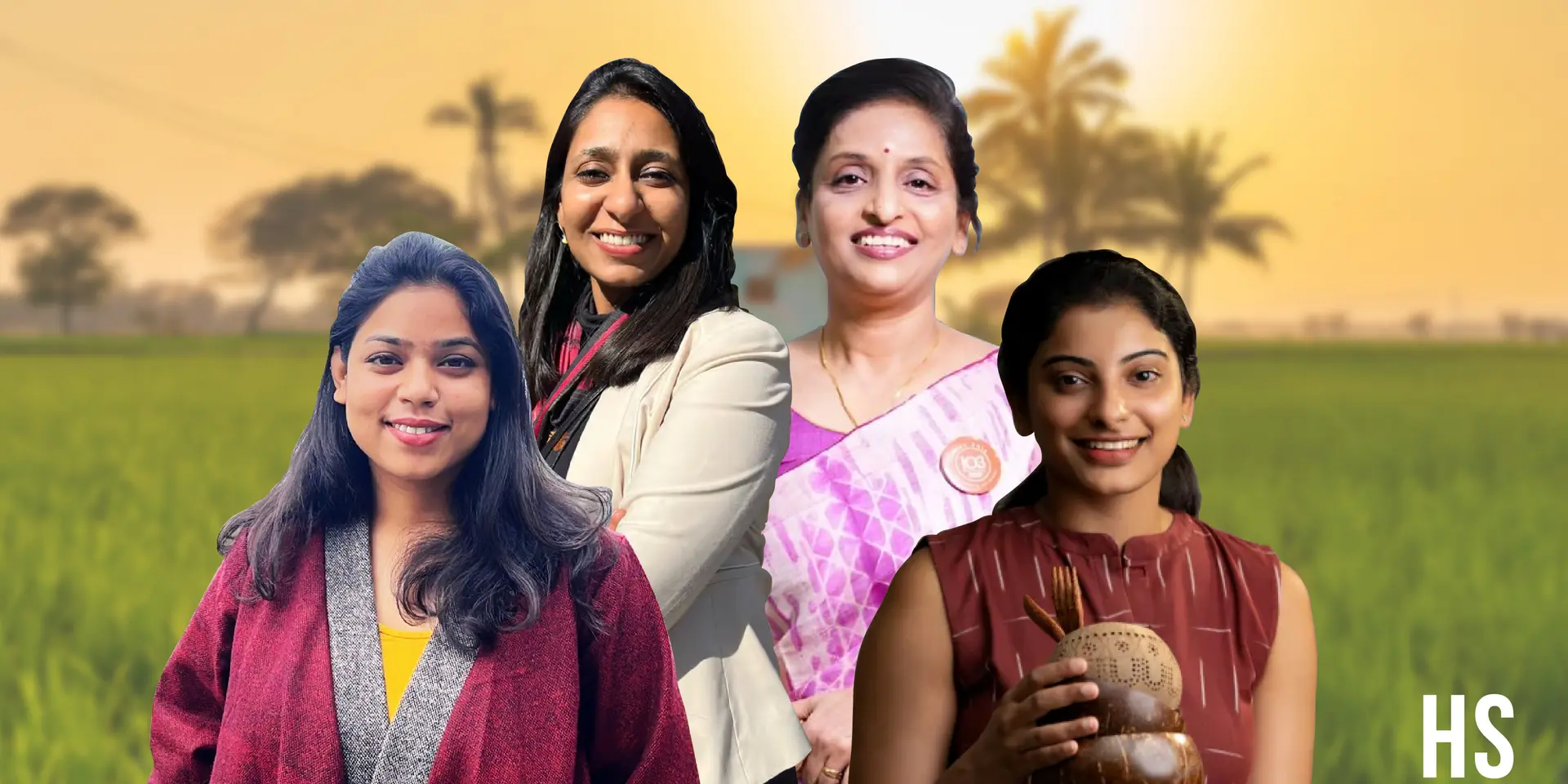

Across India's rural landscapes, women entrepreneurs are turning local challenges into opportunities for sustainable growth. Meet the founders building businesses that are transforming livelihoods and communities.
From the Thar Desert to the hills of Kerala, a growing number of women entrepreneurs are building businesses rooted in sustainability and transforming village economies. They are building businesses using diverse resources—from camel milk and waste milk to coconut shells, indigenous spices, and traditional crafts. Their businesses are taking rural produce to global markets and creating income opportunities for farmers, artisans, and pastoral communities.
Here is a list of women who are reshaping livelihoods across rural India.
Aakriti Srivastava, Bahula Naturals
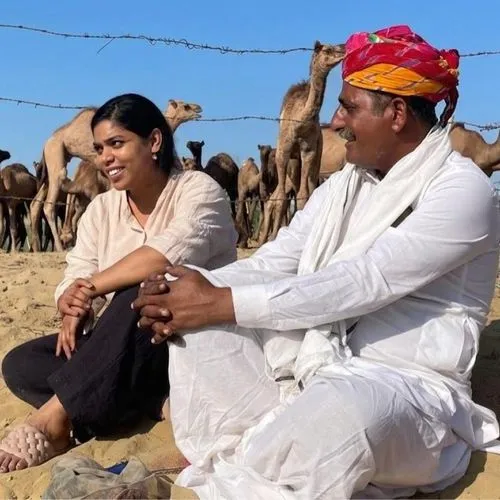
Aakriti Srivastava founded Bahula Naturals to transform livelihoods in Rajasthan's Thar Desert by turning traditional pastoralism into a sustainable, market-linked enterprise. It works with over 4,000 pastoralist families in Bikaner, Jaisalmer and Jaipur in a community-first approach that places women at the centre of the value chain.
It manufactures across three categories: camel milk and value-added products, indigenous Rathi cow’s milk and products and agri produce. Beyond products such as artisanal camel milk cheese, Bilona ghee, black wheat flour, and cold-pressed oils, the enterprise invests in better inputs, clean energy solutions like household biogas units, and local employment, with 95% of its workforce comprising youth from the same villages.
In Bikaner, Bahula caters directly to local households through doorstep delivery, offering fresh milk, ghee, cheese, paneer, cold-pressed oils, and flour. Beyond its local presence, the brand also reaches customers across India through its direct-to-consumer ecommerce platform.
Prerna Agarwal & Shwetambara Ujjain, Samakhya Sustainable Alternatives
While working in villages near the India-Pakistan border in Rajasthan, Prerna Agarwal found that families raising sheep were earning next to nothing from coarse wool, often selling it for less than Rs 20 a kilogram or discarding it altogether.
Along with co-founders Shwetambara Ujjain and Danish Choudhary, she founded Samakhya Sustainable Alternatives in 2022 to transform this undervalued resource into a sustainable business opportunity. Based on research that showed coarse wool is an excellent natural insulator, the enterprise developed eco-friendly insulation materials for the construction industry, turning what was once considered waste into a climate solution.
Today, Samakhya works with over 500 pastoralist families across Rajasthan and has built a decentralised supply chain through Magra Pashupalak Centres, which offer sheep shearing, veterinary support, and assured wool procurement. The enterprise also employs 35 women at its processing units, where the wool is sorted and converted into insulation rolls and felt sheets for green buildings. Its products have been used in schools, community centres, and institutional buildings, offering a natural alternative to conventional insulation materials while reducing energy consumption.
This model has revived rural livelihoods by increasing incomes, creating local employment, and encouraging greater participation of women and young people in the local economy.
Megha Phansalkar, Tisser Artisan Trust
Through Tisser Artisan Trust—named after the word tisser, meaning “to weave”—Megha Phansalkar is working to build a more resilient and future-ready artisan ecosystem. The organisation focuses on product innovation and diversification, leverages technology to strengthen connections with artisans, and adopts an end-to-end cluster development approach to create sustainable livelihoods while preserving traditional crafts.
Since its inception in 2015, Tisser has impacted over 100,000 artisans through producer groups, focusing on sustainable growth and economic independence for women artisans.
Today, Tisser connects over 1,000 products made by more than 1,000 artisans across multiple rural clusters. Its portfolio spans natural, handcrafted, contemporary, and affordable products rooted in India's rich craft traditions. By working closely with artisan communities, the trust aims to create long-term rural employment while offering an alternative to mass-produced goods.
Beyond market access, Tisser supports weavers and craftspeople through sustainable business practices, preserves traditional knowledge, and promotes environmentally responsible production. It works with Madhubani artisans in Bihar; Tant & Jamdani weavers in West Bengal; Tussar artisans in Chhattisgarh; Chilari and Kalamkari in Telangana; Kanjeevaram in Tamil Nadu; Channapattana toymakers in Karnataka; Warli, Khadi, and Bamboo craft in Maharashtra, and more.
Its specific initiatives include the Women Artisans’ projects, the Women Artisans Skill Enhancement Project, the Grassroots Regional Artisans Movement, Project Revive, and others.
Maria Kuriakose, Thenga Coco
After working and studying outside Kerala, Maria Kuriakose chose to return to her home state, Kerala, to start a business rooted in sustainability.
The idea for Thenga Coco came after Maria noticed that thousands of coconut shells, an abundant by-product in the state, were either discarded or burnt. This sparked the idea for Thenga Coco, a Palakkad-based venture that transforms coconut shells into functional and decorative lifestyle products, building a business around the principles of sustainability and circular economy.
Today, Thenga Coco has grown into what it claims is India's largest manufacturer of coconut shell products, with a catalogue of more than 110 SKUs ranging from kitchenware and home décor to gifting products. The company works with women and skilled artisans across Kerala, converting agricultural waste into premium products that are sold across India and exported to European markets.
In 2024, the startup set up its own manufacturing unit in Velanthavalam, on the Kerala–Tamil Nadu border, which employs 26 women on the shop floor, handling every stage of the manufacturing process—from cutting and shaping coconut shells to sanding, polishing, finishing, and packaging.
Annu Sunny, Graamya
Founded by Annu Sunny and Bhavesh Sawariya, Graamya works with smallholder farmers in Kerala's Idukki district to source indigenous spices directly, eliminating intermediaries and ensuring better returns for growers.
The enterprise focuses on native varieties of pepper, cardamom, cinnamon, cloves, nutmeg, mace, cocoa, coffee, and turmeric, while encouraging natural farming practices and preserving traditional cultivation methods. It has also started procuring minor crops that previously had no value: bird’s eye chilli, curry leaves, and Malabar tamarind.
Graamya recently became the first company to commercialise ICRI-10, a newly developed green cardamom variety from the Cardamom Research Institute, launching it both as a packaged direct-to-consumer product and for export markets.
The enterprise operates two processing facilities—a primary unit in the village where spices are dried and undergo initial processing, and a central facility where they are sorted, graded, cleaned, and packaged. Its core team includes a food technologist, an agriculture expert, and a marketing team, while a workforce of daily-wage workers, many of them women, is engaged in sorting and grading the spices before they are shipped to domestic and international customers.
Graamya also collaborates with chefs to create and co-brand signature spice blends, including chai masala and fish curry masala, thereby expanding its range of value-added offerings.
Edited by Megha Reddy